Licensing Expansion to Cover Dealers and Custodians
The government will introduce a bill this year to license digital asset dealers and custodians. The proposal will expand regulation beyond trading platforms and bring more service providers under formal supervision. As a result, authorities aim to close regulatory gaps and strengthen operational standards.
Officials structured the reforms under Hong Kong’s second digital asset policy statement. The framework seeks to balance innovation with clear compliance obligations across the market. At the same time, regulators intend to reinforce market integrity and financial stability.
The Securities and Futures Commission will oversee key parts of the expanded regime. It plans to broaden approved products and services for professional participants. In addition, the regulator will launch an accelerator program to support compliant financial technology development.
Stablecoin Licensing and Market Liquidity Measures
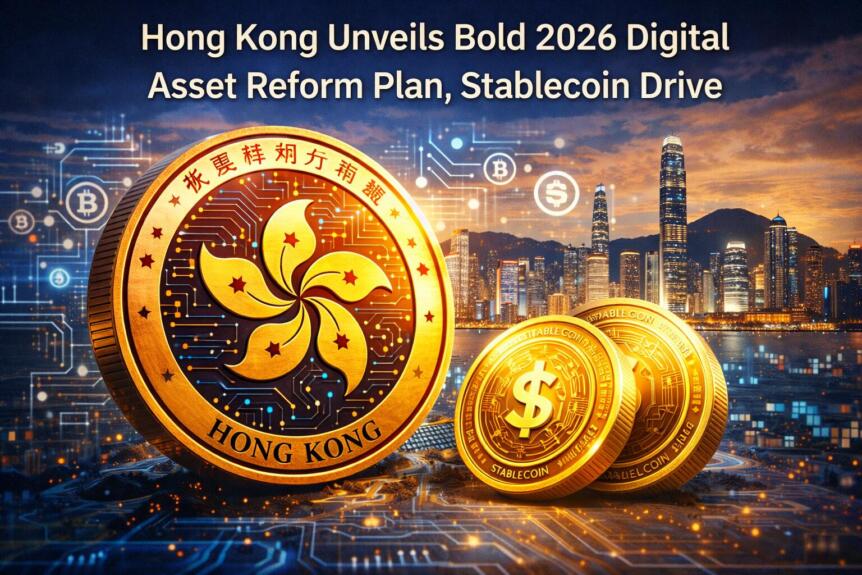
Authorities have confirmed that Hong Kong has implemented a licensing system for fiat-referenced stablecoin issuers. The first batch of licenses will be granted next month under the new framework. Consequently, the city will move from regulatory planning to live market authorization.
Regulators will work with approved issuers to develop controlled and compliant use cases. Officials aim to integrate stablecoins into payment and settlement activities within clear risk parameters. Meanwhile, authorities will monitor issuance structures and reserve management standards.
The Securities and Futures Commission will also take steps to deepen digital asset market liquidity. It will expand the scope of eligible instruments and services available to professional market participants. Therefore, policymakers expect stronger capital flows and improved price discovery across platforms.
Hong Kong’s broader strategy reflects rising global competition among financial centers. Several jurisdictions have advanced stablecoin and tokenization rules in recent years. In response, Hong Kong has accelerated its regulatory timetable to maintain regional leadership.
Tokenized Bonds and OECD Reporting Framework
Tokenization forms another core pillar of the government’s digital asset strategy. Authorities will issue guidance allowing debenture holder registers to operate on distributed ledger systems. This clarification will support legal certainty for tokenized bond structures.
Officials will also explore electronic signatures for bond issuance documents. In parallel, authorities will examine the digitalization of bearer bonds within existing legal boundaries. These measures aim to modernize debt markets while preserving regulatory oversight.
Hong Kong has already experimented with tokenized green bond issuance in recent years. Those pilot projects demonstrated operational feasibility and settlement efficiency. Building on that experience, policymakers now seek broader institutional adoption.
At the same time, the government will amend the Inland Revenue Ordinance. The changes will implement the OECD Crypto-Asset Reporting Framework and the updated Common Reporting Standard. A bill is expected in the first half of this year.
The new reporting rules will strengthen cross-border tax transparency for digital asset transactions. Authorities intend to align Hong Kong with global standards on financial disclosure. Therefore, the reforms will address tax compliance while supporting market credibility.
Together, the licensing expansion, stablecoin approvals, and tokenization guidance mark a coordinated policy push. The measures integrate regulation, innovation, and tax reporting into a unified framework. As implementation begins, Hong Kong positions itself as a structured and competitive global digital asset hub.