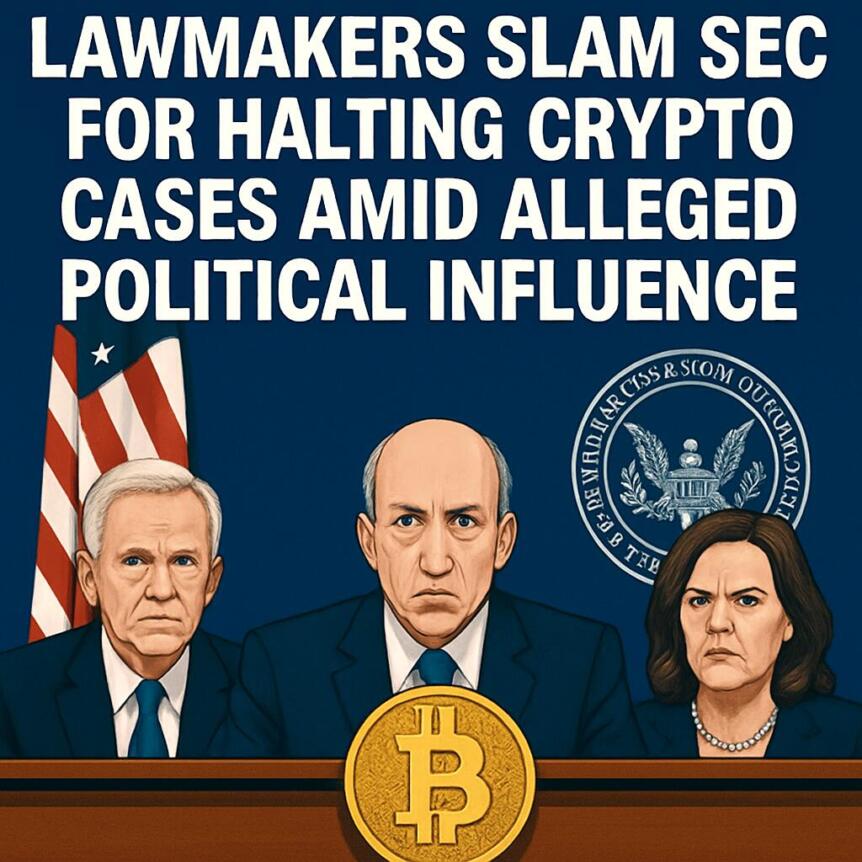
A group of Democratic lawmakers has criticized the Securities and Exchange Commission (SEC) for halting several high-profile enforcement actions against major cryptocurrency firms. The lawmakers argue that the SEC’s decisions raise concerns about political influence and undermine market integrity. They point to the timing of the closures, which came after former President Donald Trump’s election.
SEC Drops Crypto Cases Amid Political Scrutiny
Since 2025, the SEC has voluntarily dropped at least a dozen cryptocurrency enforcement cases. These cases included ongoing litigation against major firms like Binance, Coinbase, and Kraken. The SEC’s decision came despite favorable court rulings supporting the agency’s claims of fraud and illegal securities offerings.
Democratic representatives, including Maxine Waters, Sean Casten, and Brad Sherman, have questioned the Commission’s sudden change in approach. They argue that the timing coincides with donations from crypto companies to Trump’s campaign and inauguration. This raises concerns about possible political motivations behind the SEC’s decisions.
The SEC cited its regulatory discretion as the reason for dropping the cases. However, lawmakers contend that legal merit was strong in these cases. They believe the SEC’s actions suggest outside influence, undermining the agency’s independence.
Focus on Justin Sun’s Case and Political Connections
The letter from the lawmakers also singles out Justin Sun, the founder of the Tron Foundation. Sun’s SEC case has remained paused, despite the ongoing investigation into his involvement with potential securities violations. The lawmakers expressed concern over his investments in Trump-linked crypto ventures.
Sun’s ties to China and the Chinese Communist Party have raised alarms about the potential risks to U.S. market stability. The lawmakers urged the SEC to lift the stay on Sun’s case or reach a settlement that reflects the strength of their claims. They also demanded documents related to the SEC’s decision-making process to investigate any political or foreign influence.
Lawmakers argue that the SEC’s inconsistent enforcement of cryptocurrency regulations creates uncertainty and risks for the market. They fear that political considerations have influenced the agency’s decisions, potentially undermining public trust in U.S. financial markets. As cryptocurrency remains a hotly debated issue, the role of regulatory agencies in managing the market will continue to attract significant scrutiny.