Key insights
- Lawmakers request a DOJ and Treasury review of Binance’s sanctions and AML controls.
- Reports allege $1.7B in crypto flowed to Iran-linked entities via the exchange.
- Senators cite concerns over post-settlement compliance and political ties.
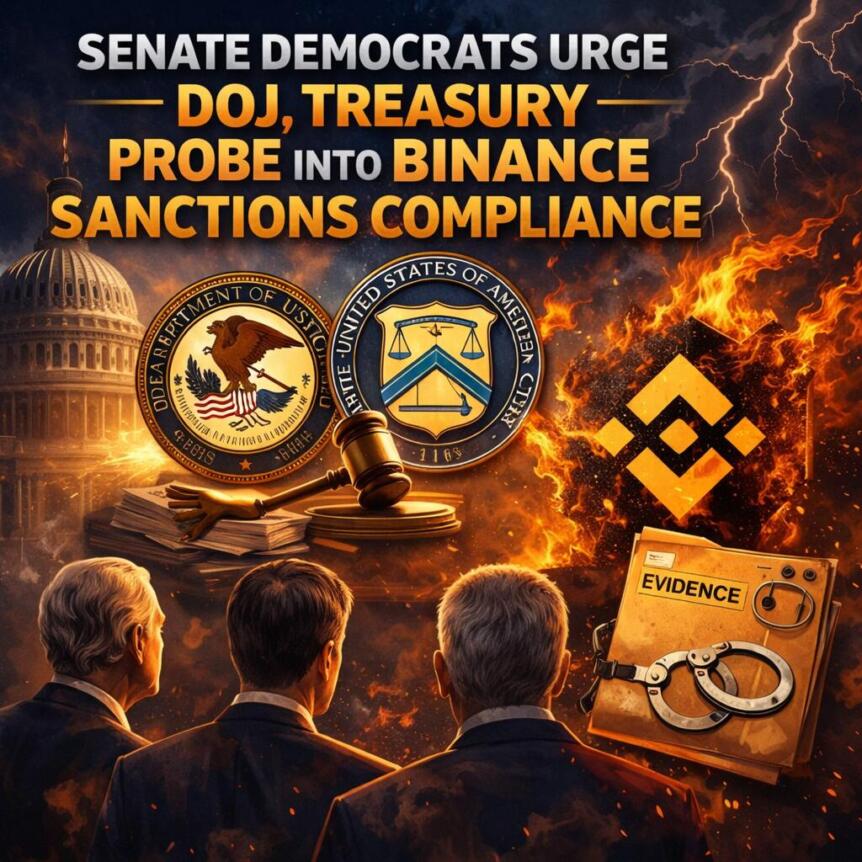
Senate Democrats have asked the U.S. DOJ and Treasury to examine whether Binance has violated U.S. sanctions and the terms of its 2023 settlement with federal authorities. The request raises fresh scrutiny of the exchange’s controls against illicit finance.
🚨NEW: Eleven Senate Banking Dems including @SenWarren, @MarkWarner, @CortezMasto, @Sen_Alsobrooks and @SenRubenGallego sent a letter to @PamBondi and @SecScottBessent urging DOJ and Treasury to investigate @binance over media reports of illicit finance activity, including…
— Eleanor Terrett (@EleanorTerrett) February 27, 2026
The letter came from eleven Democrats on the U.S. Senate Banking, Housing, and Urban Affairs Committee. It urged a comprehensive review of Binance’s compliance systems after media reports linked the platform to transactions involving Iranian entities.
Allegations of Iran-linked transactions
The senators stated that internal compliance findings at Binance suggested about $1.7 billion in digital assets moved through the exchange to Iranian actors. The letter referenced groups tied to terrorism and Iran’s security apparatus. Lawmakers said a vendor connected to Binance allegedly handled a large share of the transfers.
The letter, led by Mark Warner and signed by Ranking Member Elizabeth Warren, also claimed that Iranian users accessed more than 1,500 accounts. It further warned that Russian-linked actors may have used the platform to evade sanctions.
Senators expressed concern that Binance dismissed staff who flagged suspicious activity. They also referred to reports that the exchange lowered the collaboration with the law enforcement. They argued that such actions would be against its federal agreement.
Compliance obligations and prior settlement
In 2023, Binance pleaded guilty to charges tied to sanctions violations and anti-money laundering failures. The exchange agreed to pay more than $4 billion and accepted U.S. oversight. The settlement required stronger know-your-customer checks and sanctions screening.
Under its agreement with the Treasury’s Office of Foreign Assets Control, Binance committed to blocking prohibited transactions. Senators claimed that the reported flows to Iran would undermine those commitments. They asked regulators to confirm whether Binance maintains effective controls.
Political ties and broader risks
The letter also noted Binance’s recent business links involving Donald Trump and his family’s crypto ventures. Lawmakers cited promotion of a Trump-backed stablecoin issued by World Liberty Financial, a major investment tied to the project.
They also referenced Trump’s pardon of Binance founder Changpeng Zhao, who had pleaded guilty upon failing to implement an effective anti-money laundering program and served a four-month prison sentence.
Beyond Iran, senators pointed to Binance’s expansion in parts of the former Soviet Union and partnerships that could expose the platform to sanctions risks involving Russia. They requested responses from federal officials by March 13.