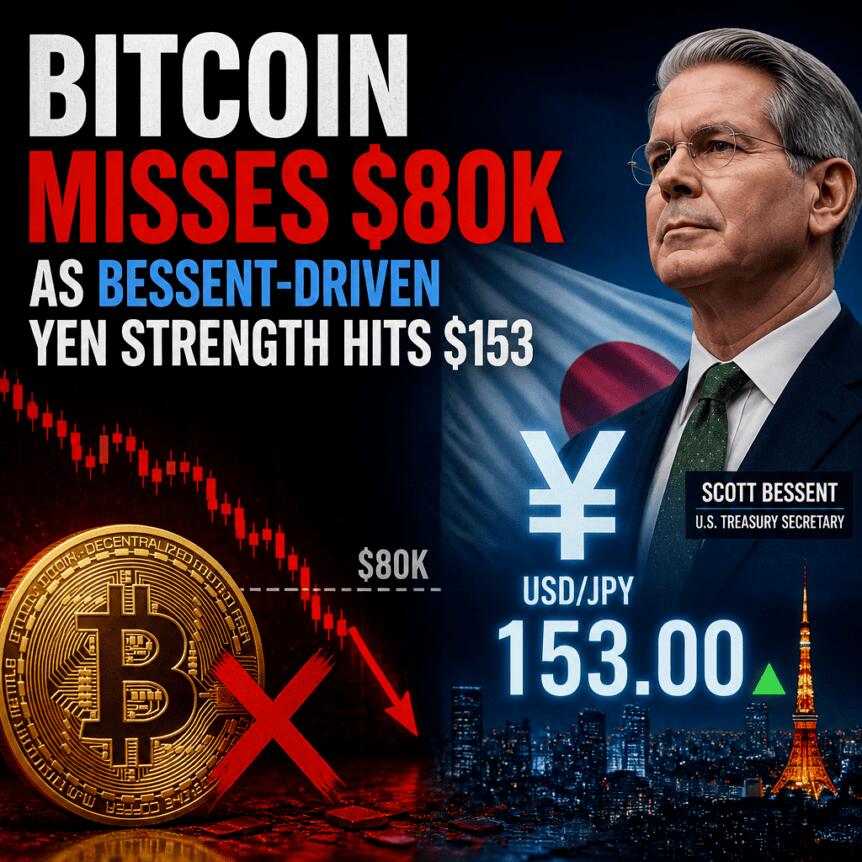
Bitcoin traded in a cautious range under $80,000 on Wednesday, weighed by a broader risk-off mood driven by escalating tensions tied to Iranian oil shipping and renewed pressure on macro liquidity conditions. At the same time, the Japanese yen strengthened sharply, keeping traders focused on the mechanics of the yen carry trade and the possibility of further currency market intervention.
Market moves unfolded as US stocks drifted lower and crude oil pushed higher after fresh US strikes on Iranian-linked oil tankers. Brent crude climbed above $101 per barrel for the first time since late July, while WTI traded above $96, according to price levels cited alongside TradingView charts.
Key takeaways
- Bitcoin struggled to regain $80,000 after a short-term bounce attempt, while BTC/USD remained roughly flat to slightly lower on the day.
- Oil’s jump—Brent above $101 and WTI above $96—added to pressure on risk assets amid US-Iran developments.
- The yen moved to its strongest level against the dollar since February, trading around 153 per USD, with yen shorts still positioned near record levels.
- Comments from US Treasury Secretary Scott Bessent revived attention on possible additional yen intervention, potentially accelerating an unwind in leveraged positions.
- Traders are also watching the Bank of Japan’s next decision, with expectations for a 0.25% rate hike on Sept. 28.
Bitcoin stalls as oil and equities soften
According to TradingView data referenced in the report, BTC/USD’s local upside attempt faded as the pair tried to retest $80,000. At the time of writing, Bitcoin was down about 0.4% on the day, signaling a lack of momentum rather than a decisive breakdown.
That hesitation tracked with weaker sentiment elsewhere. Fresh US strikes on Iranian oil tankers contributed to lower trading in US equities at the Wall Street open, while oil prices printed new three-month highs. The move in energy markets mattered for crypto largely because it reinforced the same macro mix investors often react to: geopolitical shocks, higher near-term inflation expectations, and tighter financial conditions.
Oil has been acting as a transmission channel for risk appetite this week. The article notes Brent’s surge above $101 per barrel, building on gains from the previous session, while WTI held above $96.
Yen strength returns carry-trade risks to the foreground
While oil set the tone for risk assets, the yen’s renewed strength became the centerpiece for traders watching cross-currency liquidity. The Japanese currency was cited as trading around 153 per dollar—its highest level versus the USD since February—and up significantly since early August (the report states a 6.5% rise from the start of August).
The underlying concern is the yen carry trade: when the yen strengthens, positions that borrow yen and buy higher-yielding assets can become vulnerable, forcing reductions and moving liquidity across markets. The article points back to earlier reporting that Japan and the US conducted repeated joint interventions in foreign exchange markets, which helped drive the yen higher rapidly.
That dynamic has also been complicated by speculation that Washington could limit Japan’s selling of US Treasuries as part of future intervention operations—an angle that, if true, would directly connect global reserve flows with yen liquidity.
Near-record yen short positioning raises the stakes
Wednesday’s focus intensified after Barchart flagged record yen short positioning at the start of September, citing Bloomberg data. The report says total yen shorts hovered above 5 trillion yen, a scale large enough to matter if price action forces an orderly unwind to turn into a faster scramble for exits.
In comments to Reuters, Charu Chanana, chief investment strategist at Saxo, argued that the yen’s continued climb could change the pace of de-leveraging. She noted that the carry trade may be particularly exposed because the unwind could be occurring before the Bank of Japan delivers the rate hike investors were expecting.
Chanana’s warning, as quoted in the article, was that while some yen shorts may already have been cut, positioning still appears sizable—meaning further yen gains could shift a gradual reduction in leverage into a more self-reinforcing unwind.
That matters for crypto because many traders treat liquidity conditions—especially those tied to global funding currencies like USD and JPY—as a key input for volatility and risk-taking. If leveraged positions unwind quickly, correlation spikes and sudden repricing can follow across multiple asset classes, including digital assets.
Scott Bessent renews intervention signals ahead of BOJ decision
The yen story also gained a political and policy dimension after renewed hints from US Treasury Secretary Scott Bessent. Earlier coverage cited in the article described how Bessent suggested the “door was open” to future yen intervention operations, and the current reporting says he reinforced those themes this week.
According to the Financial Times, Bessent made remarks at Southern Methodist University in Texas in which he suggested he has “asymmetric information” about how Japanese policymakers might respond if the US intervenes in the Japanese yen market. The quote, as presented in the report, framed intervention as something he can anticipate—particularly relative to traders positioned in the FX market.
These comments come alongside expectations for the Bank of Japan’s next meeting on Sept. 28. The article notes that traders are looking for a 0.25% interest-rate hike, and it also explains that the yen’s strength has been occurring while the market waits for BOJ action.
In practice, the timing is important: if intervention talk and yen strength persist while the rate decision draws near, the incentive for additional yen-short exposure may drop, while pressure to reduce carry-related leverage could rise.
For investors, the key takeaway is that Bitcoin’s lack of momentum near $80,000 is occurring in a macro environment where both geopolitical risk (via oil) and funding stress (via the yen carry trade) are moving in the same direction—toward tighter conditions for risk assets.
Traders should watch how quickly yen shorts unwind and whether Bessent’s intervention signals translate into more concrete FX-market actions, while also tracking oil’s trajectory and the lead-up to the Bank of Japan’s Sept. 28 decision, which could determine whether current volatility remains contained or escalates.