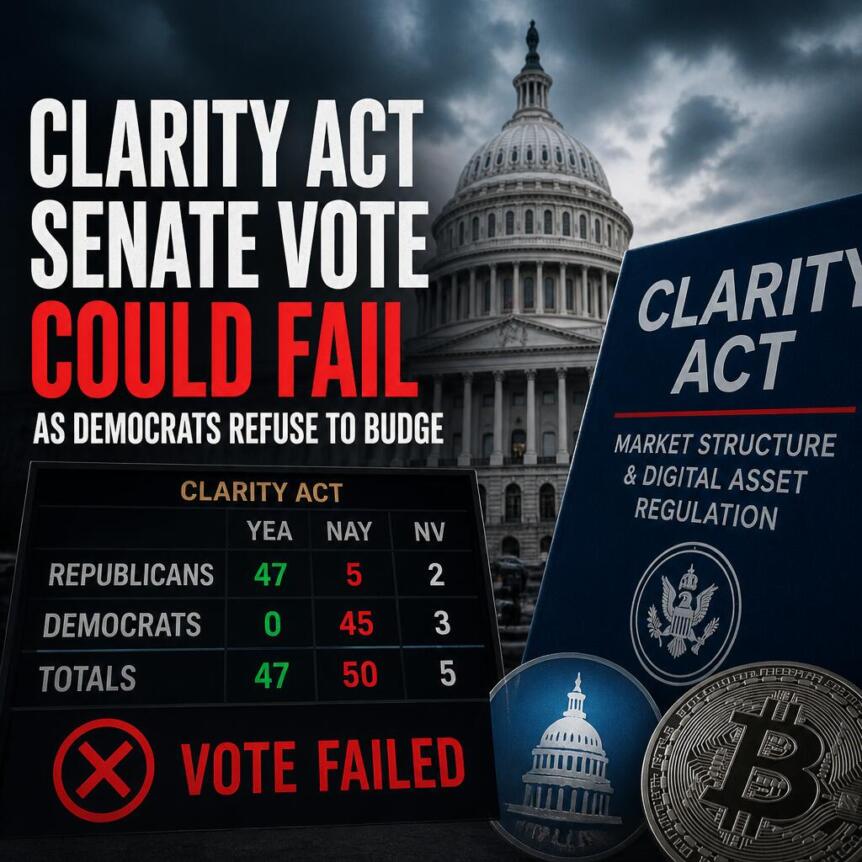
Senate negotiations over digital asset legislation remain unresolved as lawmakers prepare for a key procedural vote. The CLARITY Act faces growing uncertainty after Democratic senators signaled they would not support ending debate without further concessions. Republican leaders continue seeking enough backing before lawmakers leave Washington for the summer recess.
Democrats Signal Resistance Before Procedural Vote
Democratic senators continue coordinating their position before the expected procedural vote on the CLARITY Act. Several lawmakers insist unresolved issues require additional bipartisan negotiations before supporting cloture. Senate leaders have not announced any agreement addressing those concerns.
Punchbowl News reporter Brendan Pedersen described the current Democratic position in a post on X. He wrote, “There is a clear consensus among Senate Democrats right now that—without movement on ethics, illicit finance and stablecoin yield—a cloture vote this week on the Clarity Act will fail.” His comments reflected the latest state of negotiations before the expected vote.
Pedersen also wrote, “Democrats won’t be moved by crypto cash at this point.” That statement highlights continuing resistance despite Republican efforts to secure procedural support. The CLARITY Act therefore remains short of the bipartisan momentum needed for a successful cloture vote.
Outstanding Issues Continue to Divide Both Parties
Senate Majority Leader John Thune continues working toward a procedural vote before lawmakers begin the August recess. However, several Democratic senators argue the CLARITY Act still requires further revisions before advancing. Negotiators continue discussing ethics provisions, illicit finance safeguards, and stablecoin yield rules.
Republican lawmakers have sought Senate consideration of the legislation for several months. Current vote estimates indicate supporters still lack sufficient backing to advance debate. Negotiators continue working to resolve disagreements before the CLARITY Act reaches another procedural milestone.
One Democratic aide questioned whether negotiations could survive another political escalation before Congress returns. The aide said, “If they spend in August, it’s done.” That remark underscores concerns that campaign activity could further complicate CLARITY Act negotiations.
Senate Talks Remain Focused on Reaching Consensus
Senator Ruben Gallego questioned whether Republican negotiators were maintaining productive bipartisan discussions around the CLARITY Act. He said, “We are clearly here, trying to engage constructively.” Gallego also added, “At this point, if they’re not engaging, it’s telling me that they don’t want this to happen.”
Some Democratic lawmakers also expressed concern about political spending by crypto-backed organizations before Congress reconvenes in September. They believe additional campaign activity could further strain ongoing bipartisan discussions. Those concerns continue influencing negotiations surrounding the CLARITY Act.
Supporters of the legislation maintain that additional negotiations could still produce a workable compromise before future procedural votes. They believe remaining differences between House and Senate proposals can still be addressed through bipartisan discussions. For now, the CLARITY Act remains dependent on negotiations before any successful cloture vote can proceed.
Senate negotiations continue without a confirmed breakthrough before the expected procedural vote. The immediate future of the CLARITY Act now depends on whether bipartisan negotiators resolve outstanding disputes. Until then, Democratic resistance continues creating uncertainty over this week’s planned Senate action.