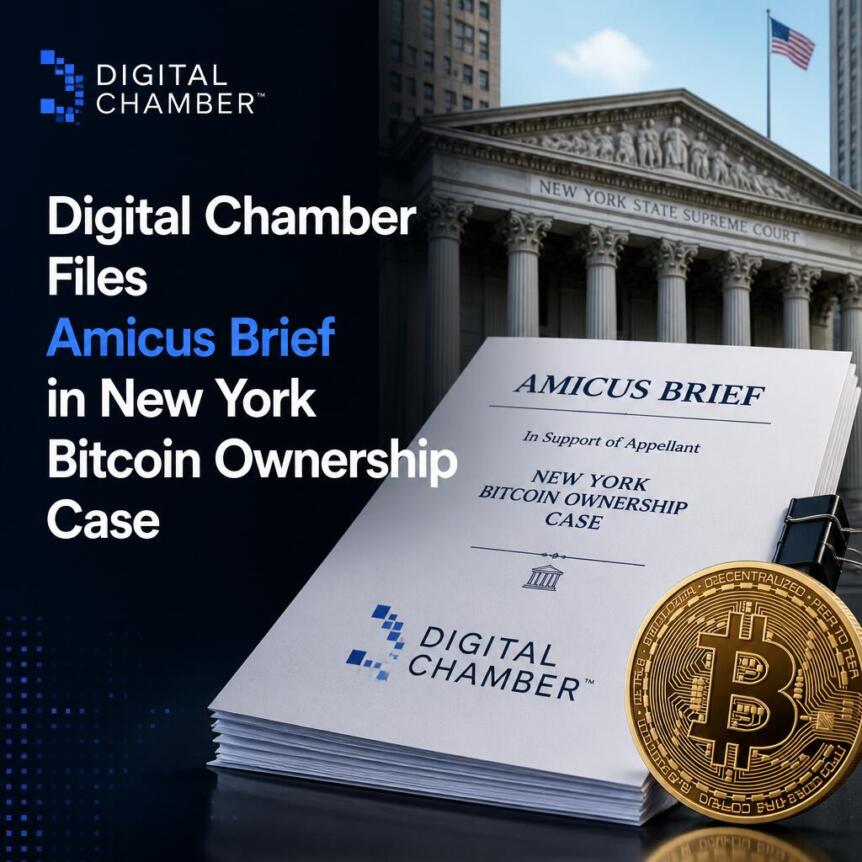
The Digital Chamber has submitted an amicus brief against a New York lawsuit asking to acquire 39,069 dormant Bitcoin wallet addresses holding an estimated 3.7 million BTC. It says the case could impair the concept of digital property rights and digital self-custody.
Digital Chamber Challenges Dormant Bitcoin Wallet Ownership Claims
The blockchain trade association issued a statement on Monday stating that such a ruling would lead to confusion over who owns digital coins in the cryptocurrency ecosystem. It said inactive self-custodied Bitcoin wallets are not abandoned property. The group said the plaintiffs’ theory “fractures fundamental principles of digital asset ownership and extends beyond the crypto market.
In the suit filed in May by the plaintiff, Noah Doe, and two Wyoming companies, the New York Supreme Court is seeking to rule that thousands of inactive Bitcoin addresses constitute abandoned property under Article 7-B of New York’s Personal Property Law. The plaintiffs are asking for ownership of the wallets, which Timechain Index, a blockchain analytics company, estimates contain approximately 3.7 million BTC valued at approximately $234 billion at today’s market values. Several wallets connected to the creator of Bitcoin, Satoshi Nakamoto, are reportedly in that list.
Blockchain Activity Undermines Dormant Wallet Ownership Claims
It is alleged that Noah Doe discovered a vulnerability that would make it impossible for some owners to access their Bitcoin holdings. He said he tried to find the owners of the wallets for over a year before his suit and subsequently granted an ownership stake in most of the challenged wallets to two Wyoming-based companies.
Opposition against the case has increased in the legal community. A so-called “John Doe 33” made this appeal to the court last week, claiming that Bitcoin addresses are data strings and not legal entities, so they cannot be sued. M&A attorney Ian R. Cohen also has sought permission to appear as amicus curiae.
As for the alleged “abandonment of many wallets,” meanwhile, blockchain activity has debunked the notion. According to recent data, at least 31 addresses mentioned in the lawsuit conducted 17,527 transactions involving BTC in June. The case has been paused until July 14, when oral arguments will be heard. Separate questions concerning ownership of rights to the Bitcoin are pending from any control over the keys required to access the Bitcoin.