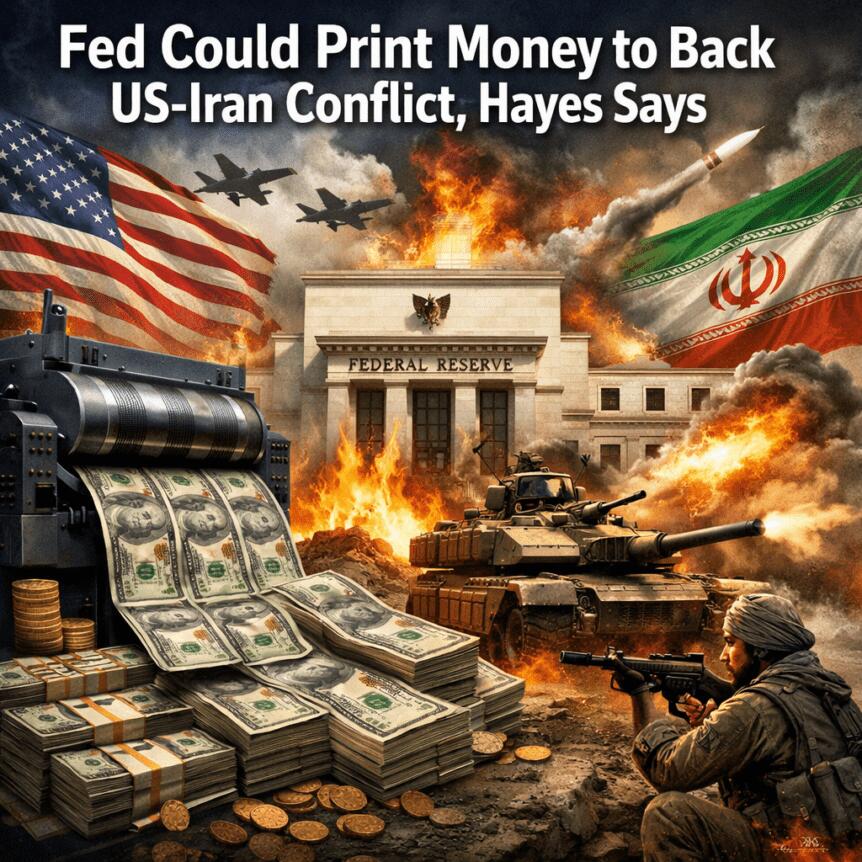
Analysts say that shifting US monetary policy could hinge on geopolitical developments in the Middle East, with crypto markets watching for signals from the Federal Reserve. BitMEX co-founder Arthur Hayes argues in a Monday blog post that American presidents have repeatedly engaged in Middle East action, and the Fed has historically responded by cutting rates or expanding the money supply to finance those campaigns. He writes that the longer an administration pursues Iran-focused objectives, the greater the likelihood the Fed will “lower the price and increase the quantity of money” to support those efforts, a pattern he sees echoed in past conflicts. Hayes cites the Gulf War of 1990, the post-9/11 wars, and the 2009 Afghan surge as episodes where monetary easing followed military action. Over the weekend, Israel and the US conducted airstrikes on Iran that killed Ali Khamenei, a development President Donald Trump has pledged to continue.
Key takeaways
- The analytically argued link between wartime financing and Fed easing suggests policy pivots could accompany geopolitical shocks, with crypto markets potentially benefiting from increased liquidity.
- Historical precursors—Gulf War (1990), the post-9/11 era, and the 2009 Afghan surge—are cited as episodes where rate cuts or aggressive money printing supported wartime aims, according to Hayes.
- The weekend strikes on Iran introduced fresh geopolitical risk, intensifying scrutiny of how policy makers balance inflation, growth, and security concerns while markets price in potential easing.
- Crypto-market chatter around “World War III” spiked on social media after the latest flare-up, though observers noted that current dynamics are not comparable to peak speculative periods in 2025.
- Hayes has floated liquidity tools such as Reserve Management Purchases and other easing measures, signaling how policymakers might adapt if macro risks escalate, a thread that dovetails with ongoing debates about liquidity in crypto markets.
Tickers mentioned: $BTC
Price impact: Positive. The piece frames geopolitical risk and potential Fed easing as supportive for crypto markets, implying upside for BTC if policy shifts materialize.
Market context: The narrative sits at the intersection of macro policy, geopolitics, and crypto liquidity. As risk sentiment shifts with geopolitical headlines, traders monitor whether Fed actions—or lack thereof—will unlock liquidity channels that typically buoy risk assets including digital currencies.
Why it matters
The episode highlights how macro policy and geopolitical trajectories can influence the behavior of crypto markets. If the Federal Reserve were to pivot toward rate cuts or quantitative easing in response to ongoing conflict dynamics, liquidity could expand and risk appetite could rise, creating a more favorable environment for digital assets like Bitcoin. The discussion also underscores the fragility of markets that are sensitive to policy signals; investors may pivot quickly in anticipation of liquidity injections or policy tightening, reinforcing the need for disciplined risk management.
For market participants, the perspective from Hayes — that policy responses to geopolitical frictions can be both reflexive and pro-cyclical for crypto — adds a layer of nuance to how traders interpret price movements. It also draws attention to liquidity tools and central-bank balance-sheet dynamics as structural drivers that could shape the next phase of the crypto cycle. While none of this guarantees a specific price path, it emphasizes that policy and geopolitics remain key variables in the crypto trading playbook.
What to watch next
- Federal Reserve communications and any signals about rate cuts or new liquidity programs, including Reserve Management Purchases.
- Developments in the Iran-Israel conflict and leadership dynamics in the region, alongside any shifts in geopolitical risk assessments.
- Bitcoin price action in response to macro news and policy signals, with attention to test levels around major milestones.
- Regulatory and institutional flows that could affect BTC-related products and overall market liquidity.
Sources & verification
- BitMEX blog: Arthur Hayes on iOS warfare and monetary policy implications — https://www.bitmex.com/blog/ios-warfare
- Cointelegraph coverage: Israel-US airstrikes on Iran and the described leadership developments — https://cointelegraph.com/news/bitcoin-recovers-to-68k-following-reported-death-of-iranian-supreme-leader
- Kobeissi Letter remark on futures and WW3 framing — https://x.com/KobeissiLetter/status/2028251687572688942
- Santiment data on World War III mentions in crypto discourse — https://x.com/santimentfeed/status/2028285118553493784
- Jane Street discussion on Bitcoin price narratives — https://magazine.cointelegraph.com/bitcoin-price-manipulation-jane-street-bitcoiners-debate-cointelegraph/
Market reaction and key details
The central thread running through this discourse is the tension between geopolitics and macro policy and how that tension spills into crypto markets. Hayes’ framing rests on a historical pattern: wartime actions tend to be financed through monetary easing, which, in turn, broadens liquidity and tends to support assets that thrive on risk-taking. In the current moment, observers watch for any official signal from the Fed that policy might shift toward easing, a move that could catalyze a broader crypto rally if liquidity taps are opened.
Beyond the macro angle, the conversation threads in public commentary include market data points such as marginal moves in stock futures and shifts in energy prices, which can influence risk appetite across asset classes. As noted in related analyses, Bitcoin and other crypto narratives have at times mirrored shifts in traditional markets, but the relationship remains imperfect and highly context-dependent. The social-media chatter around WW3 underscores how fast sentiment can pivot on headlines, even if the underlying price action is more nuanced than headline narratives suggest.
Notably, the discourse extends to liquidity tools and policy mechanisms that could shape the trajectory of crypto markets. Hayes has previously floated ideas like Reserve Management Purchases as a potential tool to soothe markets, and he has linked these constructs to broader money-printing dynamics that could accelerate crypto adoption during periods of policy stress. In parallel, market observers have debated whether large participants and market makers have the capacity to influence price through strategic liquidity provisioning, a theme that has featured in discussions around Jane Street and other firms in analyses like the one titled “Would Bitcoin really be at $200K if not for Jane Street? Trade Secrets.”
As with any geopolitical and macro narrative, investors should command a cautious, context-aware approach. The next few weeks could deliver clarity on the Fed’s stance, the evolution of the conflict in the Middle East, and the way crypto markets weigh fresh liquidity signals against ongoing macro uncertainties. While Hayes’ framework provides a lens to interpret potential policy responses, it is one of many factors driving price discovery in Bitcoin and other digital assets.