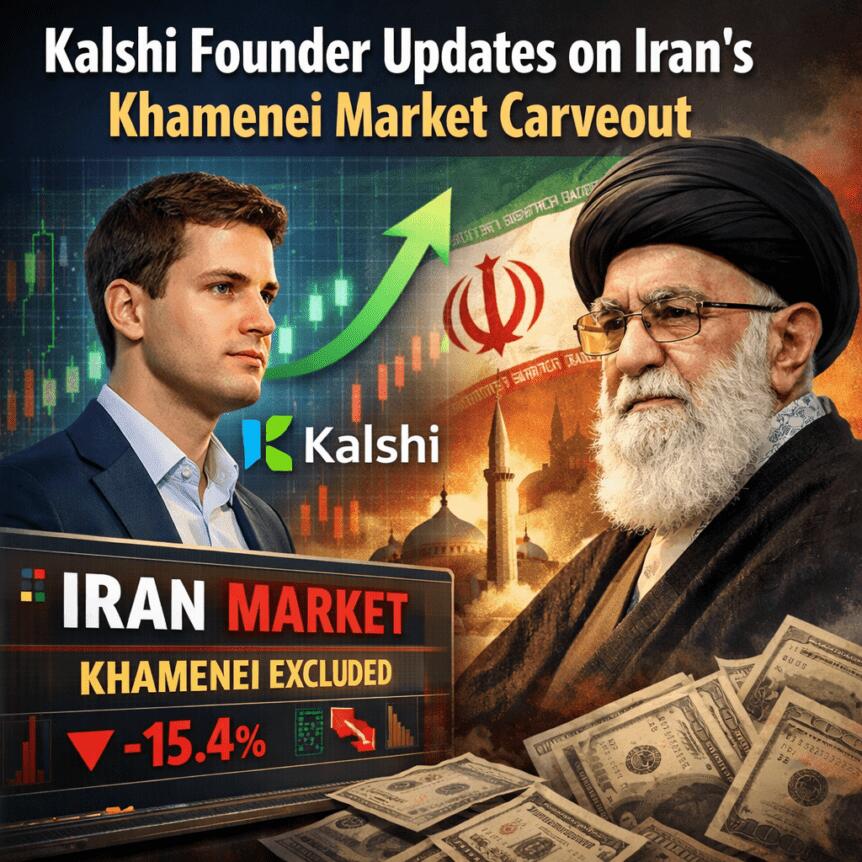
Prediction-market operator Kalshi voided certain contracts tied to the death of Iran’s top leader after his passing was confirmed, saying it designed safeguards to prevent profits from outcomes involving death. The death, reported by Iranian state media early Sunday after an attack by Israel and the United States, prompted traders to move into markets such as “Ali Khamenei out as Supreme Leader.” Co-founder Tarek Mansour explained on X that the platform does not list markets directly connected to death and that the rules were applied to prevent profit from such outcomes. Kalshi has since reimbursed fees for the affected market and set settlements according to the last-traded price prior to the death event.
In the platform’s own words, the policy is clear and longstanding: death-related markets are not listed, and mechanisms exist to deter profit from catastrophic events. Kalshi reiterated this stance on Saturday, stressing that the death carveout was embedded in the market’s rules. Still, the decision generated backlash online, with users arguing that the platform was curbing potential profits. The linked market for the event—“Ali Khamenei out as Supreme Leader”—remains available only under the clarified rules, and the refunds reflect Kalshi’s effort to close the episode with financial fairness for participants who were in before and after the event.
The exchange said it would reimburse all fees for participants in the death-market and would settle traders who held bets based on the last-traded price before the death. Those who opened positions after the death were also reimbursed, with the difference between the entry price and the last-traded price returned. The policy has become a focal point for debates about how prediction markets should respond to geopolitical turnarounds and sensitive events, highlighting tensions between user expectations and platform safety nets.
The broader conversation around political and geopolitical markets extended beyond Kalshi. Earlier coverage highlighted a related issue on rival platforms, where questions about insider trading and the surfacing of sensitive information prompted scrutiny. For instance, a February episode on Polymarket drew attention after six traders netted about $1 million on bets about a U.S. strike on Iran, with wallets created that month and some positions filled just hours before explosions in Tehran, according to Bloomberg. Among other threads, the narrative tied into comments from political figures who criticized information handling and raised questions about the integrity of event-driven markets.
Kalshi’s position underscores a recurring tension in prediction markets: the desire for liquidity and profitability versus safeguards that prevent exploitation of real-world events. The company’s co-founder, in his post on X, framed the approach as a principled stance to prevent profit from death, a line that some traders interpret as protective discipline and others as a restraint on market opportunities. The platform’s ongoing emphasis on rule-based conduct suggests a continued commitment to transparency around how markets are structured and settled, including how post-event price dynamics influence refunds and settlements.
In parallel coverage, a briefing about related insider-trading concerns on Polymarket signaled how geopolitical volatility can intensify debate around predictive trading. The February surge in bets around a potential strike on Iran, coupled with the rapid wallet activity observed by analysts, prompted calls for enhanced scrutiny of how information flows influence on-chain markets. While Kalshi’s policy remains explicit about death-related markets, the broader ecosystem continues to wrestle with questions about fairness, transparency, and the potential for speculative activity to intersect with real-world events in unpredictable ways. The discussions around those questions—spurred by both Kalshi’s decision and the Polymarket episode—reflect the evolving regulatory and community norms governing digital-age prediction platforms.
Key takeaways
- Kalshi voided the “Ali Khamenei out as Supreme Leader” market after confirmation of the death, applying rules designed to prevent profits tied to death-related outcomes.
- The platform reimbursed all fees for the affected market and settled positions using the last-traded price prior to the death event.
- Traders who opened positions after the death were refunded the difference between entry prices and the last-traded price, according to Kalshi’s announcements.
- The death-market policy is described as long-standing, with the rules clearly stated in the market’s framework, yet the decision drew online backlash from users who felt profits were being curtailed.
- Geopolitical event-driven markets on other platforms, such as Polymarket, have faced insider-trading scrutiny and rapid, market-driven activity around sensitive events, illustrating broader tensions in the space.
Sentiment: Neutral
Price impact: Neutral. The refunds and settlement mechanics aimed to neutralize profit opportunities tied to the event, with no evidence of material market disruption described in the sources.
Market context: The episode sits within a broader pattern of how prediction markets respond to geopolitical shocks, balancing user demand for tradable exposure with safeguards to deter exploitation of real-world events. As regulators and platforms scrutinize on-chain and event-based markets, governance decisions like Kalshi’s illustrate how policy design shapes liquidity, risk, and user trust across the ecosystem.
Why it matters
The decision to void a death-related market and refund participants highlights a core challenge for modern prediction platforms: protecting users while maintaining transparent, rule-based operations around volatile, high-stakes events. For traders, this episode reinforces that markets anchored to real-world outcomes can trigger rapid policy shifts, especially when outcomes touch sensitive or destabilizing events. The policy keeps the platform aligned with ethical considerations that discourage profiting from human tragedy, but it also raises questions about the breadth of such rules and how they apply to future situations.
From the builders’ perspective, Kalshi’s stance demonstrates how market design can embed safeguards that reduce mispricing risk and potential manipulation. The explicit rule set—paired with a clear post-event settlement framework—provides a reproducible approach for handling similar events in the future. For users, the episode underscores the importance of understanding the platform’s rules before placing bets, particularly in markets connected to political or humanitarian events that may spiral into unforeseen consequences.
For the broader crypto and on-chain ecosystem, the episode sits at the intersection of liquidity, risk sentiment, and regulatory scrutiny. It accents the ongoing debate about how decentralized or semi-decentralized prediction markets should operate when real-world events intersect with volatile capital flows. As the market landscape evolves, stakeholders will watch for how platforms balance openness and safety, how settlements are executed in edge cases, and how governance processes respond to investor expectations during periods of geopolitical flux.
What to watch next
- Kalshi’s continued enforcement and clarification of its death-market policy, including any updates to the market’s rules or post-event settlement practices.
- Regulatory or community responses to the incident, and whether other markets adjust their own death-related or sensitive-event rules in response.
- Ongoing scrutiny of insider-trading allegations on prediction markets, particularly around geopolitical events, and what disclosures or safeguards platforms adopt.
- Developments around the specific market page for this event (kxkhameneiout) and any subsequent disclosures from Kalshi about settlements or future similar markets.
- Further analysis or reports on how price discovery and liquidity behave in event-driven markets during geopolitical shocks, including comparisons with rival platforms.
Sources & verification
- Kalshi co-founder Tarek Mansour’s statement on X regarding the death-market policy and refunds: https://x.com/mansourtarek_/status/2027924240926638323
- Kalshi’s policy on death markets and the stated carveout in market rules: https://x.com/Kalshi/status/2027773190420718034
- Iranian state media reporting the death of Ayatollah Ali Khamenei; referenced in reporting by AP News: https://apnews.com/article/iran-supreme-leader-ayatollah-ali-khamenei-dead-5b13b69b708c4ed38e8f95f5fb41a597
- Kalshi market page for the event (kxkhameneiout/ali-khamenei-out/kxkhameneiout-akha): https://kalshi.com/markets/kxkhameneiout/ali-khamenei-out/kxkhameneiout-akha
- Bloomberg coverage of Polymarket’s activity around Iran-related bets: https://www.bloomberg.com/news/articles/2026-02-28/polymarket-iran-bets-hit-529-million-as-new-wallets-draw-notice
Kalshi’s death-market decision and its implications
Kalshi faced a moment of policy clarity as it acted to void a market tied to the death of a major political figure and to reorganize post-event settlements. The company’s leadership underscored that markets framing fatal outcomes were never intended to function as profit channels, reinforcing a boundary around event-driven contracts that hinge on real-world violence or loss. The decision to reimburse all fees for the affected market and to settle participants using the last-traded price prior to the event reflects a deliberate approach to minimize financial risk for users while upholding a principled rule set. In parallel, the company reaffirmed the rule that markets do not list death-related outcomes, a position that has implications for how the platform will handle similar events in the future and how users should approach these markets going forward.
From a governance perspective, the episode demonstrates the importance of transparent disclosures and timely communication with users. By publicizing the policy and the settlement approach, Kalshi aims to maintain trust and deter opportunistic trading around sensitive developments. For participants, the refunds and price-based settlements provide a defined path for recourse when the market design encounters unforeseen real-world triggers. For observers and analysts, the event serves as a case study in how prediction markets navigate the delicate balance between liquidity and ethical boundaries, and how this balance shapes the broader market’s resilience amid geopolitical tension.
Looking ahead, industry watchers will be watching for how Kalshi and other platforms articulate any updates to their market rules, how they monitor for potential rule violations in edge-case scenarios, and how regulators respond to the increasing convergence of finance with geopolitics in the digital trading space. The dialogue surrounding dead-man markets, insider trading concerns, and the integrity of price discovery in crisis moments is likely to intensify as platforms refine their policies and governance practices in the months ahead.