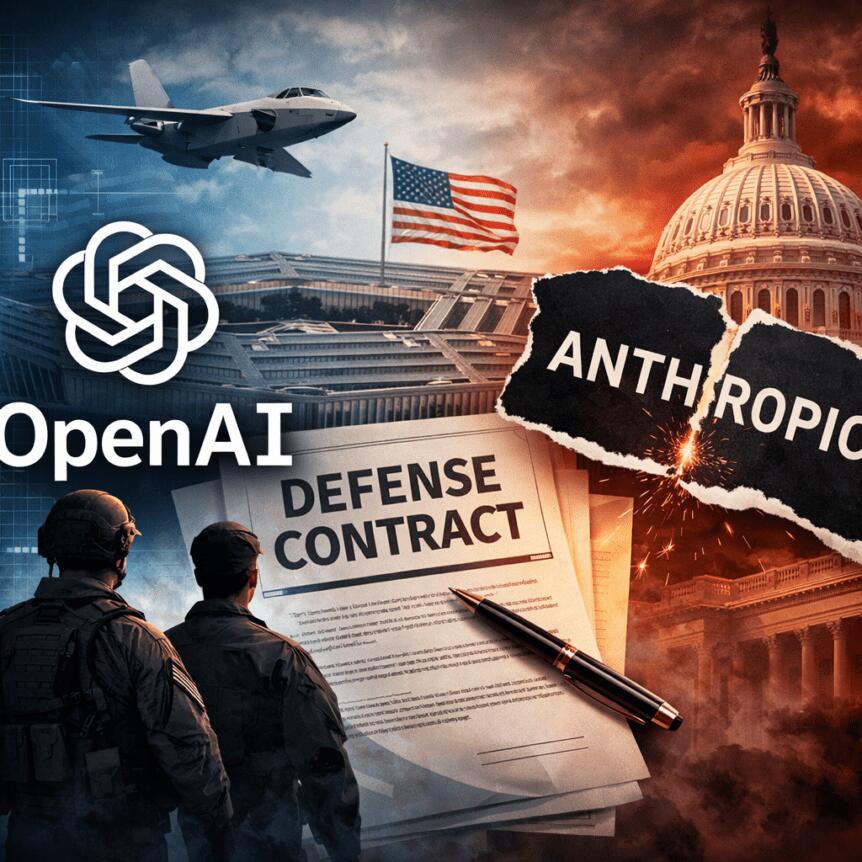
OpenAI has secured a deal to run its AI models on the Pentagon’s classified network, a move announced by OpenAI CEO Sam Altman in a late Friday post on X. The arrangement signals a formal step toward embedding next-generation AI within sensitive military infrastructure, framed by assurances of safety and governance that align with the company’s operating limits. Altman’s message described the department’s approach as one that respects safety guardrails and is willing to work within the company’s boundaries, underscoring a methodical path from civilian deployment to classified environments. The timing places OpenAI at the center of a broader debate about how public institutions should harness artificial intelligence without compromising civil liberties or operational safety, particularly in defense contexts.
The news comes as the White House directs federal agencies to halt use of Anthropic’s technology, initiating a six-month transition for agencies already relying on its systems. The policy demonstrates the administration’s intent to tighten oversight over AI tools used across government while still leaving room for carefully orchestrated, safety-conscious deployments. The juxtaposition between a Pentagon-backed integration and a nationwide pause on a rival platform highlights a government-wide reckoning about how, where, and under what safeguards AI technologies should operate in sensitive domains.
Altman’s remarks emphasized a cautious but constructive stance toward national-security applications. He framed the OpenAI arrangement as one that prioritizes safety while allowing access to powerful capabilities, an argument that aligns with ongoing discussions about responsible AI use in government networks. The Defense Department’s approach—favoring controlled access and rigorous governance—reflects a broader policy impulse to build operational safety into deployments that could otherwise accelerate where and how AI informs critical decisions. The public signaling from both sides suggests a model in which collaboration with defense entities proceeds under strict compliance frameworks rather than broad, unfiltered usage.
Within this regulatory and political backdrop, Anthropic’s situation remains a focal point. The company had been the first AI lab to deploy models across the Pentagon’s classified environment under a $200 million contract signed in July. Negotiations reportedly collapsed after Anthropic sought assurances that its software would not enable autonomous weapons or domestic mass surveillance. The Defense Department, by contrast, insisted that the technology remain available for all lawful military purposes, a stance designed to preserve flexibility for defense needs while maintaining safeguards. The divergence illustrates the delicate balance between enabling cutting-edge capabilities and enforcing guardrails that align with national security and civil-liberties considerations.
Anthropic later stated it was “deeply saddened” by the designation and signaled its intention to challenge the decision in court. The move, if upheld, could set a significant precedent affecting how American technology firms negotiate with government agencies as political scrutiny of AI partnerships intensifies. OpenAI, for its part, has indicated it maintains similar restrictions and has written them into its own agreement framework. Altman noted that OpenAI prohibits domestic mass surveillance and requires human accountability in decisions involving the use of force, including automated weapons systems. These provisions are meant to align with the government’s expectations for responsible AI use in sensitive operations, even as the military explores deeper integration of AI tools into its workflows.
Public reaction to the developments has been mixed. Some observers on social platforms questioned the trajectory of AI governance and the implications for innovation. The discussion touches on broader concerns about how security and civil liberties can be reconciled with the speed and scale of AI deployment in governmental and defense contexts. Nonetheless, the core takeaway is clear: the government is actively experimenting with AI in national-security spaces while simultaneously imposing guardrails to prevent misuse, with the outcomes likely to shape future procurement and collaboration across the tech sector.
Altman’s comments reiterated that OpenAI’s restrictions include a prohibition on domestic mass surveillance and a requirement for human oversight in decisions involving force, including automated weapons systems. Those commitments are framed as prerequisites for access to classified environments, signaling a governance model that seeks to harmonize the power of large-scale AI models with the safeguards demanded by sensitive operations. The broader trajectory suggests a sustained interest among policymakers and defense stakeholders in harnessing AI’s benefits while maintaining tight oversight to prevent overreach or misuse. As this enters a phase of practical implementation, both government agencies and tech providers will be measured against their ability to maintain safety, transparency, and accountability in high-stakes settings.
The unfolding narrative also underscores how procurement and policy decisions around AI will influence the technology’s broader ecosystem. If the Pentagon’s experiments with OpenAI’s models within classified networks prove scalable and secure, they could set a template for future collaborations that blend cutting-edge AI with rigorous governance, a model likely to ripple into adjacent industries—including those exploring AI-assisted analytics and blockchain-based governance mechanisms. At the same time, the Anthropic episode demonstrates how这样 procurement negotiations can hinge on explicit guarantees regarding weaponization and surveillance—an issue that could shape the terms under which startups and incumbents pursue federal contracts.
In parallel, the public discourse around AI policy continues to evolve, with lawmakers and regulators watching closely how private firms respond to national-security demands. The outcome of Anthropic’s intended legal challenge could influence the negotiating playbook for future government partnerships, potentially affecting how terms are drafted, how risk is allocated, and how compliance is verified across different agencies. The OpenAI-aided deployment inside the Pentagon’s classified network remains a test case for balancing the speed and utility of AI with the accountability and safety constraints that define its most sensitive applications.
As the regulatory landscape continues to shift, many in the tech community will be watching for how these developments crystallize into concrete practice—how assessments of risk, security protocols, and governance standards evolve in next-generation AI deployments. The interplay between aggressive capability development and deliberate risk containment is now a central feature of strategic technology planning, with implications that extend beyond defense to other sectors that rely on AI for decision-making, data analysis, and critical operations. The coming months will reveal whether the OpenAI-DoD collaboration can serve as a durable model for secure, responsible AI integration within the state’s most sensitive enclaves.
OpenAI’s late-Friday X post framing the Pentagon deployment, and the Defense Department’s safety-oriented stance toward Anthropic, anchor the narrative in primary statements. The Truth Social post attributed to President Trump further contextualizes the political climate surrounding federal AI policy. On Anthropic’s side, the company’s official statement provides the formal counterpoint to the designation and its legal trajectory. Together, these sources outline a multi-faceted landscape where national security, civil liberties, and commercial interests intersect in real time.