New settlement corridors aim to simplify enterprise treasury and stablecoin flows
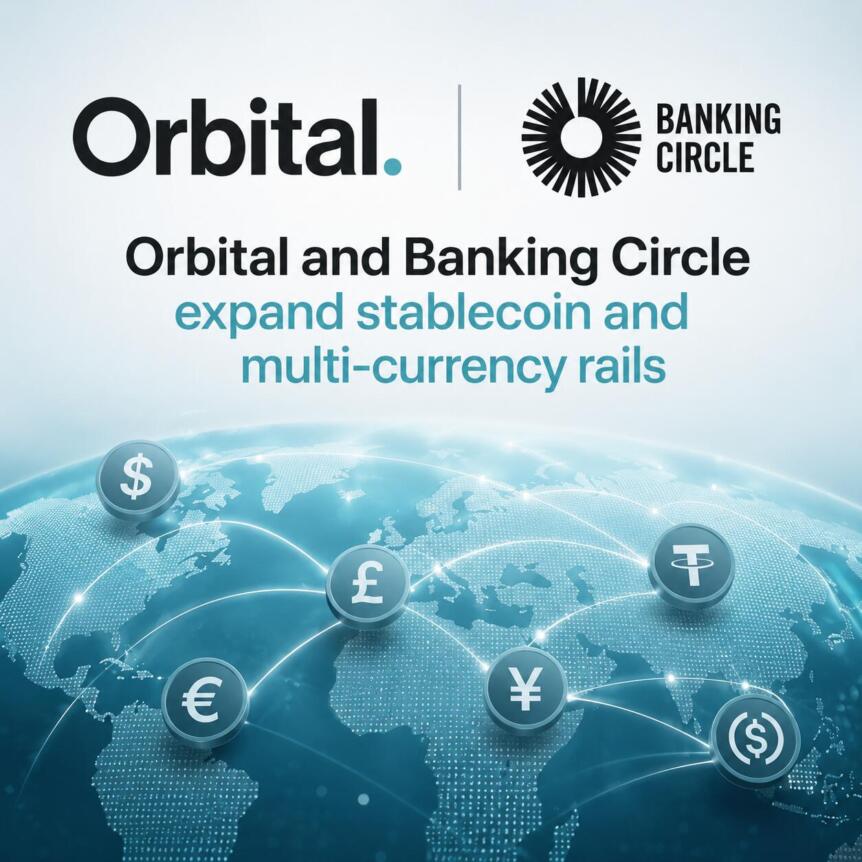
Orbital, a payment orchestration platform that integrates traditional and digital asset rails, has announced a partnership with Luxembourg-based Banking Circle to broaden its settlement footprint. The agreement adds client-named multi-currency virtual accounts for selected Nordic and Central European currencies and plans to extend coverage to Swiss franc and Australian dollar corridors. The move targets enterprises expanding in regions where local currency settlement has previously required pooled accounts or multiple banking relationships.
Orbital’s platform combines fiat and stablecoin payments, and the Banking Circle tie-up is designed to give customers more direct access to local clearing schemes and named virtual IBANs in markets that have been harder to reach from a single provider. By routing fiat, FX and stablecoin flows through a single interface, Orbital says clients can improve settlement transparency and reconcile incoming funds more easily.
What the partnership delivers
Under the arrangement, the first tranche of new corridors will include Danish krone (DKK), Swedish krona (SEK) and Hungarian forint (HUF), with Swiss franc (CHF) and Australian dollar (AUD) to follow. For enterprises, this means the ability to hold and settle local currencies using named virtual accounts rather than omnibus or pooled wallets, subject to licensing and regulatory approvals.
Key operational benefits include:
- Client-named virtual IBANs in additional currencies, improving counterparty transparency.
- Direct access to local and international payment rails, helping streamline reconciliation and reporting.
- Simplified routing for fiat, FX and stablecoin flows through a single orchestration layer, potentially reducing manual treasury work.
Banking Circle, regulated in Luxembourg, provides access to European clearing schemes and local payment networks through its branch and subsidiary footprint. The bank will also provide safeguarding arrangements compliant with the regulatory requirements that apply to Orbital’s electronic money and API licences.
Why this matters for enterprise treasury and stablecoin adoption
Enterprises operating across multiple jurisdictions often face a patchwork of banking relationships, each with their own account structures and compliance processes. That complexity is amplified when incorporating stablecoins into corporate payments and FX workflows. Named virtual accounts reduce reconciliation friction because inbound payments land under the corporate counterparty’s name rather than an omnibus provider account, which simplifies creditor communications and ledger matching.
For businesses that want to move between fiat and stablecoins — for example, using stablecoins as an on‑off ramp or for cross-border settlement — having regulated fiat corridors and a single orchestration interface can lower operational barriers. It can also help finance teams maintain clearer audit trails, supporting the compliance and reporting demands arising from cross-border activity and the evolving regulatory focus on digital assets.
Industry context and competitive dynamics
The partnership is consistent with a broader industry trend: fintechs and payment orchestration platforms are increasingly building deeper bank partnerships to deliver localized rails without needing to become banks themselves. Banks such as Banking Circle position themselves as modern correspondent banks, offering multi-currency accounts and virtual IBANs to payments firms and fintechs. For orchestration platforms like Orbital, these arrangements expand the set of regulated settlement options available to corporate clients while preserving the platform’s role as the central payments hub.
That said, the value proposition depends on enterprise demand for named local accounts and the ability of platforms to integrate those accounts into treasury, FX and stablecoin workflows. Large corporates with sophisticated treasury operations are most likely to adopt these capabilities first, while smaller firms may still rely on pooled structures or third-party payout providers.
Regulatory and operational caveats
Several caveats will shape how quickly enterprises can leverage the new corridors. First, availability is subject to licensing and local legal requirements; not all services will be offered universally at launch. Second, stablecoin regulatory frameworks remain in flux in many jurisdictions, which could affect product functionality and compliance obligations.
Operational risk factors include custody and safeguarding arrangements around fiat and digital assets, third-party dependencies for local clearing, and the potential need for additional compliance checks in cross-border flows. Orbital and Banking Circle both point to regulatory oversight and safeguarding as part of the commercial offering, but enterprises will still need to perform due diligence to ensure the solution aligns with their risk and compliance policies.
Outlook
The collaboration expands the toolkit available to corporates seeking to combine fiat and stablecoin rails in a regulated manner. For treasury teams operating across the Nordics, Central Europe, Switzerland and Australia, client-named virtual accounts could materially simplify reconciliation and counterparty transparency. However, broad uptake will depend on how quickly the partners can roll out lanes, how enterprises adapt their treasury systems, and how regulators define stablecoin and cross-border payment obligations going forward.
In the near term, expect this type of bank-platform pairing to be pursued by other orchestration providers as they compete to offer comprehensive, regulated on- and off-ramps for digital assets alongside conventional payment services.