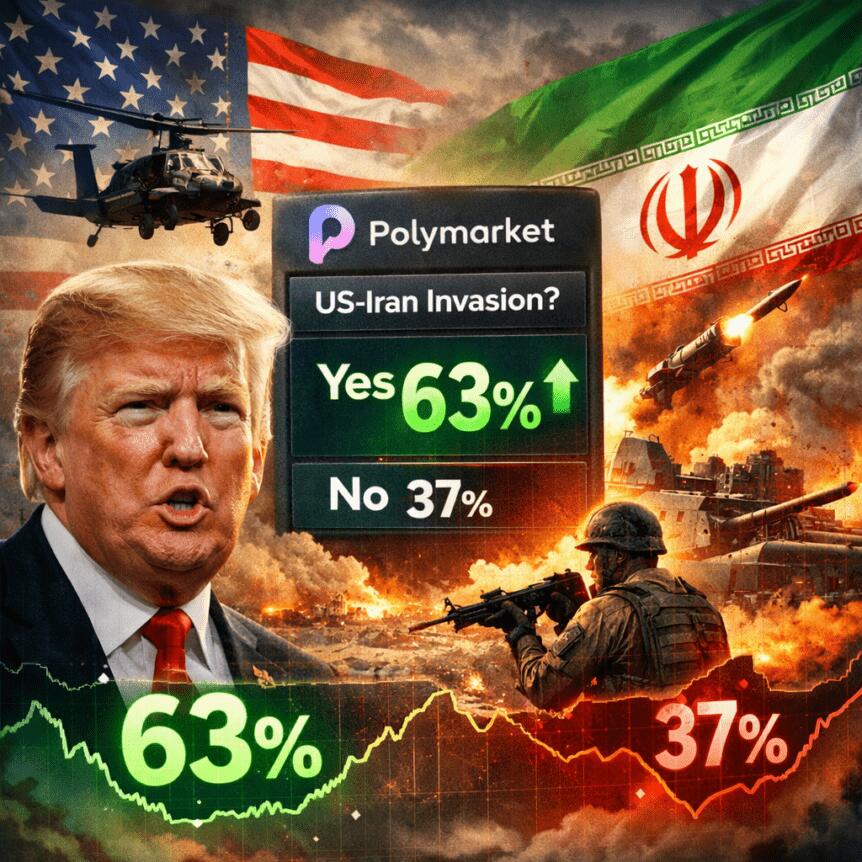
The odds of a potential U.S. invasion of Iran spiked on the Polymarket prediction market to 63% on Sunday, driven by recent remarks from President Donald Trump and ongoing regional tensions. Polymarket data show the odds rising to this level as volume on the contract reached roughly $3.74 million at the time of publication. The market had previously touched a high near 68% on March 29, a level that reflected elevated risk in the region amid a U.S. troop buildup and chatter about potential moves against Kharg Island, a key Iranian oil shipping hub.
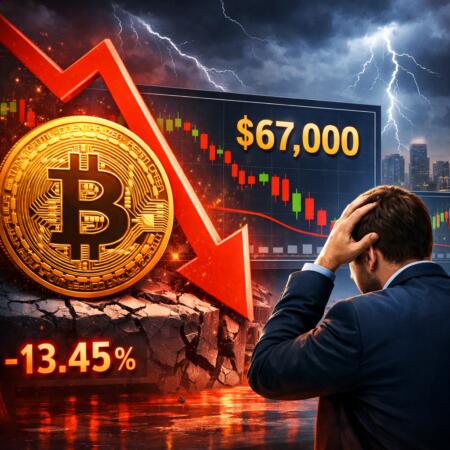
Markets also reacted to political signals in the shorter term. On Tuesday, after Trump suggested the U.S. might withdraw from Iran within two to three weeks, Bitcoin climbed about 2.6% and the S&P 500 index gained around 2.9%. Yet the latest tweet from Trump on Sunday presented a sharper and more aggressive stance, which some traders and analysts described as a reversal that injected renewed uncertainty into risk assets. Bitcoin, by the time of observation, hovered near the $67,500 area, with price action showing little sustained upside beyond that initial knee-jerk move.
“There will be nothing like it! Open the fuckin’ strait, you crazy bastards, or you’ll be living in hell,”
That was Trump’s late-week post on Truth Social, which the market quickly digested alongside the broader geopolitical backdrop. The exchange between flaring rhetoric and cautious downside risk has left traders trying to parse what comes next for a market that remains highly sensitive to geopolitical headlines and policy signals. Brent crude oil, a closely watched barometer of energy risk and sanction dynamics, remained elevated, closing the week above $109 per barrel as markets prepared to resume trading after the Easter break.
The episode also drew a chorus of commentary from economists and market observers about the risks of escalating conflict. Economist Peter Schiff criticized the tone of the rhetoric, arguing that threatening civilian infrastructure is counterproductive and risks undermining credibility in negotiations. “I wish Trump would stop threatening Iranian civilian infrastructure. It’s a lose-lose for us: backing down hurts his negotiating credibility,” Schiff said, noting that escalation could intensify regional tensions and complicate U.S. relations. Peter McCormack, a Bitcoin-focused podcaster, echoed the sense of alarm, calling the development “wild” in response to the latest exchange.
The broader market backdrop remains fragile as investors weigh the odds of conflict against potential economic backlash, including energy flows and sanctions dynamics. On the price front, Bitcoin’s response to political headlines has become a focal point for risk assets, with traders tracking both reactionary moves and longer-term narrative shifts around crypto as a hedging or speculative instrument in times of geopolitical stress. Data from TradingView indicated BTC’s price hovered around the $67,500 level in the immediate aftermath of the latest developments, signaling a cautious stance rather than a decisive breakout.
Key takeaways
- The Polymarket odds of a U.S. invasion of Iran before 2027 rose to 63% on Sunday, with roughly $3.74 million in volume, reflecting elevated political risk pricing in crypto markets.
- Bitcoin briefly surged about 2.6% in reaction to a possible withdrawal timeline for Iran, while the S&P 500 climbed around 2.9% on the same backdrop before later stabilizing.
- The latest Trump post on Truth Social injected renewed uncertainty, illustrating how mixed signals from political leadership can keep risk assets tethered to headlines rather than fundamentals.
- Oil markets remain tense, with Brent crude trading above $109 per barrel as markets digest the potential for sanctions, supply disruptions, and broader geopolitical spillovers.
- Market commentary from economists and crypto voices underscores the risk: rhetoric can move prices in the near term, but the sustainability of moves depends on policy actions and actual conflict dynamics.
Polymarket, risk pricing and the geopolitical lens
At the heart of the episode is how prediction markets like Polymarket are used as a barometer for risk appetite. The 63% odds figure, while not a forecast of certainty, signals that a non-trivial share of participants assign a meaningful probability to a U.S. military scenario in the coming years. The volume around $3.7 million demonstrates substantial speculative activity tied to a geopolitical event with potentially outsized macro consequences. Historically, such markets can swing in response to rapid-fire news, but they also tend to reflect the evolving balance sheets of risk: the more uncertain the horizon, the higher the premium on hedges and bets that mirror that probability spectrum.
Crucially, the odds move alongside the broader narrative around U.S. policy toward Iran, including troop positioning and statements about potential targets. The March 29 peak around 68% is a reminder that even among risk-averse investors, spikes can occur when the threat of escalation appears tangible. For traders in crypto markets, these predictions are less about a direct exposure to geopolitical conflict and more about the spillover effects on risk sentiment, liquidity, and demand for assets perceived as hedges or risk-on plays depending on the narrative driving headlines.
Markets in motion: crypto, equities and energy under the same stress test
The immediate price response in Bitcoin and equities underscored a familiar pattern: time-sensitive headlines can trigger quick moves in risk assets, followed by a reversion as events unfold or as clarity improves. The Tuesday move—BTC up around 2.6% and the S&P 500 rising roughly 2.9%—illustrates how a potential de-escalation signal can momentarily ease risk concerns. But the subsequent Sunday post, with a more aggressive stance, reintroduced volatility into the system, highlighting the fragility of market positioning in periods of mixed signals.
On the energy front, Brent crude’s endurance above $109 per barrel points to a global energy backdrop that could compound macro risk if the Iran situation intensifies. In a market where oil, sanctions policy, and military postures are intertwining factors, investors are left weighing how any disruption to Iranian oil flows could ripple through inflation expectations, central-bank policy assumptions, and risk asset valuations.
Beyond headlines, observers have underscored a broader narrative: geopolitical risk remains a dominant variable in crypto market discourse. While Bitcoin has shown resilience as a non-sovereign asset with a potential appeal as a hedge in turbulent times, the asset’s price dynamics in relation to conflict-related risk are far from straightforward. The current episode reinforces the need for readers to monitor not just the price channel of BTC, but the evolving policy environment, sanctions posture, and the timing of any real military or diplomatic moves that could alter the market’s risk calculus.
Related reading: Polymarket backlash and market adjustments, and earlier coverage of Trump signals on withdrawal. For readers interested in the energy angle, a look at the Iranian mining sector’s regulatory climate provides additional context to how policy shifts can ripple through both crypto and traditional markets.
As the situation unfolds, investors should watch how the administration frames its next steps and how markets price in both the probability of conflict and the likelihood of de-escalation. The coming days will be telling for whether risk appetite recovers on any signs of restraint or remains subdued on the prospect of renewed tensions.
What remains uncertain is how much of the current price action reflects genuine strategic shifts versus the amplification of narratives on social and prediction markets. Readers should stay tuned to official policy updates, macro data releases, and ongoing market commentary to gauge whether the current episode marks a temporary disturbance or the beginning of a longer, more consequential cycle for crypto, equities, and energy markets.