Bitcoin’s purpose and value proposition are once again under the microscope as veteran crypto commentator Ran Neuner weighs the asset’s enduring narrative. In a recent Cointelegraph interview, Neuner candidly questions Bitcoin’s core identity, admitting he struggles to articulate a clear reason for people to buy it at this moment.
“I don’t know how to answer that question. That’s the problem,” he said, underscoring what he describes as an ongoing identity crisis for the flagship cryptocurrency. Once pitched as peer-to-peer money and later reframed as digital gold, Bitcoin’s alignment with traditional stores of value has become less straightforward in the current cycle, prompting questions about what truly drives its value. “And so the biggest crisis that I have at the moment is justifying to myself what Bitcoin is and where Bitcoin derives its value from,” Neuner added.
Rather than chasing bold price forecasts, Neuner argues that investors should abandon directionally guessing the market and instead build data-driven theses that incorporate risk management. The conversation soon widens into macro territory, where broader economic forces appear to shape crypto markets just as much as on-chain data.
“I don’t know how to answer that question. That’s the problem.”
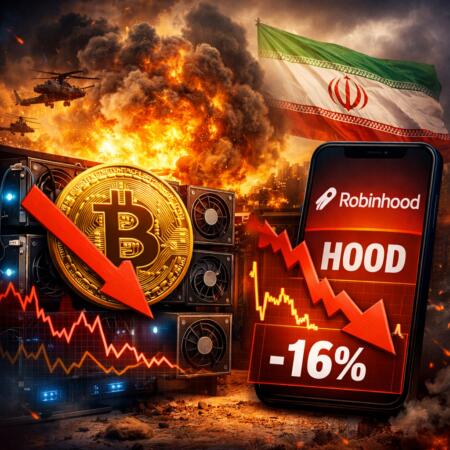
Neuner points to a confluence of macro factors as the real market-moving forces behind crypto activity. He notes that developments such as the ongoing tensions related to Iran, shifts in oil prices, and inflation patterns are actively shaping market behavior. In his view, capital flows—rather than headlines—offer a more reliable signal in an information environment that is increasingly distorted.
Looking ahead, Neuner sketches a provocative scenario in which artificial intelligence agents transact autonomously, potentially birthing a new digital economy built on crypto infrastructure. While speculative, the idea underscores a broader theme: the crypto market may be evolving toward deeper automation and decentralization in how value is exchanged.
Key takeaways
- Bitcoin’s core identity remains contested, with observers noting it has drifted from its original narratives and has not always tracked traditional stores of value in recent cycles.
- Investors should shift from price guessing to constructing data-driven theses and formal risk controls, according to Neuner.
- Macro dynamics—such as geopolitical tensions, energy prices, and inflation—are increasingly influential in crypto market behavior, with capital flows highlighted as a more reliable signal than headlines.
- The future could see AI-enabled agents participating in crypto-enabled transactions, signaling a potential shift toward autonomous, infrastructure-driven digital economies.
Bitcoin’s narrative in flux and what it means for traders
The interview frames Bitcoin not merely as a price instrument but as a durable question about what it stands for in a world where macro volatility and information asymmetry are amplified. Neuner’s stance reflects a broader industry debate: can Bitcoin reassert a unique value proposition, or will it remain a continuously evolving hypothesis about digital scarcity and trust in a rapidly changing financial system?
From forecasts to evidence: building resilient theses
Rather than chasing cyclical highs or defending specific targets, Neuner advocates for building investment theses that are testable against data and embedded with downside protection. In practice, this means focusing on long-run adoption signals, network health, and the interplay between traditional finance and crypto liquidity, rather than sensational short-term moves.
Macro signals and the crypto market’s direction
The conversation highlights that external forces—geopolitics, energy markets, and inflation—play a decisive role in shaping crypto flows. In a landscape where information can be noisy or distorted, watching capital allocation and cross-asset correlations may offer clearer directional cues than headlines alone.
A potential future: autonomous crypto-based commerce
Neuner’s speculative outlook envisions AI-driven agents that transact autonomously, leveraging crypto rails to execute and settle deals. While not a concrete forecast, the idea aligns with ongoing trends toward automation, programmable money, and the broader push to embed crypto infrastructure within everyday digital commerce.
For readers tracking the evolving crypto narrative, the conversation underscores a simple takeaway: the market’s next phase may hinge less on price bets and more on how convincingly Bitcoin and related ecosystems demonstrate intrinsic value amid macro shifts and technological advances.
Stay tuned for more insights as market participants weigh whether Bitcoin can reframe its value proposition and how the integration of automation and AI might reshape the crypto economy in years to come.