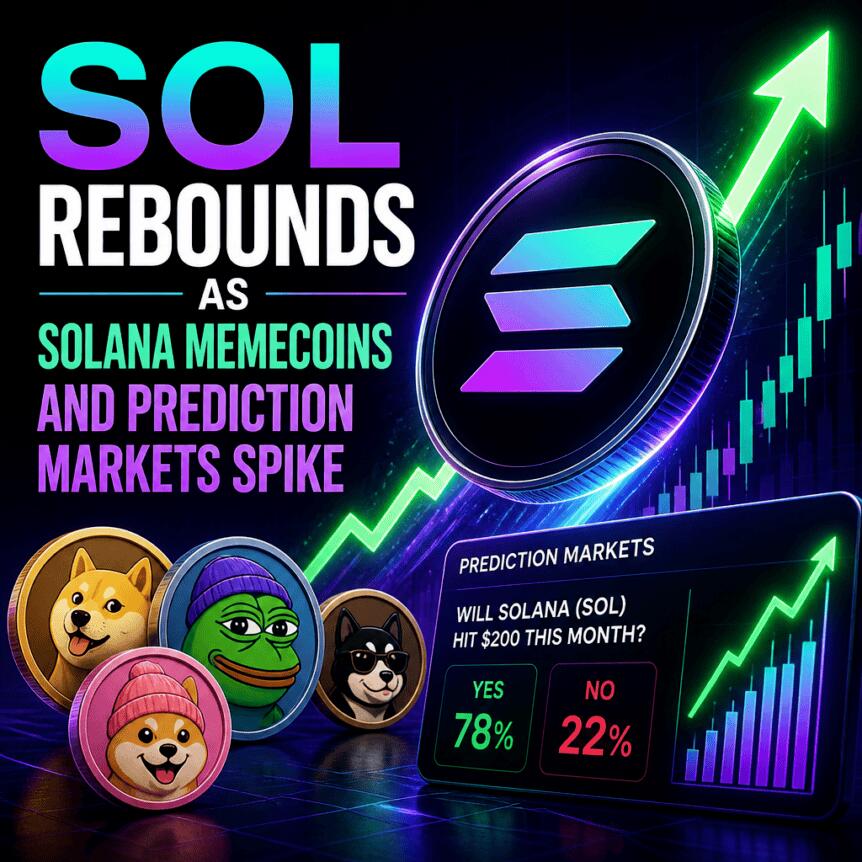
Solana’s SOL token climbed to a level not seen in more than 30 days, briefly trading around $83, and the move is drawing attention because it doesn’t look like a simple altcoin sympathy rally. Instead, market data points to a mix of rising tokenized-asset activity on Solana, renewed memecoin momentum, and improving flows tied to stablecoin liquidity.
The question now for traders is whether this renewed bid can push SOL back through the $90 area—or whether the market is already cooling off as leverage comes off the table. Recent derivative and on-chain indicators suggest enthusiasm may be more selective than it was earlier in the week.
Key takeaways
- SOL hit a 30-day high near $83, showing signs of decoupling from the broader altcoin market’s weakness.
- Tokenized trading activity on Solana accelerated as cumulative tokenized stock transfers surpassed $10 billion around June 23.
- Memecoins and prediction-market activity boosted short-term attention, but leveraged positioning cooled quickly.
- Futures annualized funding fell to about 3% on Friday from an 11% peak earlier, implying less appetite for chasing gains to $90.
Tokenized assets bring a new tailwind to Solana
One of the clearest narratives behind SOL’s strength is the renewed growth in tokenized asset activity on the Solana network. According to data referenced from RWA.xyz, Solana’s tokenized assets rose to a record-high $3.5 billion on Wednesday—up from $2.7 billion about one month earlier.
The same dataset also points to what’s driving that expansion. The article cites tokenization products related to corporate credit and market indexes such as the S&P 500 and the Nasdaq-100. In addition, RWA.xyz data shows Solana leading the tokenized industry by active addresses, with 294,274, compared with Ethereum’s 204,955.
On the “why it matters” side for investors and builders: when tokenized assets expand, it generally increases demand for on-chain infrastructure—settlement, custody, trading venues, and related DeFi rails. Even if tokenized flows don’t translate immediately into SOL spot buying, they can reinforce the perception that Solana is capturing practical usage, not only speculative demand.
Memecoin revival and ecosystem features support short-term momentum
Beyond tokenization, the rally also appears to have been helped by a memecoin resurgence. The article highlights the Sunday airdrop of The Black Bull (ANSEM), which launched on Pump.fun. ANSEM reportedly reached a market capitalization of $60 million by Tuesday, with the developer directing roughly 65% of the supply to Ansem’s public wallet; the launch rollout reportedly involved about 74,000 addresses over the initial three days. The distribution is described as lacking full transparency.
That kind of attention can matter because memecoin activity often spurs retail trading and related network usage—especially on ecosystems where token launches and trading are tightly integrated. In this case, multiple Solana memecoins gained, but the article notes that the biggest winner was the Pump.fun platform token (PUMP). PUMP added about 27% on the week, returning to the top 100 by market capitalization and reaching an estimated $630 million valuation. ANSEM itself reportedly extended gains on Friday, reaching an all-time high market capitalization of $112 million.
Alongside memecoins, the article also ties SOL’s renewed interest to prediction-market functionality. It cites the integration of a “World prediction markets” experience into the Phantom wallet, reporting nearly $890,000 in total value locked over two days, framed as an effort to compete with Polymarket during the World Cup betting cycle. It also mentions that Jupiter has prediction markets under beta testing, with a reference to a June 29 launch.
Leverage cools: derivatives signal traders are less willing to chase
If tokenized-asset growth and memecoins helped ignite the move, derivatives data suggests the market is no longer as eager to press higher prices. The article points to a sharp decline in bullish leveraged appetite after Wednesday, when SOL rose above $75 for the first time in 30 days.
Specifically, the SOL perpetual futures annualized funding rate fell to 3% on Friday from an 11% peak just two days earlier. The piece references Laevitas for those funding figures, and notes that under “neutral conditions,” the funding rate should typically sit in a range from 6% to 12% to balance the capital cost.
That shift is important for traders because funding rates often reflect whether longs are crowding the trade. A cooling funding environment can mean new longs are less willing to pay up for exposure to SOL, which can reduce the momentum needed to sustain a breakout attempt—especially if spot demand doesn’t keep pace.
In other words, the market may be congratulating itself on earlier gains while becoming more cautious about a further push toward $90. The article’s framing emphasizes that investors may not want to bet on SOL widening its performance gap over other altcoins based solely on temporary memecoin-driven attention. Without sustained blockchain activity that converts into durable demand—rather than short-lived hype—there may be fewer reasons for leverage to build again quickly.
What to watch next for SOL and Solana activity
For SOL to realistically challenge the $90 zone, the next signal to track is whether the tokenized-asset expansion and broader on-chain usage can offset any fading retail-driven flows. If tokenized trading volume continues to grow and prediction-market participation sustains, the narrative supporting SOL may broaden beyond memes. Conversely, if leveraged sentiment stays subdued and funding remains below the levels typically associated with healthy upside positioning, SOL may consolidate even if it remains resilient versus the rest of the altcoin market.