Solana’s Vision of Continuous Evolution Contrasts with Ethereum’s Self-Sustaining Model
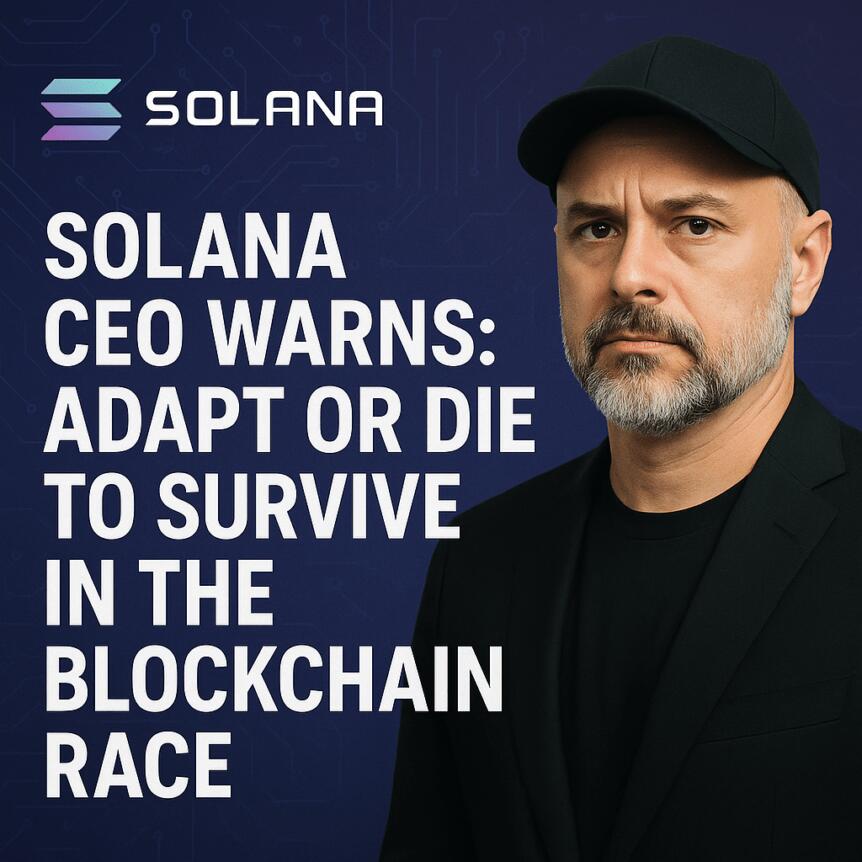
Solana Labs CEO Anatoly Yakovenko emphasized the importance of maintaining an ever-evolving blockchain ecosystem, highlighting a dynamic approach prioritized by the network. He contrasted this vision with Ethereum’s focus on decentralization and sustainability, as outlined by its co-founder Vitalik Buterin.
Key Takeaways
- Yakovenko advocates for Solana’s continuous iteration to meet user needs, cautioning against stagnation that could lead to network obsolescence.
- Buterin’s approach emphasizes Ethereum’s transition to a fully self-sustaining blockchain with minimal developer influence, aiming for long-term decentralization.
- Discussions around feature complexity highlight the trade-offs between rapid innovation and security risks, centralization, and protocol stability.
- Yakovenko envisions integrating AI-driven updates, with fees potentially funding future development, underscoring a flexible, adaptive strategy for Solana.
Tickers mentioned: Ethereum, Solana
Sentiment: Neutral
Price impact: Neutral. The contrasting philosophies reveal divergent development strategies without immediate market repercussions.
Solana’s Evolving Strategy and Future Innovations
During a recent statement, Anatoly Yakovenko stressed that Solana must continuously innovate, asserting that the network should never depend solely on specific groups or individuals for upgrades. Instead, a diverse community should steer protocol improvements, including AI-assisted development efforts. He envisions a future where Solana’s fees could directly support AI applications aimed at optimizing the network’s codebase, reinforcing a commitment to adaptable technology.
Yakovenko reaffirmed that “You should always count on there being a next version of Solana,” signaling ongoing development and evolution. This approach starkly contrasts with Ethereum’s vision of becoming a highly decentralized, stable platform that prioritizes security and decentralization, even at the expense of faster scaling.
Meanwhile, Vitalik Buterin recently indicated that Ethereum still has significant work ahead before achieving true self-sustainability. Improvements such as quantum resistance, advanced scalability features, and more decentralized block production are critical for Ethereum’s future resilience. His emphasis remains on safeguarding decentralized sovereignty, even if it slows adoption in the short term.
Both networks operate within a competitive landscape, with Ethereum dominating smart contracts and tokenization, while Solana capitalizes on speed and consumer app integration. Their differing roadmaps reflect broader industry debates on innovation speed versus protocol security and decentralization.
In summary, Solana is committed to a flexible, community-driven evolution model, potentially harnessing AI for future upgrades, whereas Ethereum aims for a robust, self-sufficient system built on decentralization and security. These strategic choices are shaping their respective roles in the rapidly evolving blockchain ecosystem.