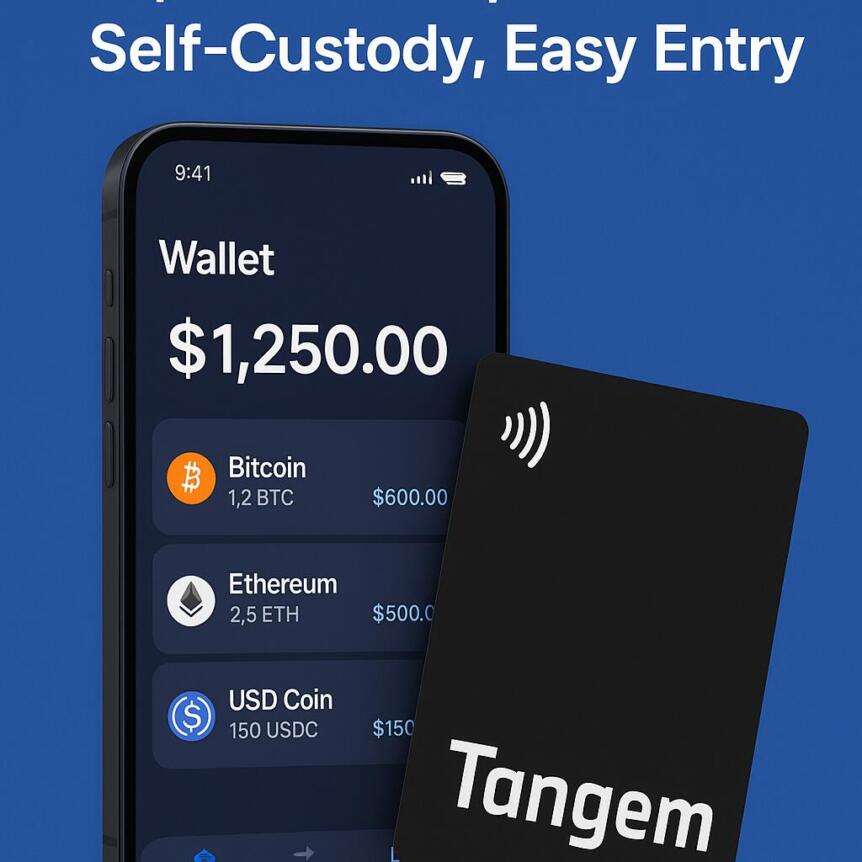
Equipped with its new Tangem Mobile Wallet, the company expands self-custody by embedding wallet creation directly into the Tangem app. The feature lets users spin up a free self-custody wallet in seconds, offering an accessible entry point that does not require immediate hardware adoption. The move aligns with Tangem’s goal: practical self-custody from day one while preserving the option to upgrade to hardware security later.
Key Takeaways
- Free self-custody wallet created in seconds inside the Tangem app.
- Backup options include a hardware wallet or a recovery phrase (12-word seed).
- Private keys are encrypted and stored on the device; iOS uses Secure Enclave/Keychain and Android uses StrongBox/Keystore.
- Security and upgrade path: the wallet can migrate to a Tangem hardware card, and it has undergone a Cure53 security audit.
Tangem Mobile Wallet
The Tangem Mobile Wallet is designed to reduce the barrier to self-custody by delivering wallet creation inside the Tangem app. Starting today, users can set up a free self-custody wallet in seconds, providing an accessible entry point for managing digital assets without committing to a hardware device. The solution fits Tangem’s aim to offer practical self-custody from day one while keeping the option to upgrade to hardware security as needed.
With the quick-start option, the app generates a wallet, encrypts its private keys, and stores them on the user’s smartphone. Keys are secured within the device’s protected storage (Secure Enclave or StrongBox; iOS Keychain and Android Keystore). Importantly, this initial setup is not backed up yet; if a user loses their phone, breaks the device, or uninstalls the app, those keys could be lost along with any funds they control. The app prompts users to finalize wallet setup on the homepage to mitigate this risk.
Backups are offered in two paths. A hardware wallet option allows the private keys to reside on a Tangem card or ring, a dedicated air-gapped device designed to never expose keys. Users can migrate from the mobile wallet to the hardware wallet or create a new wallet on the card. The recovery phrase option displays a 12-word seed that users should write down and verify.
The hardware devices are designed to be portable and resistant to tampering: no USB ports, no batteries, and no screens to break. You can tap a Tangem card to the phone to transact, or use multiple cards as part of a broader key management strategy. Upgrading the current wallet transfers the private key to the card and erases it from the phone; creating a new wallet on the card adds a separate hardware wallet in the app for those who want both.
Security validation comes from Cure53, a German cybersecurity firm that audited Tangem’s mobile wallet. The audit provides external validation of the wallet’s security posture, which is critical when handling real funds. Tangem emphasizes that the app itself generates and stores keys locally and that Tangem has zero access to user private keys.
Pricing and philosophy are straightforward: the Mobile Wallet is free to set up and use, while Tangem’s hardware cards are sold separately. The mobile wallet offers full self-custody functionality, and upgrading to hardware remains an optional step for users seeking enhanced protection. The mobile-to-hardware pathway is designed to support gradual learning and safer handling of funds.
Ultimately, the Tangem Mobile Wallet is intended as a flexible entry point that grows with each user. It helps users understand transaction mechanics with small amounts, experience key ownership, and build good security habits, with a clear path to hardware protection when they are ready. It is not a forced upgrade, but a pathway to stronger custody as confidence and needs evolve.