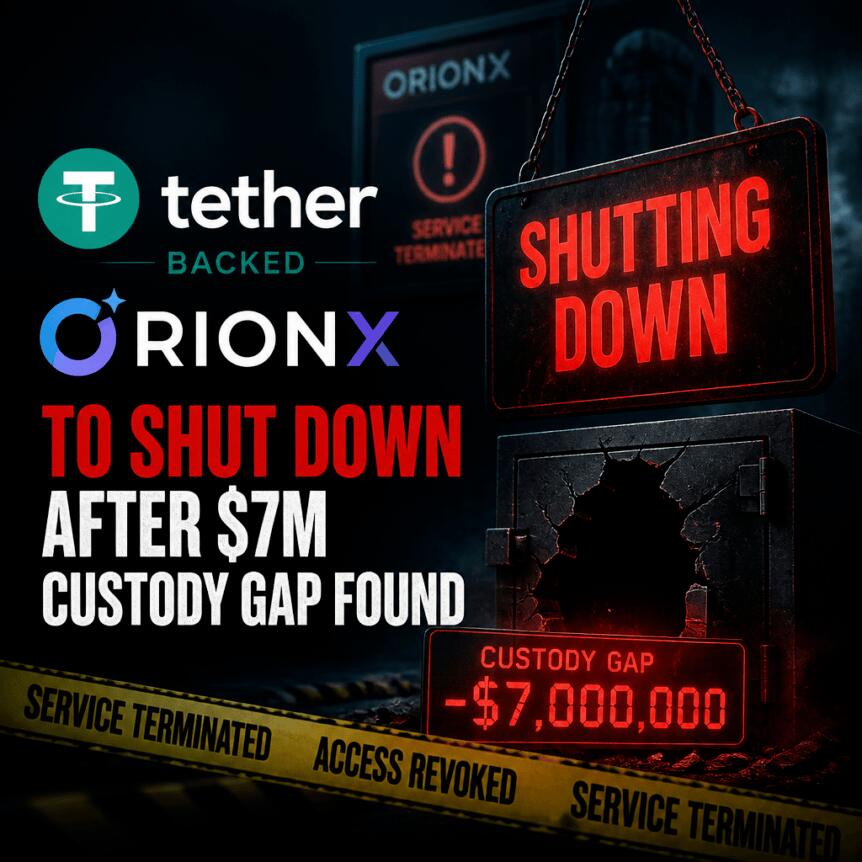
Orionx, a Chile-based cryptocurrency exchange backed by Tether, is shutting down after a forensic review flagged a multimillion-dollar custody discrepancy, according to statements shared by the company on X. The exchange said it is moving into a permanent closure process and has temporarily suspended withdrawals as it works to return client funds.
Orionx said the audit identified more than $7 million in assets recorded in its custodial records that had been transferred to wallets it does not manage. The announcement arrives against a broader backdrop of increased scrutiny around custody controls and regulatory compliance for crypto firms operating in Latin America.
Key takeaways
- Orionx is initiating a permanent shutdown after a forensic audit found a custody mismatch involving more than $7 million.
- The exchange says withdrawals are temporarily suspended while it prioritizes returning client assets.
- Orionx has not disclosed when the transfers occurred, but a criminal complaint alleges outflows from custody between 2018 and 2021.
- Former co-founders Roberto Zibert and Joaquín Díaz deny allegations tied to unauthorized access to custody systems.
- Tether led Orionx’s Series A in 2025 as part of an expansion push, with the funding announcement later removed from Tether’s website.
A forensic finding triggers a withdrawal pause
Orionx announced that it began the process of permanently closing the platform after uncovering what it described as evidence of a custody-related issue. In its X post, the exchange said withdrawals have been paused in the interim while it attempts to return as much as possible to clients.
At the center of Orionx’s case is the discrepancy identified between the balances shown in its systems and the assets it holds at its custody addresses. Orionx attributed the issue to more than $7 million in custodial assets having moved to wallets the exchange does not manage, according to the company announcement.
While Orionx said it commissioned a forensic audit that compared internal records with verifiable on-chain data, the exchange did not specify in its post when the transfers took place or how the mismatch was first detected. That timing detail is important for investors and users trying to understand exposure windows, but the available reporting points to a longer period of alleged activity.
Timeline and alleged custody gaps cited in a Chilean complaint
According to reporting by Chilean newspaper La Tercera, Orionx undertook internal efforts to comply with Chile’s Fintech Law, conducting a review of its operations in 2025 and bringing in financial professionals. The publication tied Orionx’s actions to a criminal complaint involving former executives.
Reportedly, on Aug. 27, Orionx’s chief operating officer Thomas Mac Millan noticed a “significant mismatch” between the balances recorded in Orionx’s systems and what was actually held in custody, as described in the complaint. Orionx then ran an internal review and later commissioned an external forensic audit that matched its records with data that can be checked on-chain.
The forensic audit findings, as described through the complaint and reported by La Tercera, indicate that balances tracked within Orionx’s systems were higher than the assets held at its custody addresses for Bitcoin (BTC), Ether (ETH), XRP, and Polygon (POL). That kind of gap can be especially consequential for users because it suggests the platform’s accounting and custody reality did not align across multiple major assets.
La Tercera further reports that the complaint alleges assets were transferred out of Orionx’s custody between 2018 and 2021, including to accounts hosted on other crypto platforms. Although the exchange’s public announcement did not spell out the period, the complaint points to a multi-year span, which could influence how authorities and affected customers evaluate responsibility and timing.
Criminal complaint targets former co-founders; denials follow
Orionx said it filed a criminal complaint on Wednesday against former executives Roberto Zibert and Joaquín Díaz—both co-founders—whom it alleges had access to the company’s crypto custody systems. In the complaint as reported by La Tercera, an account associated with Díaz allegedly received more than $1.5 million across 14 transfers. The report also cites allegations that another wallet received 187 Ether, more than 4.1 million USDt (USDT), and 200,000 USDC from Orionx.
Zibert and Díaz denied wrongdoing, according to La Cuarta. They said they never acted against customers’ interests and argued that the cause of Orionx’s asset shortfall remains unclear.
For Orionx customers, the competing narratives—Orionx’s custody-mismatch claims versus the co-founders’ denials—are likely to shape what happens next. But the practical impact is immediate: Orionx is prioritizing asset recovery efforts while keeping withdrawals suspended, meaning users cannot rely on normal exchange liquidity during the shutdown process.
Tether’s 2025 backing and the question of what changed
Orionx was founded in Chile in 2017 and expanded from a retail crypto exchange into a broader platform that offered crypto payment and financial services across Chile, Peru, Colombia, and Mexico.
In June 2025, Tether invested in Orionx, exclusively leading Orionx’s Series A round, according to an archived version of Tether’s announcement. That announcement is no longer available on Tether’s website, but the archived copy attributes the investment to Tether’s stated aim of expanding digital-asset adoption across Latin America.
Cointelegraph reported that it contacted Tether and Orionx for comment but had not received a response by publication. The episode raises an investor question that often comes up in crypto custody failures: even when an exchange secures prominent strategic backing, custody controls and operational integrity still require continuous verification, particularly as regulatory expectations rise.
What remains uncertain is how the alleged custody shortfall ties to Orionx’s later operations and compliance efforts. The complaint reporting points to transfers between 2018 and 2021, while Orionx’s public review and forensic steps occurred later. Until more details emerge from the criminal process and the ongoing closure and restitution efforts, the exact mechanics of the gap—along with the responsibility chain—may remain disputed.
Over the coming weeks, clients and observers will likely watch for updates on whether Orionx can identify and recover missing assets from the wallets it says it does not control, as well as what authorities uncover regarding access, internal controls, and the alleged timeline of transfers.