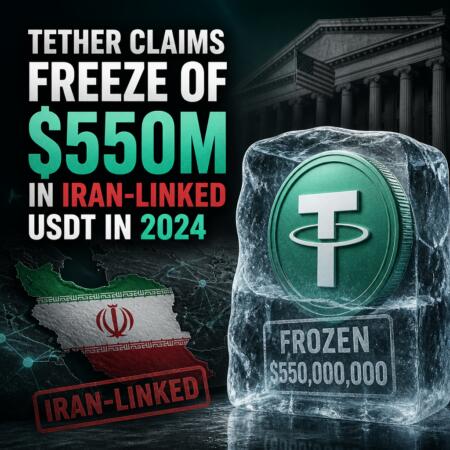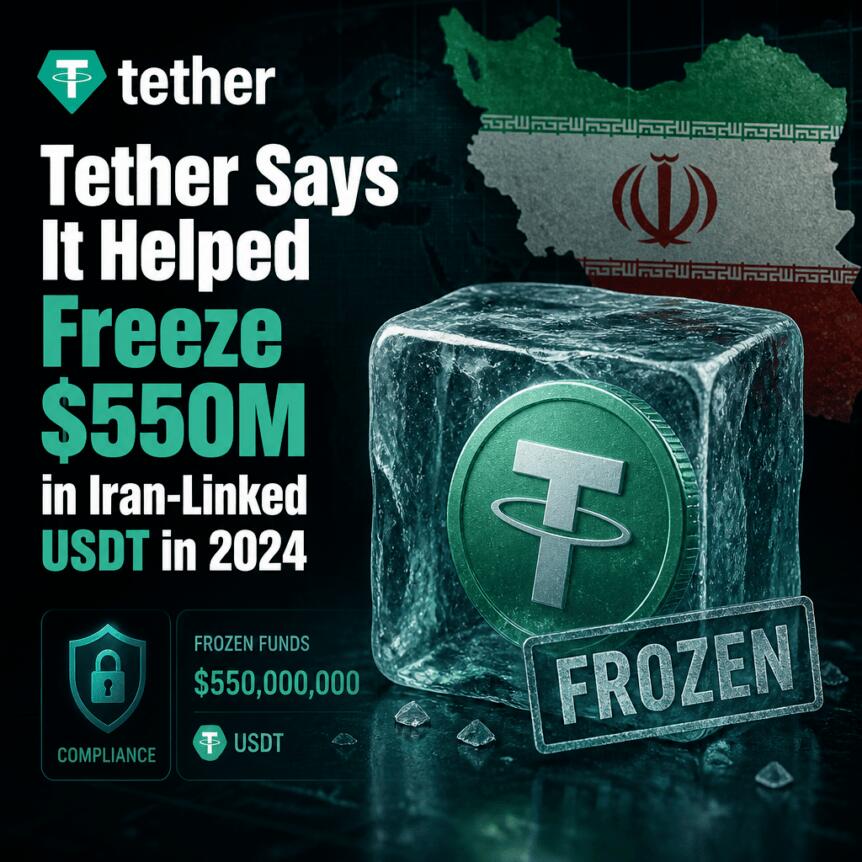
Tether said it helped authorities freeze nearly $550 million worth of USDT tied to Iran-linked activity during 2026, adding to a broader public dispute over whether stablecoins can be used to bypass sanctions. The company’s update comes as a Democratic-led U.S. Senate investigation urged federal agencies to examine potential sanctions violations involving the stablecoin.
In a statement on Monday, Tether said it has worked with international law enforcement “for years” to identify and freeze illicit funds, citing cooperation that it claims has resulted in more than $4.9 billion in assets being frozen globally. The company pointed to multiple 2026 freezes, including more than $130 million across four wallets this year and a larger action in April involving over $344 million linked to the Central Bank of Iran.
Key takeaways
- Tether said it supported freezes totaling nearly $550 million in Iran-linked USDT during 2026, including over $344 million tied to Iran’s central bank in April.
- The company attributed its actions to ongoing coordination with international law enforcement and enforcement bodies, according to its Monday statement.
- A Senate Permanent Subcommittee on Investigations report, released alongside Democratic investigators, alleged USDT is frequently used in Iran-related sanctions evasion networks.
- Investigators reported that most sanctioned wallets they reviewed transacted exclusively or nearly exclusively in USDT, prompting calls for Treasury and Justice scrutiny.
- Tether said it has enabled tracing, freezing, and recovery of funds by agencies including the DOJ, FBI, Secret Service, HSI, and OFAC, per CEO Paolo Ardoino.
What Tether says it froze in 2026
Tether’s Monday statement frames the figure of nearly $550 million as the result of sustained enforcement cooperation rather than isolated compliance events. The company said it froze more than $130 million in USDT across four wallets during 2026 and that in April it froze more than $344 million associated with the Central Bank of Iran.
CEO Paolo Ardoino emphasized the company’s view that USDT does not function as a “haven” for sanctioned entities or criminal networks. “Tether has consistently demonstrated that USDT is not a haven for sanctioned actors, terrorist organizations or criminal networks,” Ardoino said, according to the company’s statement.
Beyond the Iran-linked freezes, Tether also cited what it calls a wider enforcement record. The firm stated that its cooperation worldwide led to “more than $4.9 billion in assets being frozen,” including more than $2.4 billion connected to U.S. authorities.
The Senate investigation alleges USDT’s outsized role
The company’s comments came as Democratic investigators on the Senate Permanent Subcommittee on Investigations released a report alleging that USDT has become a central conduit for Iran to evade sanctions. According to the report summary cited in Monday’s coverage, investigators analyzed sanctioned activity and found a strong preference for USDT among Iran-linked wallets.
The Senate investigators reported that 84% of 846 crypto wallets sanctioned for ties to Iran had transacted exclusively or nearly exclusively in USDT. That finding helped spur U.S. Senator Richard Blumenthal to call on the Treasury and Justice departments to investigate whether sanctions violations occurred.
Tether did not dispute that USDT is widely used; instead, it placed its emphasis on actions taken with law enforcement. Still, the juxtaposition of the Senate’s claim of near-dominant USDT usage among sanctioned wallets and Tether’s freeze figures underscores a key tension in the debate: compliance actions after identification versus questions about whether the system’s design and ecosystem usage enable sanction evasion before enforcement triggers occur.
Why the dispute matters for stablecoin oversight
Stablecoins sit at the center of much day-to-day crypto settlement, including for cross-border transfers where speed and liquidity can outweigh transparency. As a result, allegations that a specific stablecoin is used disproportionately by sanctioned actors raise broader regulatory questions beyond the individual issuer.
Tether’s figures—nearly $550 million frozen in 2026 tied to Iran-linked activity, plus a longer-running claim of more than $4.9 billion frozen globally—offer a compliance-focused counterpoint. But the Senate investigation’s wallet-level findings, as summarized in the report, highlight the practicality concern: even if freezes eventually occur, the stability and accessibility of USDT may allow sanctioned parties to move value before authorities intervene.
For investors and market participants, the implications are twofold. First, heightened scrutiny can affect how exchanges, custodians, and compliance tooling handle stablecoin flows tied to sanctioned jurisdictions. Second, calls for investigations into potential sanctions violations can accelerate policy debates around stablecoin governance, monitoring obligations, and the standards platforms should adopt to prevent illicit routing.
Tether points to law enforcement coordination
Ardoino’s statement sought to reinforce that Tether is not operating in isolation. He said the “record is public” and that U.S. agencies—including the DOJ, FBI, Secret Service, HSI, and OFAC—have worked with Tether to trace, freeze, and recover assets. He added that Tether would continue making its tracing and freeze capability available to authorities targeting terrorism, sanctions evasion, fraud, and other serious crimes.
For readers tracking the compliance debate, the key watchpoint is how these freeze-and-recover claims will be evaluated against the Senate investigators’ conclusion that USDT is frequently used in Iran-related sanction evasion. The outcome could depend on what investigators can show about the timing of illicit activity, whether issuers or intermediaries failed to act on warning signals, and how consistently sanctioned flows are detected across the ecosystem.
As the investigation moves forward, market participants are likely to watch for additional details from federal agencies on whether they will open formal probes, as well as any further guidance on compliance expectations for stablecoin issuers and service providers.
For now, the central question remains unresolved: Tether says it actively helps freeze illicit USDT, while the Senate report argues USDT is overwhelmingly present in sanctioned wallet activity tied to Iran—so the next developments will likely hinge on what investigators can determine about prevention, detection, and enforcement timing across the stablecoin network.