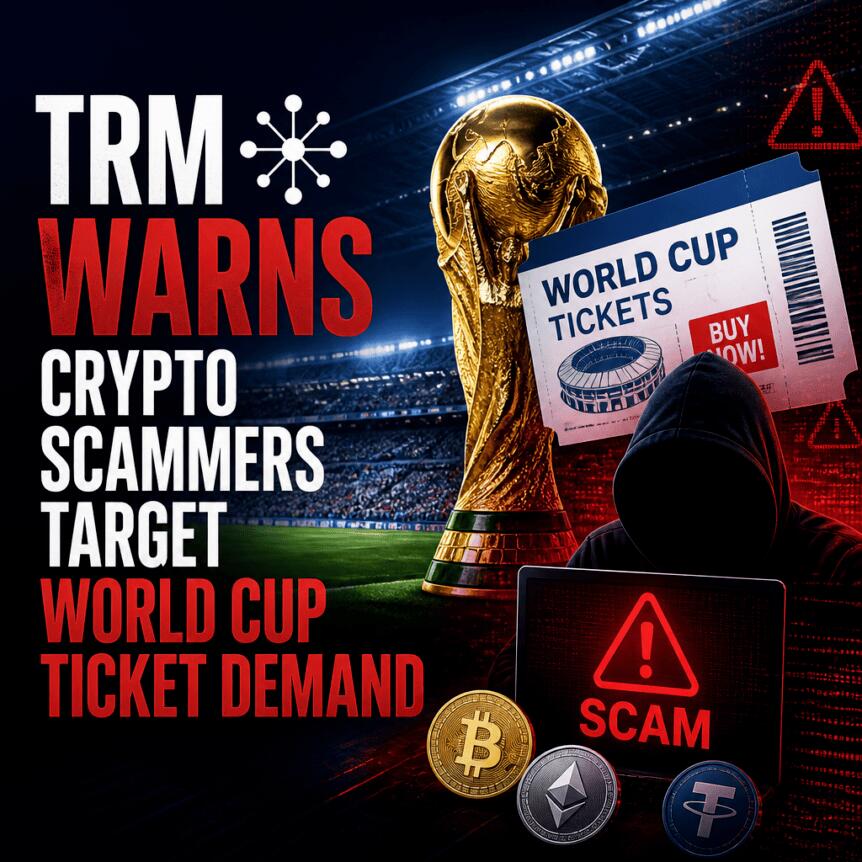
Crypto fraudsters are increasingly setting their sights on mass-market sporting events, and the 2026 FIFA World Cup is emerging as a high-value target. TRM Labs says it has identified multiple World Cup-related scam operations that combine fake ticketing with fixed-match betting pitches and crypto-themed promotion tactics designed to move funds from victims quickly.
In a report shared with Cointelegraph, the blockchain intelligence firm warned that scammers often prepare well before kickoff—building infrastructure weeks in advance, then scaling activity as public attention peaks. With large audiences expected to seek tickets, travel, and wagering opportunities, investigators say the risk of fraud is likely to remain elevated throughout the tournament.
Key takeaways
- TRM Labs identified World Cup-related scams including two fake ticketing sites and a fixed-match betting pitch tied to four crypto addresses.
- TRM Labs says scammers typically build operations ahead of major events, then intensify activity when demand surges.
- US authorities previously warned that threat actors were spoofing FIFA websites to collect personal information and sell fake tickets.
- FIFA cautions that tickets sold outside official channels may be invalid and subject to cancellation without notice.
- Complicated ticket availability—especially around resale—may increase opportunities for fraudulent intermediaries.
TRM Labs links crypto scams to World Cup demand
According to TRM Labs, the scammers behind World Cup-themed schemes are leveraging the same dynamics that make major tournaments profitable: concentrated interest, time-sensitive decision-making, and widespread use of online payments. The company said it identified several operations tied to the event, including two fake-ticketing websites and a fixed-match betting pitch associated with four crypto addresses.
Ari Redbord, global head of policy at TRM Labs, told Cointelegraph that criminals do not wait until the first match to strike. He said scammers often prepare infrastructure weeks in advance and then scale once the public is fully focused on the event.
Redbord also highlighted a practical advantage for compliance and investigations. Because crypto transactions are recorded on-chain, investigators and financial compliance teams can potentially intervene earlier than they might in purely traditional payment channels—before losses become harder to contain.
Why the timing and ticketing environment raise the stakes
The 2026 World Cup is being hosted across Canada, Mexico, and the United States. FIFA has said it expects attendance of about 6.5 million fans across the tournament, alongside large economic impact—creating a broad pool of demand that can be exploited by scammers offering tickets, travel, and betting opportunities.
TRM Labs’ warning aligns with broader concerns about online fraud during sporting events. Earlier in the run-up to the tournament, the FBI publicly warned that threat actors were spoofing FIFA websites. In May, the agency said these actors were attempting to collect personal information, sell counterfeit tickets and products, and potentially carry out other malicious activity.
FIFA has also issued direct guidance to fans. In its warnings, FIFA said tickets purchased outside its official website may expose buyers to fraud. It added that tickets obtained through unofficial channels may be treated as invalid and could be cancelled without notice.
Real-world ticket pressure can fuel scams
Even when official channels exist, gaps in availability can create openings for bad actors. The Council on Foreign Relations reported that several opening matches in the US and Canada were not sold out on FIFA’s platform as of Monday. In parallel, the Financial Times reported that official resale portals still showed 176,000 unsold tickets across the group stages.
These conditions matter because fraudulent actors often target moments when legitimate buyers are actively searching for options. When people feel urgency—whether due to partial sell-throughs, unclear resale timing, or uncertainty about seat availability—they are more likely to fall for impersonation sites or “limited inventory” claims.
For investors and market participants who interact with crypto rails, the key point is that these scams are not limited to one category. TRM Labs’ identification of both fake-ticketing operations and fixed-match betting pitches suggests scammers are casting a wide net across the World Cup’s commercial ecosystem rather than relying on a single entry point.
What to watch as the tournament progresses
TRM Labs’ message is that the window for fraud is not confined to kickoff week. With scammers capable of positioning infrastructure ahead of time, enforcement and consumer-protection efforts need to remain active throughout the tournament—not just at the beginning. Fans and anyone supporting compliant payments should monitor for impersonation tactics, verify ticketing channels carefully, and treat event-themed crypto promotions with skepticism.
As more attention flows to resale activity, betting chatter, and viral event content, the most important question for the rest of the tournament will be whether authorities and compliance teams can keep pace with scammers scaling operations in response to public demand.