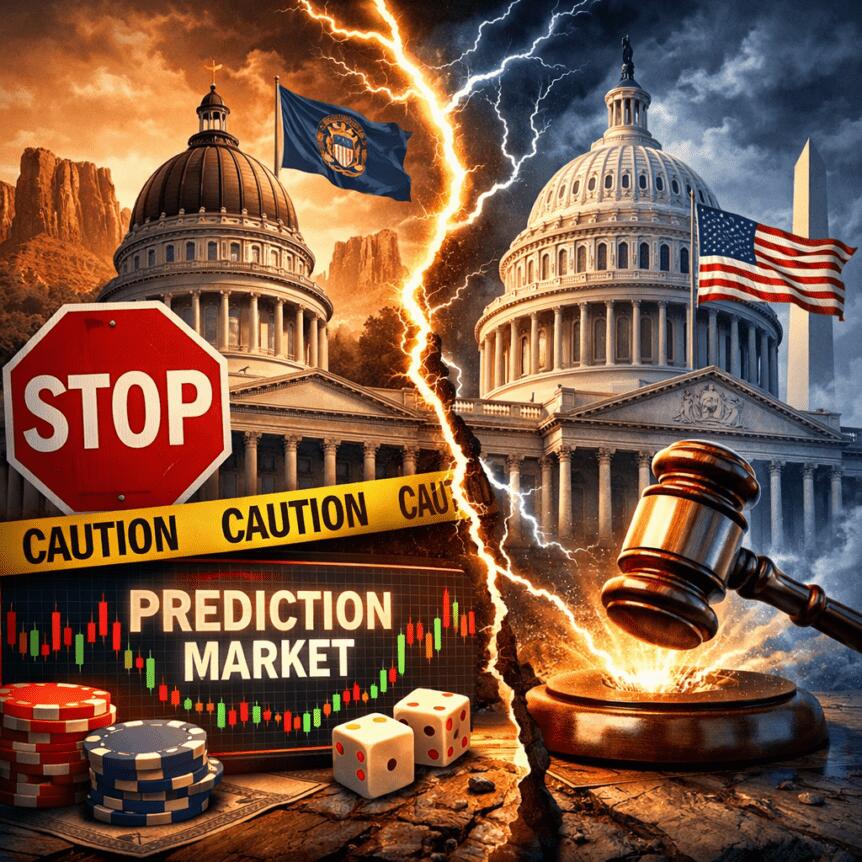
The state of Utah is moving to shut down prediction market platforms like Kalshi and Polymarket as part of a broader clash over how this evolving sector should be regulated. The legislative push, marked by HB243 (Gambling Revisions), would redefine “proposition betting” as gambling, aiming to bar platforms that host event-based bets—whether framed as prediction markets or sportsbooks—from operating in the state. The Utah House cleared the bill on February 10, followed by Senate approval on February 27, setting the stage for a gubernatorial signature. Governor Spencer Cox signaled his support, framing the move as a shield against what he described as risky, youth-targeting gaming products. The episode adds to a growing patchwork of state actions that intersect with federal authority over derivatives and fintech platforms.
Key takeaways
- Utah advances HB243, redefining proposition betting as gambling and barring platforms offering prediction-like services within the state.
- Kalshi has filed suit against Utah, contending its event contracts are federally regulated derivatives under the Commodity Exchange Act, not gambling.
- The Commodity Futures Trading Commission maintains that it has exclusive authority over prediction markets, framing them as potential conduits for information discovery, and indicating readiness to defend this stance in court.
- Similar clashes are unfolding in other states, including Iowa, and a series of federal court cases in Ohio have shaped the legal landscape around enforcement and jurisdiction.
- The regulatory tension highlights how crypto-adjacent markets—where prediction and derivatives intersect—could be affected by evolving governance and enforcement priorities.
Tickers mentioned:
Sentiment: Neutral
Market context: Regulatory scrutiny of prediction markets sits at the intersection of consumer protection, gambling law, and financial-market oversight, with federal authorities signaling a willingness to assert jurisdiction while states pursue their own legislative fixes.
Why it matters
Utah’s move crystallizes a broader narrative about how governments will treat platforms that blend prediction, gambling-style mechanics, and financial exposure. While proponents view prediction markets as tools for aggregating information—potentially offering more transparent signals than traditional polls—the regulatory approach in Utah treats these markets as gambling products subject to state-law restrictions. The dispute foregrounds a central question for the crypto and blockchain-adjacent economy: who should police event-based contracts that rely on real-money wagers and futures-style pricing? The CFTC’s stance that it retains exclusive federal oversight over such markets adds a layer of complexity for operators seeking a national framework that could preempt state bans or carveouts.
Kalshi’s legal strategy underscores the federal-versus-state tension at the heart of this debate. By insisting that its event contracts fall under federal derivatives regulation rather than gambling restrictions, the company is leveraging the Commodity Exchange Act to push back against Utah’s restrictions. That position aligns with prior CFTC positions that see these markets as subject to federal oversight, rather than states’ patchwork prohibitions. The unfolding cases, including Kalshi’s actions in Iowa and Ohio, illustrate how a chain of judicial decisions could shape not only the fate of prediction-market platforms but also broader efforts to innovate within the crypto and fintech ecosystems.
Beyond this particular dispute, observers are watching the implications for similar products—especially those that seek to tokenize or automate event-based bets with digital infrastructure. If courts uphold federal preemption for these contracts, it could unlock a more uniform regulatory path for platforms exploring cross-border and cross-state operations. Conversely, if states prevail, a mosaic of prohibitions could emerge, potentially dampening investment in related technologies and complicating compliance for operators seeking to scale. The debate is not just about Utah or Kalshi; it concerns the regulatory architecture that will govern the next wave of financial experimentation in the digital era.
In public remarks at a Florida industry conference, CFTC Chairman Michael Selig reminded attendees that the agency regards prediction markets as instruments with potential informational value, even calling them “truth machines” when priced and funded by participants who put real stake behind their views. He stressed that the CFTC would defend its authority in court if challenged, signaling that attempts to clamp down on such markets at the state level may be met with federal countermeasures. This framing dovetails with ongoing debates about how to regulate innovative financial products without stifling legitimate experimentation. The tone from Washington, D.C., and state capitals alike suggests a transitional period as policymakers weigh consumer protection, market integrity, and the demand for novel market signals.
What to watch next
- Governor Cox’s formal signature on HB243 and any subsequent regulatory guidance from Utah authorities.
- Federal court developments in Kalshi’s Utah and Iowa lawsuits, including any rulings on whether the CFTC’s authority can foreclose state bans.
- The Ohio federal court ruling on Kalshi’s attempt to block enforcement—whether it sets a precedent for other states’ actions against similar platforms.
- Additional state-level proposals targeting prediction markets or similar event-based contracts, and how courts interpret their scope vis-à-vis federal law.
- Responses from other market participants and lawmakers that could chart a broader regulatory framework for crypto-adjacent prediction markets.
Sources & verification
- Utah HB243 (Gambling Revisions) text and legislative history: https://le.utah.gov/~2026/bills/static/HB0243.html
- Associated Press report on Cox’s stance and the signing intent: https://apnews.com/article/utah-kalshi-polymarket-spencer-cox-mormon-gambling-c3fecd3e120b4d5be103bc9e1f4a5587
- Kalshi v. Utah: Kalshi’s lawsuit filing (Utah News Dispatch PDF): https://utahnewsdispatch.com/wp-content/uploads/2026/02/Kalshi_V_Utah.pdf
- Kalshi’s Iowa action (report reference): https://cointelegraph.com/news/kalshi-preemptively-sues-iowa-claiming-risk-of-enforcement-action
- Ohio court action on Kalshi’s sports-betting case: https://cointelegraph.com/news/kalshi-court-ohio-sports-betting-lawsuit
- CFTC Chair comments on prediction markets and enforcement stance: https://x.com/ChairmanSelig/status/2023744651216240966?s=20
- Related coverage on Kalshi’s Ohio case and broader regulatory actions: https://cointelegraph.com/news/kalshi-sued-khamenei-trade-carveout
Regulatory clash reshapes the landscape for prediction markets
Utah’s HB243 embodies a strategic attempt by a state to reframe the legal perimeter around prediction-based platforms, extending beyond traditional sports betting to what officials view as speculative markets that could attract vulnerable users. The bill would reclassify proposition betting—where wagers hinge on individual events within a game, rather than the final outcome—as gambling. In practical terms, that shift empowers Utah’s regulators to block operators from offering those services in the state, regardless of how the platforms label themselves. The legislature’s passage through both chambers, followed by the governor’s stated intent to sign, signals a strong intent to create a production-ready barrier against these services at the state level.
Kalshi’s legal response underscores a core proposition: federal law governs the structure and operation of event contracts. By contending that these are derivatives within the CFTC’s purview under the Commodity Exchange Act, Kalshi argues that Utah cannot selectively ban the contracts simply because they are framed as prediction markets. This argument hinges on questions of preemption and the reach of federal securities and commodities law into digital and financial-innovation spaces. The case mirrors a broader pattern in which states test the limits of their regulatory reach while federal agencies assert a uniform framework intended to maintain market integrity and protect participants.
As the federal regulator’s position gains resonance, Kalshi has pursued multi-front litigation. The company’s Utah suit targets the state’s enforcement actions, while an accompanying Iowa filing signals a broader strategy to secure a federal preemption shield. Meanwhile, a separate Ohio decision denying Kalshi’s bid to halt state enforcement actions demonstrates how courts are weighing the balance between state consumer protections and federal authority. Taken together, these movements sketch a regulatory arc: a fight over jurisdiction that could determine how prediction markets, crypto-linked or otherwise, can operate across the United States.
For market participants and observers, the outcome could influence investment, product development, and international competitiveness. If federal oversight becomes the default, operators may gain the ability to launch across multiple states with a consistent, preemptive framework. If, on the other hand, state restrictions proliferate, founders may face a fragmented landscape characterized by varying compliance costs and heightened legal risk. The CFTC’s characterization of prediction markets as “truth machines”—contingent on active participation and risk-bearing—adds a qualitative element to the regulatory debate: markets that are price-discovered and transparent can offer valuable signals, but only if designed and governed with appropriate safeguards.
What to watch next
- Fiscal and regulatory status of HB243 after gubernatorial action, including any rulemaking or enforcement guidelines from Utah’s gambling regulators.
- Upcoming court decisions in Kalshi’s Utah and Iowa cases that could clarify federal preemption in the context of state gambling prohibitions.
- Rulings in Ohio and other jurisdictions that could set precedent for how prediction-market operators navigate enforcement actions.
- Public statements from the CFTC and related federal agencies about the regulatory approach to crypto-adjacent prediction markets and their potential scope beyond traditional derivatives.