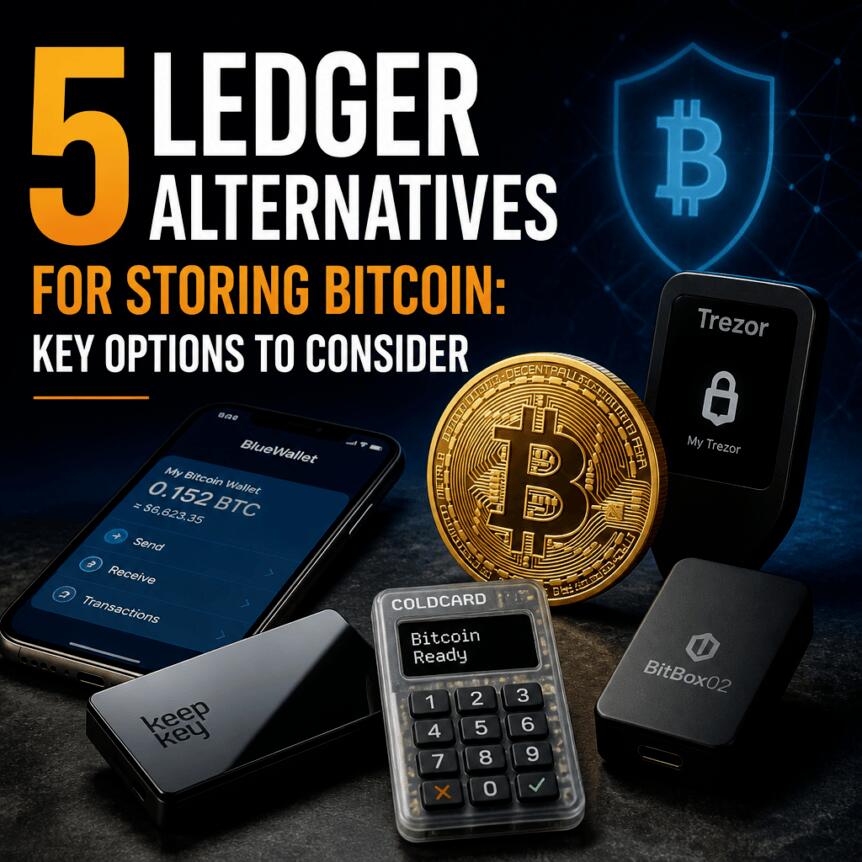
Recent reports of more than $200 million in crypto losses linked to tampered hardware wallets and predictable—rather than properly random—seed generation have renewed scrutiny of self-custody. The core issue is not that every investor failed to follow best practices; it’s that some risks can be introduced upstream, through devices or supply chains that holders cannot independently verify.
At the same time, physical attacks targeting crypto owners are increasing, with Cointelegraph citing wrench attacks occurring in France roughly every 2.5 days this year. That broader threat landscape makes a single-storage approach harder to justify—even for cautious users. Many experienced holders now emphasize diversification across storage methods to limit what can go wrong if one layer is compromised.
Key takeaways
- Security problems are no longer limited to “user error” or “lost seed phrases”; tampering and poor randomness can also undermine hardware wallet setups.
- Crypto ETFs can reduce the operational burden of self-custody, but they shift risk toward centralized issuers, custodian arrangements, and market mechanics.
- Passkey-based wallets may simplify access, yet users must still understand device-loss and recovery trade-offs—especially when recovery depends on third parties.
- Multisig can reduce reliance on a single key or device, but it can introduce coordination friction and smart-contract risk in some implementations.
- Centralized exchanges and paper wallets may solve certain convenience problems, but they carry their own failure modes, including platform risk and key-exposure risk during generation.
Why hardware wallet trust is being questioned
Hardware wallets are designed to keep private keys offline and require users to protect a seed phrase. However, the latest wave of losses described in the source material centers on tampered devices and seeds that were not truly random—problems that self-custody users cannot reliably detect after the fact.
The knock-on effect is psychological and practical: even holders who purchase from official sources and store seed phrases correctly may still be exposed to manufacturer- or supply-chain-side failure. This is precisely why the discussion is shifting toward layered risk management—spreading holdings across multiple addresses and, when appropriate, across different custody frameworks.
Crypto ETFs: less operational work, different risk profile
Crypto exchange-traded funds (ETFs) are often framed as an alternative “entry point” for investors who want exposure without managing keys. The source material stresses a key distinction: even if investors fund an ETF with Bitcoin, they receive shares tied to the ETF’s net asset value rather than direct ownership of the underlying digital assets.
That matters for how investors evaluate risk. ETFs can remove many self-custody tasks—seed phrase handling, wallet backups, and concerns about physical break-ins. But the trade-off is that investors must trust centralized providers, third-party custody arrangements, fee structures, and the possibility that share price behavior may diverge from the underlying crypto market price.
According to guidance referenced from the U.S. Securities and Exchange Commission (via an Investor Bulletin on crypto-asset custody basics for retail investors), crypto-asset custody involves arrangements and responsibilities that investors should understand before allocating capital. The source also cites Ophelia Snyder, co-founder of 21Shares, who argues that exchange-traded products can make sense “for most people most of the time” due to tax, estate planning, and security considerations. She also highlights that security ultimately depends on the provider and that infrastructure controls should be a major selection factor.
The source further mentions that pseudonymous Bitcoin model creator PlanB moved BTC to ETFs in 2025, previously drawing criticism, but later said he had “zero regrets” after the Ledger and Coldcard incidents—underscoring how quickly the narrative around custody can change when hardware wallet trust is shaken.
Passkeys, multisig, and the limits of “better UX”
For users who want to reduce seed phrase friction, passkey-based wallets have gained attention. The source describes passkeys as cryptographic credentials stored on a device, typically secured with biometrics or a PIN, enabling account access without a dedicated offline hardware component. This can be especially relevant for systems built around smart contract interactions.
However, passkeys are not risk-free. The source notes that losing a device or passkey can still create serious access problems, and recovery may require trusting a third party depending on implementation. That concern was raised publicly by Adam Back, CEO of Blockstream, who questioned Coinbase’s Smart Wallet design by asking what would happen if a passkey were hacked—characterizing it as “basically a hosted wallet with a better sales pitch.”
Multisignature wallets represent a different approach: splitting transaction authority across multiple keys. In a common 2-of-3 configuration, any two signers can authorize outgoing transfers, reducing the odds that a single lost device or compromised key permanently ends access.
Yet multisig is not a complete solution on its own. The source explains that multisig arrangements can require ongoing availability from multiple participants, can slow down transfers due to coordination, and may introduce additional exposure if using smart contract-based wallet infrastructure. It also highlights Casa’s model, which combines multisig custody with a mix of a hardware wallet, a mobile phone, and a key held by Casa, while noting that many large Ethereum ecosystem treasuries use Safe (formerly Gnosis Safe), a smart-account multisig with a web interface.
Even in multisig settings, the source includes earlier guidance from Casa’s Nick Neuman: users should still spread risk across multiple providers rather than relying on a single custody layer.
Exchanges and paper wallets: convenience trades for custody control
Centralized exchanges are the most straightforward custody alternative for many active traders. The source frames the appeal as convenience: by keeping crypto on an exchange, users shift private key management responsibilities to the company. But the recurring warning “not your keys, not your coins” remains central, since exchange histories include hacks, exploits, and even extreme cases where access to customer assets was taken improperly.
While operational security has improved and many platforms publish proof-of-reserves reports, the source cautions that proof of reserves does not fully establish an institution’s ability to meet every obligation in all circumstances. It also emphasizes that regulatory reporting requirements have grown; the source references OECD Crypto-Asset Reporting Framework-style expectations and notes that customers may be required to provide identity, residency, or tax details, with noncompliance potentially leading to account restrictions or suspended withdrawals.
Paper wallets are another alternative mentioned in the source, with keys printed offline. But the article argues that they often fail a practical security test: generating a wallet safely can be difficult, since compromised systems, malicious generators, or poor randomness can leak private keys before they are printed. Paper can also be lost or damaged, and importing the private key into an internet-connected wallet can undo the offline advantage.
What this means for investors deciding between self-custody options
The overarching message in the source is that there is no universal “best” storage method. Instead, custody should be matched to user circumstances and risk tolerance. Snyder’s framing in the source draws a clear dividing line: self-custody users tend to fall into two groups—those who are long-term crypto “natives” with strong security practices, and everyone else.
If you are not in the first camp, the source suggests self-custody may not be the right fit, and that combining some exposure via centralized exchanges and ETFs can be a practical way to distribute risk as part of a broader portfolio approach.
For readers, the key watch items are straightforward: whether hardware wallets continue to face supply-chain and randomness concerns, how providers strengthen recovery and security around passkey-based access, and whether proof-of-reserves and compliance processes evolve in ways that meaningfully change custody risk for everyday holders.