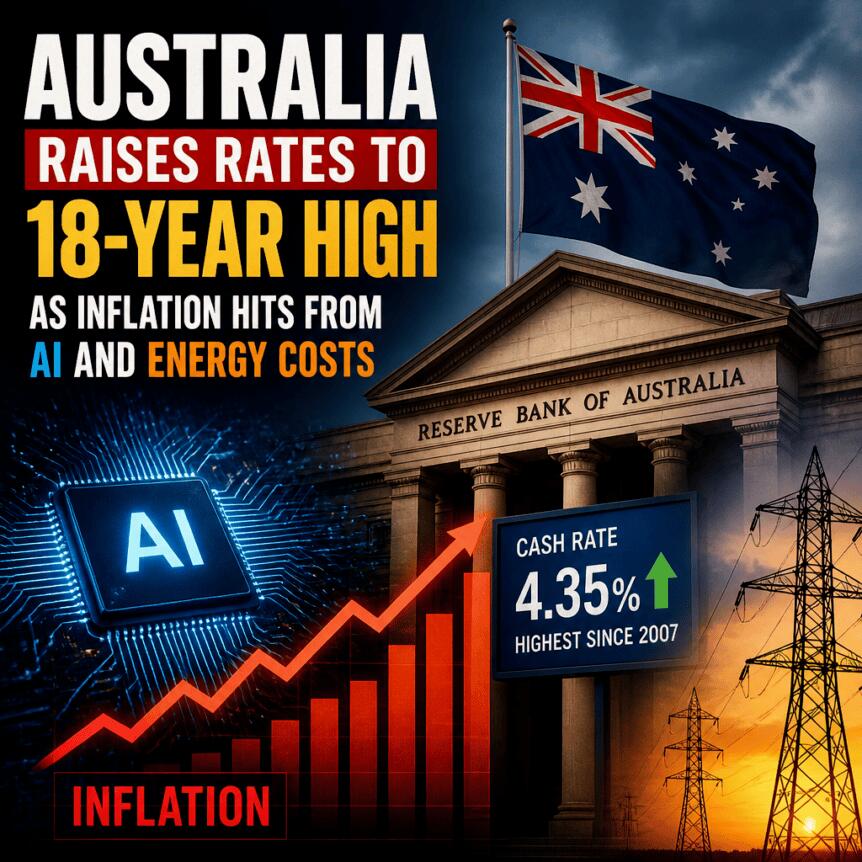
Australia’s Reserve Bank (RBA) has lifted its policy interest rate by 25 basis points to 4.85%, citing persistent inflation pressures expected to last well into 2027. The decision, made on Tuesday, underscores how cost pressures tied to energy and technology spending—particularly AI-related investment—are complicating the path back to Australia’s 2%–3% inflation target range.
In a split vote, the RBA’s monetary policy board approved the hike 6–3, with three members backing a hold at 4.60%. The bank also pushed back its inflation outlook, now forecasting inflation to return to the top of the target range only in late 2027—roughly three quarters later than it previously expected.
Key takeaways
- The RBA raised its policy rate to 4.85%, the highest level in 18 years, in a 6–3 decision.
- Inflation is now expected to stay elevated through much of 2027, with a delayed return to the target range.
- The central bank highlighted faster price growth for technology-related goods linked to AI investment, alongside higher fuel and commodity costs.
- The move comes as the US Federal Reserve recently held rates while signaling that AI-related spending may be adding to inflation pressures.
RBA hikes rates as inflation timeline stretches
The RBA’s latest decision increases borrowing costs in Australia at a time when households and businesses are already contending with the lingering effects of earlier price rises. According to the RBA, inflation is projected to remain elevated for longer than previously forecast, reflecting both energy-driven costs and new sources of demand that are feeding into prices.
In its statement, the RBA pushed back the timing of when inflation is expected to return to the top of its 2% to 3% target range, now placing that outcome in late 2027. The delay is substantial: the bank said it is “around three quarters later” than its prior expectation.
AI investment and energy costs become central to the inflation picture
While central banks have increasingly pointed to technology spending as a potential contributor to inflation, the RBA framed the issue in concrete terms. The monetary policy board said AI-related investment is driving rapid price growth for technology-related goods. That effect is occurring alongside higher fuel and commodity prices, which the bank linked to the broader impact of the Middle East conflict.
Taken together, these factors help explain why the RBA believes inflation will not cool as quickly as earlier projections suggested. Even if demand growth moderates later, the central bank’s current view implies that price pressures tied to supply constraints and production costs could persist.
Split vote highlights uncertainty inside the board
The 6–3 outcome adds another layer to the decision. Three board members preferred to hold rates at 4.60%, indicating that not all policymakers are aligned on how quickly inflation should be expected to ease. For markets and lenders, such internal disagreement can matter: it suggests that the path of future rate moves may remain data-dependent rather than predetermined.
For investors and businesses, a delayed inflation timeline also changes the way forward expectations are formed. If inflation takes longer to fall within the target band, financial conditions may remain tighter for longer—affecting everything from bond yields to borrowing rates and the broader cost of capital.
Australia’s decision follows a similar theme in the US
The RBA’s move arrives after the US Federal Reserve held rates last week, even as Fed officials warned that AI-related investment could be reinforcing price pressures. As noted by Cointelegraph in coverage of the Fed’s decision, analysts pointed to the hawkish tone of the rate hold. The Fed has also publicly discussed how investment in areas such as computer equipment and related utility demand can carry inflation implications.
The parallels are not identical—Australia and the United States operate under different economic conditions—but the shared theme is clear: policymakers are increasingly factoring in how technology-driven investment cycles can influence the inflation outlook. This matters beyond macro headlines, because it can affect global expectations for when major central banks will begin loosening monetary policy.
Australian Treasurer Jim Chalmers said the RBA’s decision was “widely expected,” but also emphasized the strain it brings for families and businesses. In his remarks on X, Chalmers described the outcome as difficult for Australians who are already facing high prices connected to circumstances outside their control.
What to watch next
With the RBA now targeting a late-2027 return to its inflation range, the next key signals will be whether technology-related goods prices keep accelerating and how energy and commodity costs evolve. Traders, lenders, and investors will likely focus on subsequent inflation prints and RBA commentary to gauge whether the delayed forecast is becoming more entrenched or if the disinflation path can reassert itself sooner.