Introduction
Bitpanda is accelerating its pivot from a crypto-only platform toward a universal exchange, announcing a move to offer stocks and exchange-traded funds on the same app. The Vienna-based exchange will widen access to traditional financial products, positioning itself as a one-stop portal for investors who want exposure to both digital assets and mainstream markets.
Key Takeaways
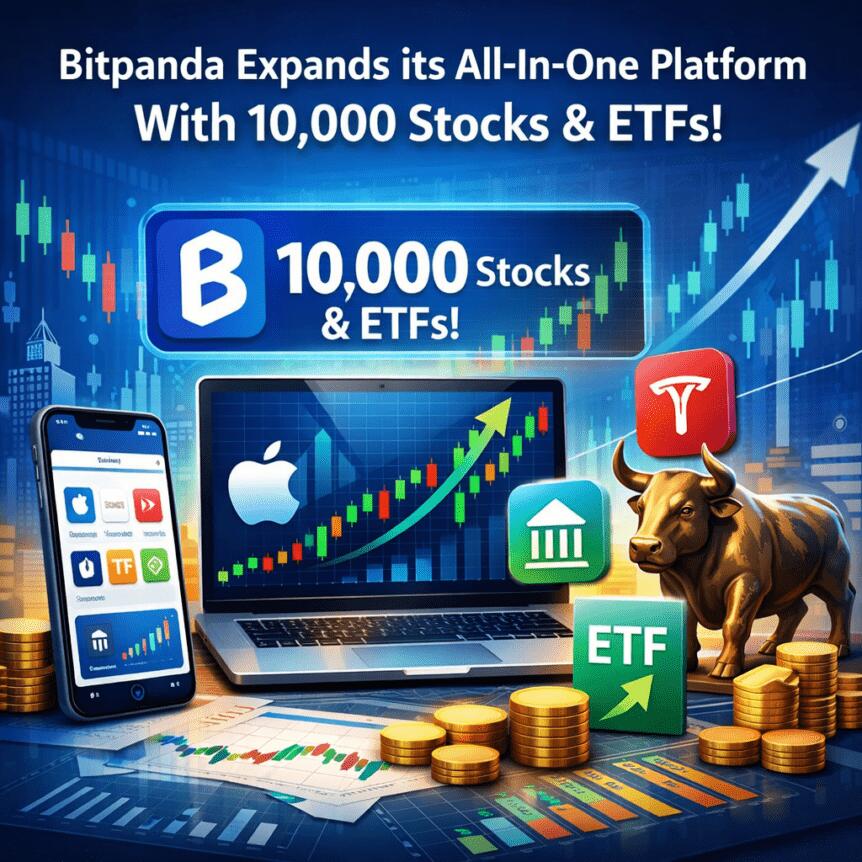
- Bitpanda will launch access to about 10,000 stocks and ETFs starting January 29, enabling cross-asset trading within a single app.
- Stocks and ETFs will be priced at a flat €1 per transaction, with no hidden fees for order flow, custody or withdrawals.
- The rollout emphasizes real stocks rather than tokenized shares and will be available across the European Union.
- The move is part of a broader trend among crypto platforms toward “universal exchange” functionality, blending crypto trading with traditional financial instruments.
Tickers mentioned:
Tickers mentioned: None
Sentiment
Sentiment: Bullish
Price impact
Price impact: Positive. The flat-fee model and cross-asset access could broaden user engagement and attract new money to the platform.
Trading idea (Not Financial Advice)
Trading idea (Not Financial Advice): Hold. The integration of traditional assets may expand Bitpanda’s user base, but investors should monitor competitive developments and regulatory clarity in the EU.
Market context
Market context: The push toward universal exchanges mirrors a broader industry trend as platforms compete to offer integrated access to crypto, equities and other asset classes in one ecosystem.
Rewritten article body
Bitpanda, the Vienna-based crypto exchange known for packaging crypto products in accessible formats, is expanding its platform to include traditional market instruments — stocks and exchange-traded funds — alongside digital assets. The company described the move as a step toward a universal exchange model, a framework that seeks to unify disparate asset classes under a single trading experience.
Starting January 29, Bitpanda will provide users with access to roughly 10,000 stocks and ETFs. In a Tuesday announcement, the firm said investors will be able to trade real stocks and ETFs within the same app they use to buy, sell or hold cryptocurrencies. The aim, explicitly stated by Bitpanda, is to simplify investing by allowing clients to manage multiple asset classes from one interface, reducing the need to switch between different platforms or apps.
Pricing for the new offering is straightforward: a flat €1 per transaction, with no additional charges tied to order flow, custody or withdrawals. Bitpanda explained that the flat-fee approach aligns with its broader objective of lowering barriers to entry across asset classes, fostering a more seamless investment workflow for users who want exposure to both crypto and traditional equities within the same ecosystem.
The roll-out comes amid a broader wave of moves by major crypto platforms to broaden their product suites beyond digital assets. Several prominent exchanges have signaled ambitions to offer TradFi exposure domestically and internationally, underscoring a trend toward consolidation of financial services on crypto platforms. For instance, Kraken has publicly pursued a pathway to equities by launching a sizeable catalog of U.S.-listed stocks and ETFs with commission-free trading as part of a phased national rollout, while Coinbase has extended stock trading capabilities and positioned its wallet as a broader “everything app” intended to enable 24/7 trading of stocks and ETFs alongside cryptocurrencies.
Bitpanda’s leadership frames the initiative as a natural evolution for the company. Eric Demuth, Bitpanda’s chairman and co-founder, called the move the “next evolution” of the platform. He said, “Eleven years ago, we made crypto simple and secure for everyone. Now comes the next evolution, for Bitpanda and for the financial market: for the first time, we’re bringing all markets and asset classes together in a single app.” The emphasis on real stocks — not tokenized representations — is intended to reassure users that the offering mirrors traditional markets, while still benefiting from the convenience and accessibility Bitpanda has cultivated since its inception. Bitpanda indicated the service will be available across the European Union, signaling a pan-EU rollout rather than a piecemeal one country at a time.
The trend toward universal trading platforms has drawn commentary from researchers and market observers who see the emergence of a new wave of “super apps” or aggregation-era platforms. Delphi Digital has described this trajectory as part of a broader shift in the crypto space, where platforms with the most users and products may command outsized influence as investors seek a single portal for multiple asset classes. In this context, Bitpanda’s strategy represents a deliberate bet on expansion and diversification, aiming to capture demand from investors seeking a more holistic financial experience within a single interface.
As the integration unfolds, the industry will watch for how regulators in the European Union respond to a model that blends digital assets with traditional securities trading on a single platform. While the approach may offer convenience and potential for broader participation in markets, it also raises questions about safeguards, licensing, and transactional transparency across asset classes. Bitpanda’s emphasis on real stocks is likely to help address some concerns, but the broader implications for cross-asset trading will continue to unfold as more platforms explore similar universality in their offerings.
The move also highlights a broader market dynamic: the appetite among crypto platforms to attract a wider investor base by providing diversified investment avenues. As more exchanges push into TradFi, the line between crypto trading and conventional markets becomes increasingly blurred, with users seeking a seamless experience that transcends asset categories. It remains to be seen how this universal exchange approach will shape liquidity, capital formation and the competitive landscape across both crypto and traditional financial markets in the months ahead.