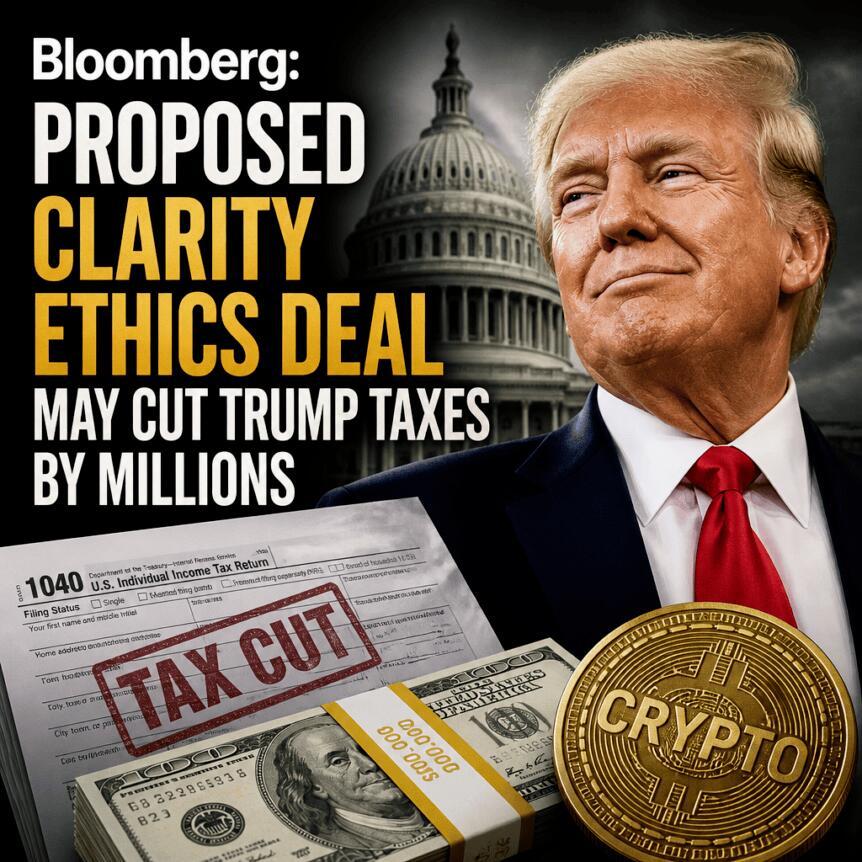
A bipartisan ethics proposal being discussed as a potential path to advancing the US crypto market-structure bill could offer a major tax benefit to President Donald Trump, Bloomberg reported on Thursday.
Bloomberg said the proposal—an addendum tied to ethics rules intended to address Democratic concerns about conflicts of interest—would require Trump to divest from crypto-related businesses. According to people familiar with the matter, it may also allow him to defer capital gains taxes on any divestitures, potentially resulting in tax savings in the millions.
Key takeaways
- Bloomberg reports a new ethics addendum could be linked to passage of the US crypto market-structure bill.
- The proposal would reportedly require presidential divestment from crypto-related business interests.
- A reported option to defer capital gains taxes on divestitures could create millions in potential tax savings.
- Democrats have previously flagged Trump’s crypto ties as a major hurdle to moving the market-structure legislation.
- Trump’s latest disclosed crypto-related income includes large revenue figures tied to token and memecoin licensing and sales.
Ethics addendum tied to market-structure push
Democratic lawmakers have repeatedly argued that the president’s financial exposure to crypto ventures makes it harder to support market-structure legislation without stronger conflict-of-interest guardrails. Bloomberg’s Thursday report frames the ethics proposal as another attempt to break that impasse.
While the addendum reportedly has not been made public, Bloomberg said it includes a divestiture requirement. The reporting also suggests an accompanying tax mechanism that would let Trump defer capital gains taxes if divestiture is required under the ethics rules.
Cointelegraph reached out to the White House for comment but did not receive an immediate response.
Why Democrats may scrutinize the tax-deferment angle
Even if divestment requirements were designed to reduce perceived conflicts, the reported tax-deferral benefit could complicate the political dynamics. Bloomberg noted that Democrats who are already wary about whether Trump’s financial interests are genuinely curbed may raise further questions if divestitures come with meaningful tax advantages.
That tension reflects a broader challenge in conflict-of-interest policy: divestment can change exposure, but the way tax rules interact with divestment can affect how fully a candidate or officeholder is seen to be stepping away.
Earlier coverage from Cointelegraph has described how concerns about Trump’s crypto conflicts have been central to resistance to the market-structure bill, and how senators were working on additional ethics language to clear a path forward. The new detail Bloomberg reported—tax deferral tied to divestiture—adds a fresh issue lawmakers may debate during negotiations.
New disclosure highlights scale of crypto-related income
One reason the ethics debate has been so intense is the extent of Trump’s disclosed financial involvement. Trump’s annual financial disclosure report for 2025, released at the end of June, listed $1.4 billion in income from crypto-related ventures during the prior year.
Bloomberg’s report, drawing on the disclosure, said the largest portion came from licensing and sale of memecoins, including Official Trump (TRUMP). The disclosure reportedly showed about $635 million in “royalties” from a “license agreement with Celebration Coins.”
The filing also indicated that World Liberty Financial—Trump’s family-associated DeFi platform—was a second major earner. Bloomberg said the disclosure attributed about $588 million to “proceeds from token sales.”
In addition, the disclosure reportedly listed $197 from the sale of an equity interest in a stablecoin venture.
Cointelegraph previously reported on the disclosures and their implications for the debate around crypto oversight, including details about stablecoin-related disclosures and the president’s crypto-connected business structures.
Corporate ties and ownership stakes remain part of the story
Separate disclosures about World Liberty’s website also reportedly show that DT Marks DEFI LLC, an entity affiliated with Trump and certain family members, owns approximately 38% of the equity interests in World Liberty’s parent company.
This kind of ownership stake is likely to matter as lawmakers weigh what “divestment” should mean in practice—especially when exposure can come not only from direct business operations, but also from equity structures and downstream licensing arrangements.
With the ethics addendum not yet publicly available, it remains unclear how detailed the divestiture requirement would be and whether it would extend to every category of financial involvement reflected in the disclosure.
For now, readers should watch whether the ethics language becomes public and how it is interpreted in Congress—particularly around what divestment would cover and whether Democratic lawmakers view the reported tax deferral as compatible with the goal of reducing genuine conflict. The outcome could shape not only the market-structure bill’s prospects, but also the standard future administrations may face when crypto policy intersects with personal financial interests.