Honoring Hal Finney: A Pioneering Figure in Bitcoin’s History
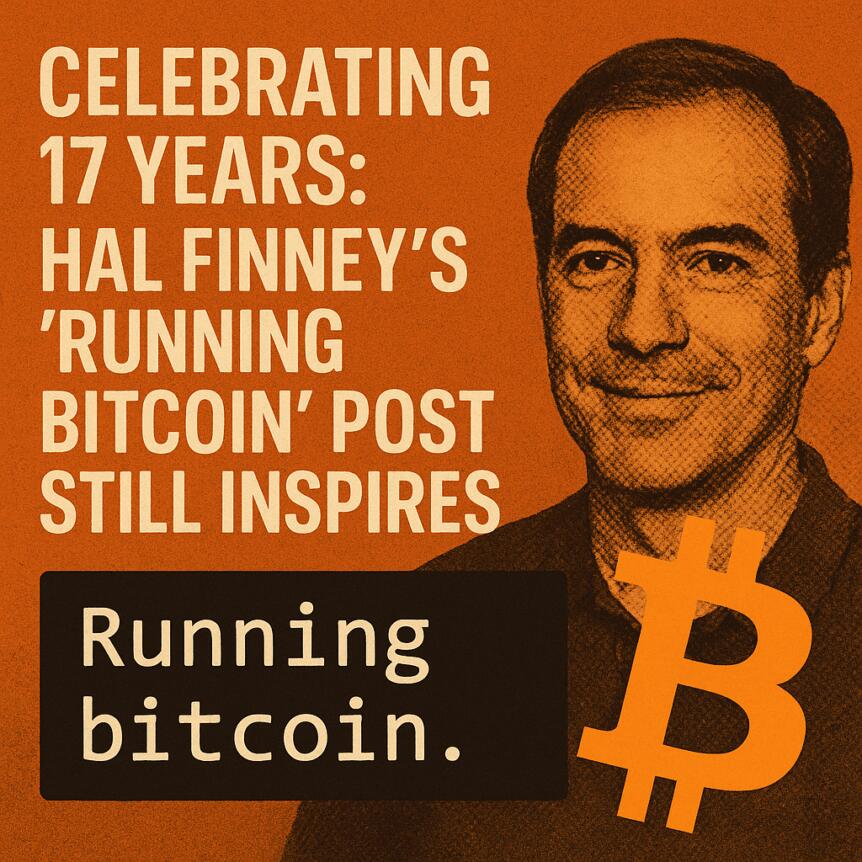
The cryptocurrency community commemorates the anniversary of Hal Finney’s historic January 10, 2009, post, which marked a significant milestone in Bitcoin’s evolution. Finney, a renowned cryptographer and early Bitcoin contributor, announced that he was running the Bitcoin node software, an act that has become an integral part of crypto lore. Celebrated for his early involvement and contributions, Finney was also the recipient of the first Bitcoin transaction, underscoring his pivotal role in the network’s infancy.
Key Takeaways
- Hal Finney’s January 2009 post is celebrated as a foundational moment in Bitcoin history.
- Finney was among the earliest adopters, responding swiftly to Satoshi Nakamoto’s whitepaper and engaging with the Bitcoin network.
- He received the first Bitcoin transaction, predating widespread adoption and fostering the narrative of his deep involvement.
- Speculation persists about Finney’s possible identity as Satoshi Nakamoto, fueled by subsequent investigations and media coverage.
Tickers mentioned: None
Sentiment: Nostalgic and investigative
Price impact: Neutral. The focus remains on historical significance rather than market movement.
Market context: As Bitcoin’s community reflects on its origins, broader crypto markets continue to evolve amidst ongoing debates about identity and decentralization.
Hal Finney, born on May 4, 1956, was a pioneering computer scientist and cryptographer whose early involvement with Bitcoin positioned him at the forefront of the digital currency revolution. His participation began shortly after the publication of Satoshi Nakamoto’s whitepaper, when he responded to the initial outreach and began running a Bitcoin node. Finney’s notable contribution includes receiving the first Bitcoin transaction—a symbolic event that established a new paradigm for peer-to-peer electronic cash.
At the time, Satoshi Nakamoto sent Finney 10 BTC, which would be worth over $900,500 today. His early correspondence with Nakamoto and involvement in the project fueled ongoing speculation about whether Finney might have been Satoshi himself, a topic that remains hotly debated. Finney’s engagement in cryptography research, coupled with his participation in the Bitcoin network, keeps him prominently in the lore of the digital currency.
Nevertheless, questions about his true identity persist. A 2024 HBO documentary series, Money Electric: The Bitcoin Mystery, reignited discussions, with some suggesting that Finney’s skills and early involvement point to him being Satoshi. Conversely, critics highlight details such as Finney’s use of Mac OS, which Satoshi reportedly did not favor, and other technical evidence that argue against this theory.
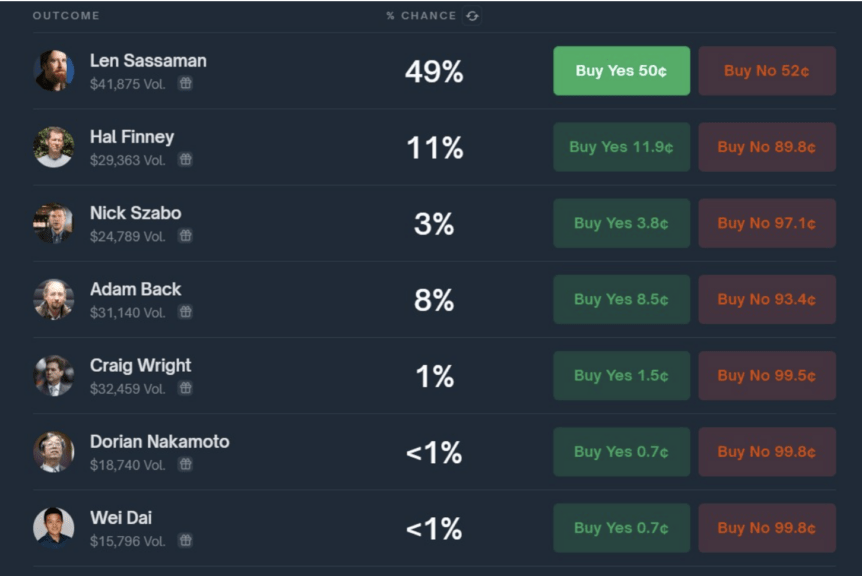
In 2010, Finney’s own online posts indicated that he and his wife both used Mac OS computers, adding depth to the debates about his possible involvement. Yet, in a 2023 analysis, Jameson Lopp, co-founder of Casa, presented evidence suggesting that Finney was not Satoshi, citing Finney’s last-minute email communication prior to completing a marathon race as a definitive break from the Satoshi profile.
Despite the complex narrative, Finney’s legacy endures as a pioneering figure whose early efforts helped shape the decentralized digital currency landscape. His contributions remain a central chapter in the history of Bitcoin, inspiring ongoing dialogue and research into its origins and evolution.