Andre Cronje, the founder of Flying Tulip, argues that a large swath of what many call decentralized finance is no longer DeFi in the strict sense. In an interview with Cointelegraph, Cronje said many protocols have evolved into “teams running for-profit businesses” with upgradeable contracts, off-chain infrastructure, and formal operational controls rather than purely immutable on-chain code.
The shift, Cronje contends, alters the very security model of the space. Where early DeFi hinged on immutable smart contracts, newer systems increasingly rely on proxy upgrades, multisignature controls, infrastructure providers, and human response protocols. “I think what we have today, Flying Tulip included, is no longer DeFi. It’s not decentralized finance. It’s teams running for-profit businesses,” Cronje declared.
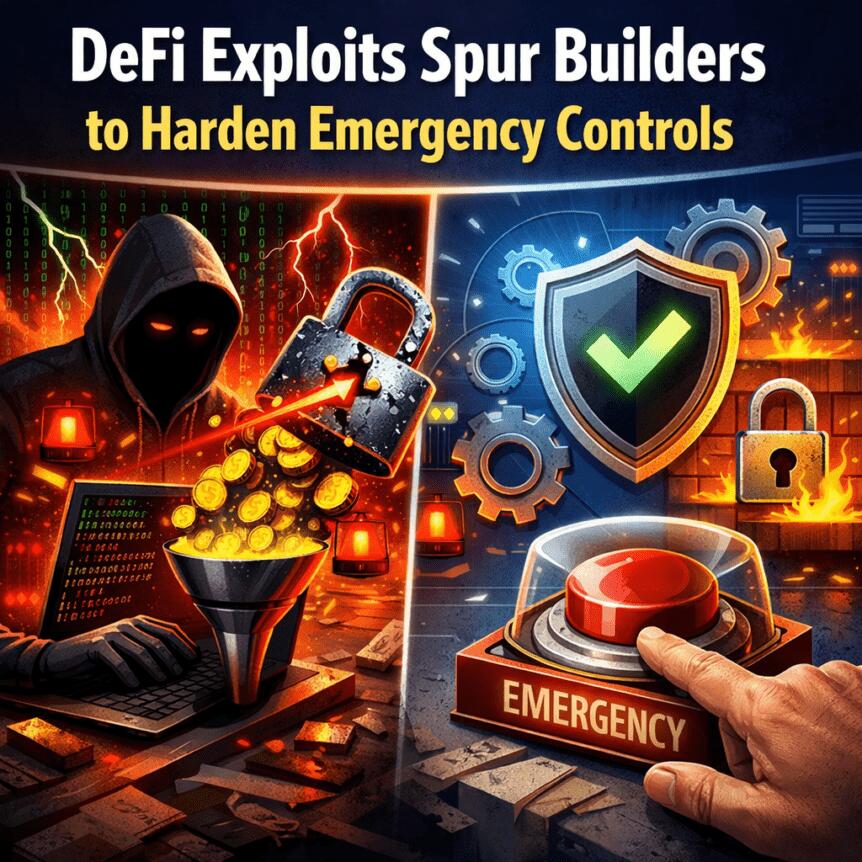
The remarks come as the industry confronts a wave of April exploits that broaden the security conversation beyond code audits to questions of operational risk. Flying Tulip itself recently introduced a withdrawal circuit breaker intended to delay or queue withdrawals during abnormal outflows. The move followed high-profile incidents involving Drift Protocol and a related restaking platform, Kelp, which together highlighted the scale of losses in the tens of hundreds of millions of dollars.
According to Cointelegraph’s coverage, the DeFi sector has grappled with losses estimated around $280 million for Drift Protocol and roughly $293 million tied to the Kelp scenario. These figures, while not the sole measure of risk, contributed to a broader debate about how to secure user funds in environments that blend on-chain mechanics with off-chain dependencies.
Crucially, the discussion centers not only on code but on governance, upgrade paths, and the resilience of the entire threat model—encompassing people, processes, and technology stacks that support deployed contracts.
Key takeaways
- DeFi’s security paradigm is expanding from immutable on-chain code to include upgrade processes, multisignature governance, and off-chain infrastructure as critical risk factors.
- Emergency controls such as circuit breakers are increasingly viewed as potential safety nets, but they raise concerns about centralization risk and the possibility of introducing new attack surfaces.
- Industry voices diverge on the right balance between automated safeguards and human intervention; the goal remains to minimize human-centric weaknesses while maintaining funds safety.
- Regulators and traditional finance observers see the evolution as a training ground for resilience, with upgrades and cross-project collaborations shaping a more robust DeFi ecosystem.
- Practically, users and builders should watch how governance, timelocks, and upgrade controls are implemented, and how these mechanisms interact with cross-chain interoperability and bridge security.
The evolving security landscape: from code to controls
In Cronje’s assessment, the DeFi world has shifted from a singular focus on auditing immutable contracts to considering who can alter code, how changes are approved, and whether timelocks or multisig approvals exist to guard against rash or malicious upgrades. He emphasized that audit checks are still essential but insufficient if a system’s governance and upgrade mechanisms can be exploited or manipulated by a compromised actor.
“The focus over all of the industry is still very much on the contract side and not sort of the more TradFi side,” Cronje told Cointelegraph. He pointed to recent exploits that leveraged traditional Web2-style weaknesses—infra access, social engineering, and other human-centered vectors—as evidence that security must extend beyond code audits.
To address upgrade risk, Cronje described Flying Tulip’s circuit breaker as a strategic pause rather than a permanent block. The aim is to “give us time to react” to abnormal capital outflows. The system is designed to pause withdrawals for a window—about six hours for Flying Tulip’s configuration, potentially longer for smaller teams with limited geographic distribution. He framed the circuit breaker as one layer in a multi-layered defense, alongside audits, timelocks, and distributed multisignature controls.
Still, industry voices varied on the desirability and design of emergency controls. Michael Egorov, founder of Curve Finance and Yield Basis, told Cointelegraph that recent incidents illustrate centralization risks and off-chain dependencies rather than pure contract bugs. He warned that a circuit breaker could itself become a vulnerability if the mechanism grants signers the power to alter code or freeze withdrawals in a compromised state.
Egorov argued for DeFi designs that can withstand shocks without requiring manual intervention. “The goal of DeFi design should be to minimize human-centric points of failure, not add to them,” he said. In his view, a resilient system should keep operating safely even when some actors are compromised, reducing reliance on privileged intervention.
Industry reactions: resilience, centralization, and the road ahead
The April incidents have also drawn involvement from traditional financial institutions. Standard Chartered published a note framing the Kelp episode as a signal of DeFi’s growing pains rather than a fatal flaw. The bank highlighted how the total lift in liquidity from the DeFi United coalition surpassed $300 million and noted ongoing upgrades—such as Aave V4 and the Ethereum Economic Zone—that aim to harden the ecosystem and reduce reliance on bridge-based cross-chain flows.
The bank characterized the heightened attention to decentralization and off-chain dependencies as a natural evolution for a space that remains early in its maturation. By incorporating these lessons, proponents argue, DeFi can improve operational resilience and user protection over time, even as the core codebase remains a critical focal point.
DeFi United’s fundraising activity—reported as over $321 million raised or committed according to the coalition’s site—illustrates a broader push to coordinate capital and governance in ways that strengthen defenses and liquidity for recovery scenarios. The big-picture takeaway for builders and investors is clear: risk management in DeFi is transitioning from a purely code-centric problem to a holistic program that blends on-chain security with robust governance, incident response, and cross-chain reliability.
What this means for builders and users
The shift Cronje describes has practical implications for developers, investors, and users. First, upgradeability introduces a new category of risk that must be mitigated with transparent governance, clear upgrade paths, and stringent access controls. Projects that rely on proxy patterns or admin keys will need to demonstrate robust disclosure and rigorous security reviews of their upgrade processes.
Second, the growing emphasis on operational risk elevates the importance of off-chain infrastructure and third-party dependencies. Audits can verify code correctness, but a compromised infrastructure provider or a successful social-engineering campaign can still endanger funds. This reality argues for diversified infrastructure, strict access management, and redundant systems to reduce single points of failure.
Third, the debate about circuit breakers highlights a tension between safety and centralization. While pause mechanisms can prevent cascading losses during extreme events, they also introduce a centralized layer that could be politicized or misused if not designed carefully. The consensus among many builders remains that any emergency control should be transparent, auditable, and have clear, time-bound constraints that limit abuse vectors.
For investors, these dynamics imply a recalibration of risk models. The strongest DeFi projects in the coming years may be those that demonstrate comprehensive governance architectures, robust migration and upgrade protocols, and explicit plans for incident response that minimize human-centric vulnerabilities while preserving user access and trust.
What to watch next
As the industry absorbs these lessons, observers will be watching how new security frameworks evolve. Expect continued experimentation with circuit breakers, time-locked upgrades, and multi-party governance, all aimed at reducing both on-chain and off-chain risk. Regulators and traditional financial actors will likely scrutinize governance processes and operational controls, seeking to codify best practices that can scale with the sector’s growth.
Readers should monitor how major DeFi protocols balance upgradeability with immutability, and how bridges and cross-chain infrastructure evolve to minimize single points of failure. The ongoing dialogue around resilience—covering code, governance, and operational risk—will shape which projects gain broader adoption and how quickly the sector can recover from future shocks.