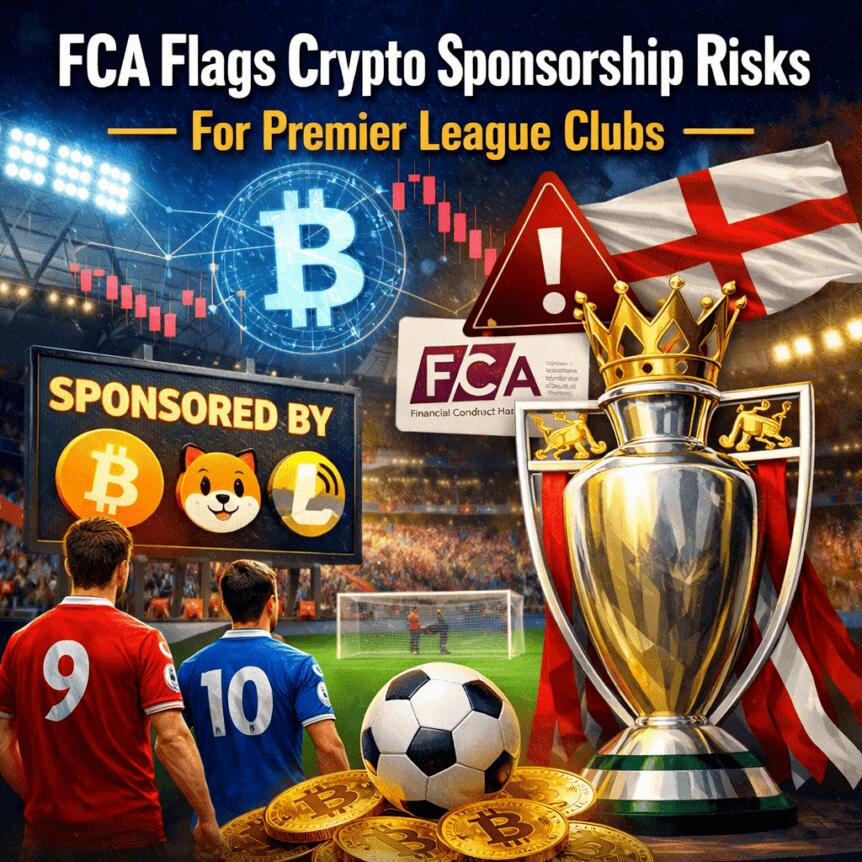
The United Kingdom’s financial regulator has issued a formal warning to football clubs, including Premier League teams, urging them to avoid sponsorship deals with unauthorized financial firms amid concerns that fans are being steered toward high-risk crypto and trading platforms without adequate protections.
In a press release, the Financial Conduct Authority (FCA) said multiple unauthorized firms—including crypto businesses and online trading platforms—are using football sponsorships to reach supporters who may be unaware of the regulatory status of these firms. The FCA warned that such sponsorships may breach UK financial services law if the sponsors operate without authorization and that fans who engage with these platforms “risk losing all their money.”
The regulator’s notice places scrutiny directly on the clubs, noting that it has written to teams to stress that sponsorship deals with unauthorized financial firms not only threaten fans but could expose clubs to legal liability, money-laundering risks, and reputational damage if due diligence on partners is inadequate. The warning aligns with a broader push to tighten financial promotions in the crypto and high-risk trading space as brands seek prominent exposure through football sponsorships.
The FCA’s action comes as crypto and trading brands have expanded their footprint across top-tier football, amplifying the visibility of retail-facing platforms at a time when the watchdog is intensifying its oversight of financial promotions. The press release signals that football sponsorships are now within the scope of the FCA’s promotional regime for crypto and related financial products. The regulator stressed that any firm not authorized in the UK can promote financial products or services only if its adverts are signed off by an authorized firm under the financial promotions regime. Source.
Key takeaways
- The FCA has written to UK football clubs warning against sponsorship deals with unauthorized financial firms and outlining potential legal and compliance risks, including money-laundering concerns and reputational damage for clubs.
- Under UK rules, promotions for financial products by unauthorized firms require authorization-backed sign-off; clubs face enforcement risk if due diligence on sponsors is inadequate.
- LAK3 Company, which sponsored Wolverhampton Wanderers in the 2024-25 season, appears on the FCA’s Warning List of unauthorized firms, illustrating the regulator’s focus on sponsor-publisher risk. Source.
- Chelsea and Manchester City have sponsored crypto platforms BingX and OKX, respectively, but neither brand appears on the FCA’s Warning List; reports indicate they do not feature on the FCA register of authorized firms. Source.
- Crypto marketing has been brought under the FCA’s financial promotions regime since October 2023, including hundreds of alerts in a 24-hour window and enforcement actions such as against HTX (formerly Huobi) for alleged illegal promotions. The FCA’s latest move extends crypto-promotion scrutiny to football sponsorships as part of ongoing enforcement. Source Source.
- The regulator is coordinating with the government, the Premier League, and the forthcoming Independent Football Regulator to address sponsorship-related risks across the sport.
Prominent sponsorships and regulatory risk landscape
The FCA’s warning underscores a growing regulatory concern over how football clubs monetize brand partnerships with high-risk financial services providers. While several clubs have inked deals with crypto and online trading brands for shirt sponsorships and stadium visibility, the FCA’s position is that such partnerships require rigorous scrutiny. The watchdog explicitly noted that sponsorships with unauthorized firms may expose clubs to legal liability and compliance failures if proper checks are not conducted.
Among the notable cases, LAK3 Company’s association with Wolverhampton Wanderers has placed the sponsor on the FCA’s Warning List, illustrating the regulator’s active monitoring of partner credentials. The presence of a sponsor on the Warning List signals heightened risk for clubs that proceed without due diligence. Source.
Meanwhile, reports quoted by the Financial Times suggest that BingX and OKX, despite partnering with Chelsea and Manchester City, respectively, are not on the FCA’s Warning List and do not appear on the official authorized-firm register. This discrepancy highlights the FCA’s ongoing efforts to balance enforcement with commercial realities in elite football sponsorships. Source.
The FCA’s notice also reflects its broader intent to bring football sponsorships within the ambit of crypto-promotions regulation, signaling that clubs must implement continuous, robust due-diligence processes for all financial-services partners. The regulator reiterated that promotion of non-authorized firms can occur only when aligned with a properly authorized partner and compliant promotional material.
Crypto promotions regime and cross-sector oversight
The FCA’s crypto marketing regime, introduced in October 2023, markedly broadened the visibility and scrutiny of crypto-related advertising. In the regime’s early phase, the FCA issued 146 alerts within 24 hours as part of a rapid, first-response approach to non-compliant promotions, and it subsequently launched enforcement actions against entities such as HTX (Huobi) for alleged illegal promotions to UK consumers. This track record demonstrates the regulator’s willingness to pursue fast, decisive action against promotional activities that could mislead or harm retail investors. Source Source.
The FCA’s latest action makes clear that football sponsorships are within the reach of crypto-promotions rules. In its communication, the watchdog noted ongoing collaborations with government departments, the Premier League, and the incoming Independent Football Regulator to address promotional and due-diligence issues across the sport. The regulator’s stance comes amid parallel regulatory attention from bodies such as the Gambling Commission, which recently warned about gambling advertisements on the replica kits worn by children at four Premier League clubs (Bournemouth, Fulham, Newcastle United, and Wolverhampton Wanderers), signaling broader regulatory sensitivities to how high-risk products are marketed to younger audiences.
The FCA did not respond to requests for comment by publication. However, the agency’s public notice emphasised that any non-authorized UK firm must have its adverts approved by an authorized entity under the financial promotions regime, reinforcing a structured path for clubs to vet and authorize sponsorship arrangements.
Closing perspective
For clubs, sponsors, and institutional stakeholders, the FCA’s escalation of sponsorship oversight defines a clearer compliance boundary around football partnerships with financial-services brands. As the regulatory framework tightens, clubs face heightened due-diligence obligations, potential licensing considerations, and increased reputational risk if partnerships are not rigorously vetted. Observers should watch for updated guidance on due-diligence standards, potential licensing requirements for football sponsorships, and cross-border enforcement developments as regulators continue to align crypto-promotions with traditional financial controls.