Bitcoin rebounded sharply over the weekend, recovering about 11% from a new cycle low near $55,110 on Coinbase to trade around $61,034. Even so, traders are debating whether the move is only a pause before another leg down, as macro pressure continues to weigh on risk assets.
The selloff has not been confined to crypto. Friday saw the Nasdaq fall an additional 5.3%, with the index approaching bear-market territory after dropping close to 20% from an October high. Broader markets were also weak: the S&P 500 slid 8.6% last week, gold dropped 4.3% over 24 hours, and both are pointing to heightened risk aversion. In that context, Bitcoin’s bounce may matter less than the question investors are asking now—whether liquidity conditions stabilize enough to hold the rebound.
Key takeaways
- Bitcoin surged roughly 11% from a cycle low around $55,110, but price is still vulnerable to renewed macro-driven sell pressure.
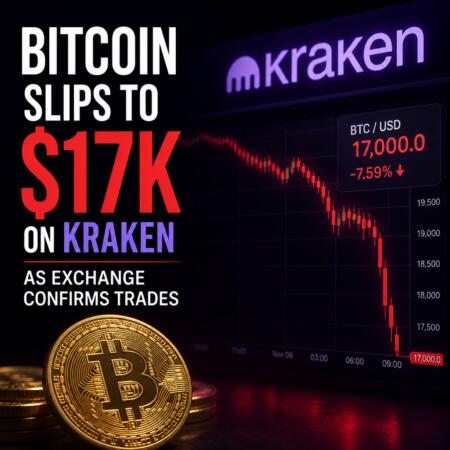
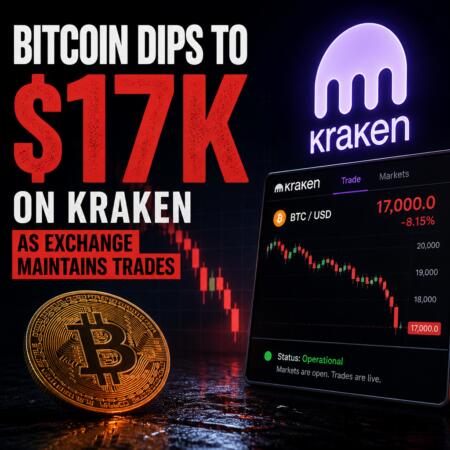
- Kraken reported no issues on its side after a brief print of around $17,000 on its Canadian dollar market—an episode that did not appear to involve account compromise.
- Ledger is investigating reports of tampered hardware wallets in Berlin and the UAE, including incidents tied to a campaign it first flagged in Southeast Asia.
- Ethereum’s “Glamsterdam” upgrade may slip to May 2027 depending on gas pricing EIP adjustments and testing outcomes.
- Regulators are warning that quantum-resistant upgrades could slow blockchains and increase fees, while the US Senate advanced tighter rules for certain prediction markets.
Bitcoin’s bounce meets a tougher macro backdrop
Bitcoin’s weekend recovery capped a rapid reversal from the new cycle low near $55,110. At the time of writing, BTC was holding around $60,750, but many market observers are still pointing to potential downside scenarios.
Several traders have referenced recurring patterns from prior Bitcoin cycles, including the idea that bull phases have historically ended with large drawdowns of at least 75% from earlier parabolic peaks. Earlier this week, veteran trader Peter Brandt raised a similar question, noting that every bull-market phase in Bitcoin’s history he has tracked ended with a correction of that magnitude. The implication is not that the move is guaranteed, but that investors should consider how far a “healthy” correction can extend when broader risk appetite deteriorates.
That macro pressure is central to the debate. The latest equity weakness and the move lower in gold underline that the selloff is not purely crypto-native. When investors retreat from high-volatility assets, BTC can still react like a risk instrument—regardless of how strong on-chain narratives look during calmer periods.
Kraken addresses the reported $17K print on its Canadian market
While Bitcoin was climbing back toward $61,000, Kraken’s Canadian dollar market briefly saw a dramatic dislocation: the BTC price reportedly crashed to around US$17,000. Kraken said the event did not reflect a security breach. According to Cointelegraph’s coverage of the incident, Kraken stated that all orders were processed correctly and that its security teams found no evidence of compromised accounts or a breach, adding “Executed trades stand.”
For traders, episodes like this raise a different type of risk: not only market volatility, but also the operational question of how exchanges price, execute, and report trades under stress. Kraken’s public reassurance reduces the likelihood of a hack, but the market impact of a brief extreme print can still linger through sentiment and automated systems.
Other cycle-related commentary has also circulated, including claims that Bitcoin’s MVRV peak this cycle reached a relatively low multiple above cost basis. But cycle analysts typically emphasize that bear markets often push Bitcoin well below realized pricing metrics. One such view cited Coinglass data that places a “balanced” level far below recent trading—highlighting why many participants are cautious about treating the bounce as confirmation of a sustainable bottom.
Hardware-wallet tampering reported in Germany and the UAE
Outside the price chart, security remained a major theme. Ledger warned customers who purchased certain hardware wallets in Berlin since January 2026 to contact support, as the company investigates reports of tampered devices in Germany and the United Arab Emirates. Cointelegraph reports that suspicious devices have been reported in Berlin, while two customers in Dubai reported losing a combined $604,000 in cryptocurrency.
Ledger linked the incidents to a distribution-channel tampering campaign it said it first investigated in Southeast Asia in October. To address customer concerns, Ledger is also offering physical inspections—including X-ray analysis—at its factory in Vierzon, France for those who believe their devices may have been compromised.
For users, this matters because hardware-wallet compromises often go beyond simple phishing: the risk can involve devices pre-manufactured or intercepted before delivery, creating a threat model that normal “be careful what you download” guidance can’t fully prevent. Investors focused on self-custody may want to revisit verification and handling practices—especially for purchases from unfamiliar channels.
Ethereum’s “Glamsterdam” upgrade may be delayed to May 2027
Ethereum remains in the middle of a planning debate around its Glamsterdam upgrade. According to Cointelegraph, last week’s developer push aimed to make Ethereum “post quantum and AI proof” in 2027, but this week’s All Core Devs Call suggested the upgrade might not be activated until May 2027.
Under the current specifications, mainnet activation could arrive as early as mid-January 2027. However, changes to gas pricing EIPs—followed by testing for compatibility issues—could push activation later into late February or early March, and potentially into April or May if more adjustments are required. No decision has been finalized, leaving a key timeline variable for builders and application teams relying on predictable protocol change windows.
The call also considered whether the upgrade scope in related forks could be modified to prioritize post-quantum features. Some developers argued that shrinking the upgrade’s scope may offer limited benefit unless it also accelerates the overall rollout—underscoring the tension between shipping readiness and technical ambition.
Security, cross-chain activity, and broader policy pressure
More data-driven security concerns continued alongside the hardware-wallet investigation. Cointelegraph reported that wallets connected to the Binance hack moved nearly $600 million in Ether over two days, with part of the funds reportedly routed through cross-chain swap protocols THORChain and Chainflip, according to blockchain data provider Onchain Lens. THORChain’s dashboard was cited showing swap volume reaching $239 million on Friday, with earnings around $243,000.
On the regulatory front, IOSCO warned that quantum-resistant blockchain upgrades could introduce performance trade-offs. In a report released Thursday, IOSCO said some quantum-resistant signatures take up significantly more space than current transaction authorization methods. That larger footprint can reduce how many transactions fit in each block, potentially increasing congestion, pushing up fees, and requiring more storage. IOSCO also cited an experiment in which a Solana test version ran about 90% slower when using quantum-resistant signatures.
The US policy calendar also advanced. Cointelegraph reported that the US Senate passed legislation that would prohibit federally regulated prediction markets from offering contracts tied to war, terrorism, assassination, and events primarily determined by a person’s death—sending the bill to the House after a voice vote.
Bitcoin’s near-term direction now depends on whether macro pressure eases enough to let the rebound hold, while the broader ecosystem continues to face operational and regulatory risks—from exchange pricing anomalies to self-custody device integrity, upgrade timelines, and performance constraints tied to quantum-readiness. Watch for confirmation that BTC can sustain support levels after the bounce and for additional clarity on what triggered extreme prints and how upgrade schedules evolve.