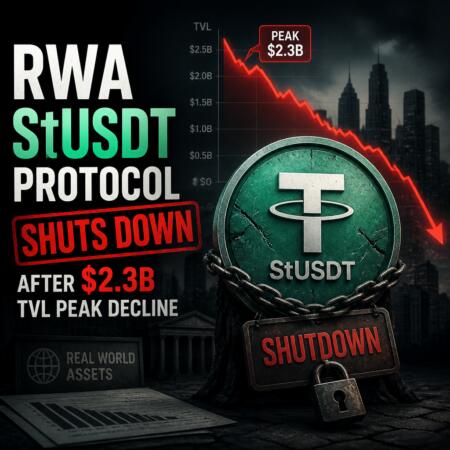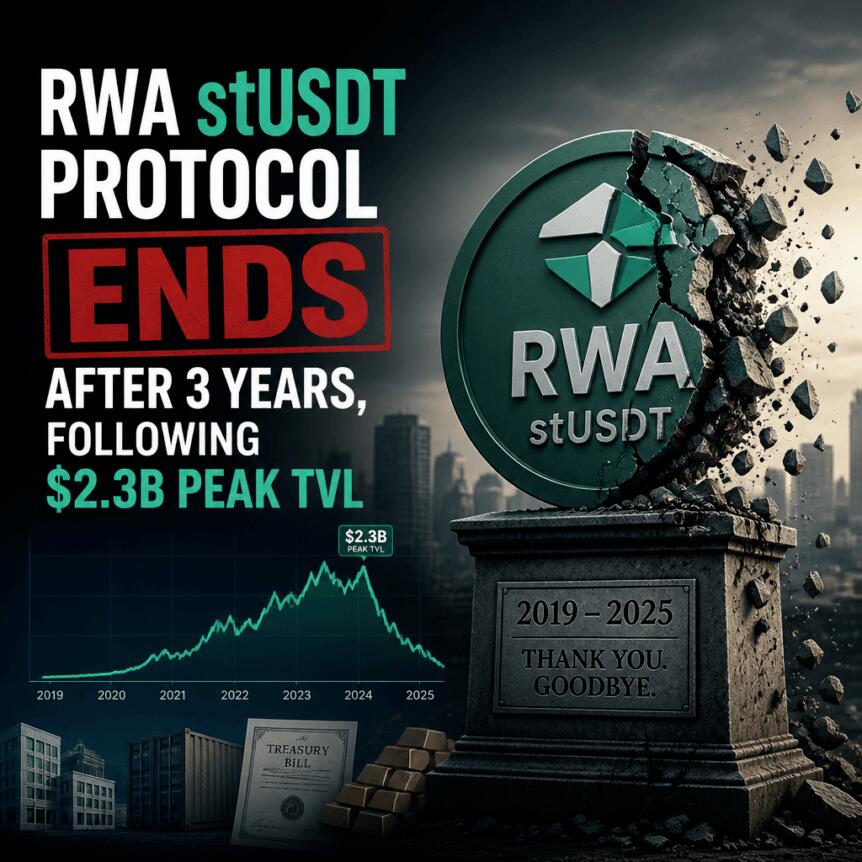
Real-world asset (RWA) protocol stUSDT has started winding down nearly three years after it reached about $2.3 billion in total value locked (TVL). In a notice shared by the project, stUSDT says it has ended interest accrual and is opening a redemption window for tokenholders, allowing withdrawals through its official portal until May 14, 2027.
The shutdown comes without a stated cause. The team says underlying assets remain fully backed, but it also warns that holders who keep stUSDT or its wrapped version (wstUSDT) on exchanges or within decentralized finance platforms will need to move tokens to personal wallets before they can redeem.
Key takeaways
- stUSDT interest accrual ended on Saturday, and token redemption is available via the project’s official portal through May 14, 2027.
- A six-month redemption window is being used to let holders unwind positions, with post-deadline requests handled later through monthly customer support batches through August 2027.
- The project says all underlying assets remain fully backed, but redemption requires tokenholders to ensure their assets are in personal wallets.
- DeFi data shows stUSDT’s TVL has fallen sharply from a November 2023 peak of about $2.3 billion to roughly $8.6 million on Sunday.
- wstUSDT market activity is being phased out by JustLend DAO as part of the broader offboarding process.
Redemption window opens as interest accrual stops
In the protocol’s public notice, the stUSDT team states that interest accrual on stUSDT ended on Saturday. It also specifies that holders of stUSDT and wstUSDT can redeem via the project’s official portal until May 14, 2027.
For redemption requests submitted after the deadline, the team says those will be processed by customer support in monthly batches through August 2027. While the notice outlines the timeline and process, it does not provide a business or technical explanation for why the protocol is shutting down at this point.
The team further emphasizes that holders must have their tokens in personal wallets. If stUSDT or wstUSDT tokens are still held on exchanges or DeFi platforms, holders are expected to transfer them out before attempting redemption. For users who built yield strategies around the protocol, this requirement effectively turns the unwind into an operational task—not just a click-through withdrawal.
Why the stUSDT unwind matters to RWA investors
stUSDT was designed to allow users to deposit USDT and receive yield tied to real-world assets, including short-term government bond exposure. When it launched in July 2023 on Tron and later expanded to Ethereum, it became one of the more visible RWA-oriented yield products in DeFi—at least by TVL.
Now, the wind-down highlights a recurring challenge for RWA yield primitives: even when a product is marketed as tokenized exposure to “real-world” instruments, the token’s lifecycle still depends on the continued operation of the issuer/protocol layer. The project’s statement that assets remain fully backed may reduce counterparty risk concerns, but it does not change the fact that tokenholders are being forced into an exit process rather than a continuing yield-bearing program.
For traders and liquidity providers, this kind of offboarding can also affect positioning strategies. Once interest accrual stops, the incentive to hold the token typically changes immediately—potentially shifting demand dynamics across both the primary redemption mechanism and any secondary venues where the asset trades.
TVL collapse from the 2023 peak
One of the clearest signals behind the shutdown is stUSDT’s dramatic decline in locked value. According to DefiLlama data, the protocol’s TVL peaked at about $2.3 billion in November 2023 and then fell substantially over the following years.
On Sunday, DefiLlama data put stUSDT’s TVL at roughly $8.6 million. That level is down from about $60 million a year earlier, showing the unwind is happening after a prolonged contraction rather than a sudden collapse.
This matters because a low TVL environment can strain the sustainability of any yield product, especially those that rely on operational processes to manage and redeem underlying exposure. The stUSDT team does not attribute the shutdown to specific market conditions in its notice, but the data trend suggests the protocol’s scale had already shrunk well before this winding-down announcement.
How wstUSDT is being handled on lending venues
The stUSDT wind-down is also affecting wrapped and DeFi integrations. JustLend DAO says it will phase out supply and borrowing functions for its wstUSDT market as part of the transition. Earlier, JustLend published an announcement specifically about the “orderly offboarding” of the wstUSDT market, signaling that DeFi lending activity tied to the wrapped token is being wound down rather than left running.
That direction aligns with the broader redemption process described by the stUSDT team: even if holders can ultimately redeem through the portal, wrapped assets used as collateral in lending markets can become constrained when those markets begin disabling functions.
In practical terms, users who have wstUSDT supplied or borrowed against on lending protocols may need to manage repayments and collateral changes in advance, since the market’s supply/borrow features are intended to be phased out.
Clarifications about Tether affiliation
stUSDT is sometimes mistaken for stablecoin issuer Tether because of its naming. However, in September 2023, Tether denied any affiliation with the stUSDT protocol, describing it as an independent project. That clarification remains relevant as the protocol enters its final operational stage.
For readers navigating RWA products, the stUSDT case underscores a useful diligence point: names alone are not enough to infer corporate or regulatory linkage, particularly in the RWA space where “USDT yield” strategies may be tied to a wide range of issuers, protocols, and market structures.
Going forward, holders should watch the details of the redemption process through the May 14, 2027 deadline and any follow-on batch processing through August 2027, while DeFi users should monitor how wstUSDT markets are gradually disabled and how collateral positions are impacted.