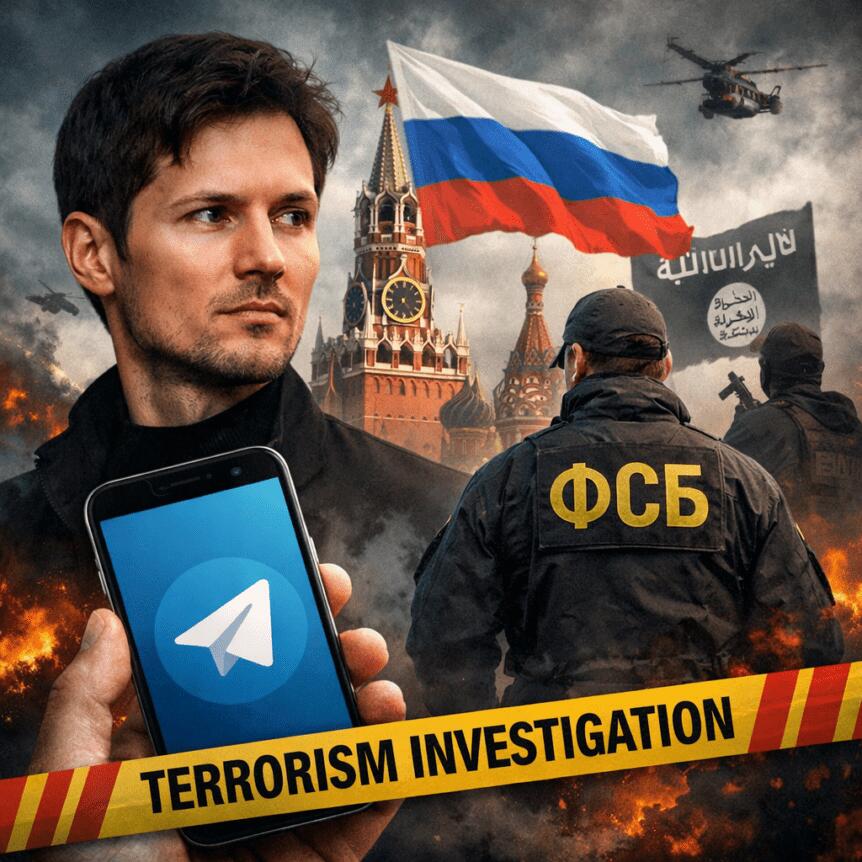
Russian authorities have opened a criminal case against Pavel Durov, the co‑founder and chief executive of Telegram, in what state media describe as an investigation into the alleged facilitation of terrorist activities. Rossiyskaya Gazeta, the official government newspaper, reported on February 24, 2026 that the Federal Security Service (FSB) is pursuing the case, with Kremlin spokesperson Dmitry Peskov confirming that the matter rests on materials produced by the FSB as part of its operational duties. The development marks a significant escalation in Russia’s ongoing scrutiny of Telegram, coming as state regulators previously tightened restrictions on the platform in early February. Telegram has not publicly responded to the reports by the time of publication, and attempts by media and Reuters could not secure an immediate comment from the company.
Key takeaways
- The case centers on allegations that Telegram facilitated terrorist activities, with the FSB providing the core evidentiary basis for investigators.
- Roskomnadzor, Russia’s communications watchdog, expanded and intensified restrictions on Telegram in early February, signaling a broader push to curb perceived extremist content on the platform.
- Telegram has reportedly refused to remove material flagged as extremist content, and authorities are considering whether the platform itself could be designated extremist, which would carry additional legal risks for users and the service.
- Analysts warn that a formal label of extremism could complicate or criminalize certain financial transactions on the platform, including payments for premium services and advertising, if such activity is deemed to facilitate prohibited activity.
- Pavel Durov argues the pressure is a broader political maneuver aimed at steering users toward a state-backed messenger, MAX, and he has pointed to similar attempts in other countries, including Iran, where authorities have sought to restrict usage while many citizens continue to favor Telegram for privacy and free expression.
Market context: The case in Russia emerges amid a broader global tightening of regulation around encrypted messaging services and online content moderation. Regulators in multiple jurisdictions are weighing how to balance security concerns with privacy and freedom of expression, a dynamic that increasingly intersects with fintech and digital payments as platforms expand into financial services and commerce.
Why it matters
The investigation underscores the vulnerability of large messaging platforms to state demands for content control in environments where authorities maintain broad powers to regulate information flows. For Telegram users in Russia and abroad, the case raises questions about access, censorship, and the potential criminalization of routine platform use in the event of extremism labeling. While Telegram has built a reputation for privacy protections and opposition to state surveillance, governments exploring how to police content on messaging apps could reconfigure the operating risks for the service and its users. The tension also highlights how geopolitical friction can spill over into digital platforms that cross borders, complicating compliance for a service with a global user base.
Beyond the immediate regulatory landscape, the incident feeds into a longer-running debate about how tech platforms should be regulated when they serve as conduits for information, finance, and social organization. Durov’s public comments and the high-profile nature of the investigation may influence both user sentiment and the strategic choices Telegram makes as it navigates competing demands from regulators, advertisers, and users who prize a degree of privacy and uncensored communication. The ongoing scrutiny also has implications for developers, investors, and policymakers who watch how platforms respond to perceived security risks while balancing civil liberties on an increasingly complex digital stage.
From a geopolitical perspective, the Russian case sits at the intersection of domestic policy and international diplomacy. Durov has framed the pressure as part of a broader effort to promote a state-controlled alternative messenger, a theme that has resonances in other jurisdictions where authorities seek to shape the digital communications landscape. While Russia emphasizes extremism and national security, observers note that the outcomes could influence global norms around the governance of encrypted messaging apps, particularly for platforms that operate across a mosaic of regulatory regimes and market priorities.
What to watch next
- Any formal public statements from the FSB or Roskomnadzor outlining the charges, evidence, or procedural steps in the case against Durov.
- Developments in Russia’s regulatory stance toward Telegram, including whether the platform faces further restrictions or a potential extremism designation.
- Responses from Telegram regarding the investigation, including any new compliance measures or policy changes in Russia or elsewhere.
- Related legal actions or investigations in other countries, such as France, where Durov has faced inquiries, and any outcomes that could affect cross-border service provisions.
- Any changes in the global regulatory environment for encrypted messaging services and how those shifts could impact user access and platform opportunities in the crypto and digital payments space.
Sources & verification
- Rossiyskaya Gazeta report detailing the FSB-led criminal probe and referencing the Kremlin spokesperson’s confirmation.
- Statement attributed to Dmitry Peskov confirming the investigation and referencing FSB materials.
- Roskomnadzor’s reported tightening of Telegram restrictions in early February as covered by major Russian tech outlets.
- Public reporting on Telegram’s response or lack thereof, and coverage of Durov’s broader legal exposure, including investigations abroad.
Russian case against Durov sheds light on Telegram’s regulatory pressure
Russia’s latest move against Telegram places Pavel Durov at the center of a high-stakes intersection between digital freedom, security, and the state’s capacity to police online content. The FSB’s involvement signals a level of scrutiny that goes beyond routine regulatory complaints, elevating the Telegram platform into the realm of criminal investigations when linked to alleged facilitation of extremist activity. Rossiyskaya Gazeta’s reporting on February 24, 2026, describes a case that is being handled with the involvement of the country’s premier security institution, a development that could have lasting implications for both the platform’s operations in Russia and its reputation globally.
The Kremlin’s confirmation, via Dmitry Peskov, that the investigation rests on FSB materials, reinforces the perception that Moscow regards Telegram as a strategic communications channel with potential cross-border impact. While the exact charges remain undisclosed in public materials, the use of criminal procedures in this context signals a hardening stance toward platforms that resist state-directed content moderation. The case aligns with a broader push by Roskomnadzor to tighten the screws on messaging apps, particularly those with robust privacy features and the capacity to host large volumes of user-generated content outside centralized control.
Telegram’s stance has been consistently positioned as a defense of user privacy and a refusal to remove content that authorities deem extremist or harmful. This friction is illustrated by the ongoing tension surrounding content moderation, with Russian regulators insisting on compliance and the platform resisting what it views as overreach. The numbers cited by state-connected outlets—namely, that roughly 155,000 channels, chats, and bots have not been removed in response to local requests—underscore the scale of Telegram’s footprint in Russia and the challenge regulators face in enforcing content rules across a platform that migrates between jurisdictions and languages. The broader implication is that a potential extremism designation could alter Telegram’s business model, affect user access, and complicate any monetization strategy anchored to the platform’s freedom of use.
Industry observers have flagged that the extremism label could carry far-reaching consequences beyond speech restrictions. German Klimenko, a former adviser to the Russian president on internet policy, warned that such a designation could criminalize payments related to Telegram Premium subscriptions and advertising on the platform. This kind of impact would affect not just end users but also service providers and advertisers who rely on Telegram as a channel for outreach and revenue. The possibility of criminal penalties or significant legal exposure for seemingly routine activities signals a broader risk landscape for digital platforms operating in regulated environments where state interests are closely aligned with national security imperatives.
Durov has publicly framed the investigation as part of a broader strategy to push users toward a state-backed messenger known as MAX, a claim that dovetails with his long-standing emphasis on privacy and freedom of expression. He has drawn parallels with other jurisdictions, including Iran, where authorities have attempted to restrict access to messaging apps while users continue to rely on them. In a February post on his Telegram channel, Durov argued that restricting citizens’ freedom is not a legitimate response and reiterated Telegram’s mission to defend privacy and speech rights in the face of pressure. This framing places Telegram’s predicament within a broader debate about how states balance security concerns with civil liberties in the digital era.
The legal and political dynamics surrounding Durov’s case extend beyond Russia’s borders. Durov’s international exposure—captured in ongoing inquiries abroad and previously including an arrest in France in 2024 and a travel ban that was lifted in 2025—illustrates how actions in one jurisdiction can resonate across multiple regulatory environments. The French developments, though not resolved in the public sphere at the time, emphasize that Telegram’s legal and regulatory challenges are not confined to a single country. As regulators and lawmakers reassess the balance between security, privacy, and platform openness, Telegram’s approach to compliance and user protection will likely shape the trajectory of encrypted messaging apps in the coming years. In the Russian context, the FSB-backed investigation remains a focal point for observers seeking to gauge how far the state will go in policing online communications and what this means for services that operate globally but must navigate local laws.