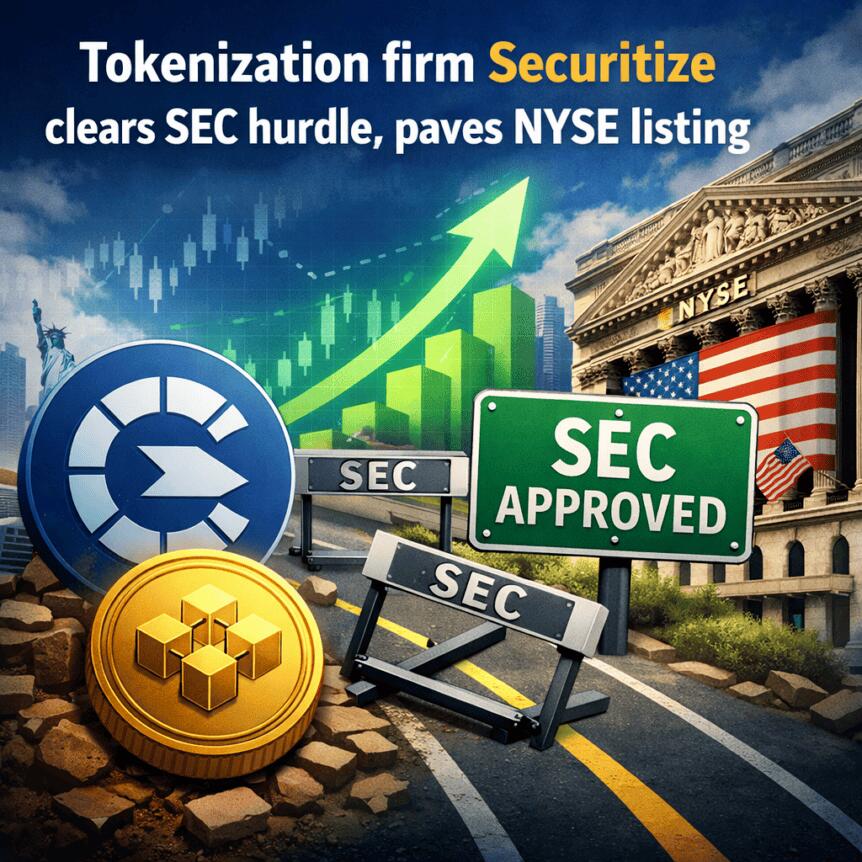
Securitize, a leading platform for tokenizing real-world assets, is one step closer to a public listing after the U.S. Securities and Exchange Commission approved a Form S-4 registration statement tied to a Cantor Equity Partners II SPAC merger. The move clears the path for a shareholder vote on June 29, with a potential NYSE listing under the name Securitize Corp, ticker SECZ, should the deal pass.
CEO Carlos Domingo framed the development as a meaningful milestone for both Securitize and the broader push toward institutional adoption of tokenization. “This marks another important milestone for Securitize and for the broader institutional adoption of tokenization,” he said. The company currently reports roughly $4 billion in assets under management and has partnered with prominent asset managers to offer tokenized funds, including Apollo, BlackRock, BNY Mellon, and VanEck. In the first quarter, Securitize posted revenue of $19.5 million, up about 39% from a year earlier.
Beyond its SPAC trajectory, Securitize has already been advancing ties with traditional finance. The New York Stock Exchange signed a memorandum of understanding with Securitize in March as part of a broader initiative to explore blockchain-based stock trading infrastructure for Wall Street.
Securitize is the largest tokenization platform by market share. Source: RWA.xyz
Tokenized real-world assets reach new highs as market matures
Looking at the broader market, the on-chain value of tokenized real-world assets has surged in the past year, signaling growing institutional interest even in a broader crypto bear market. Data from RWA.xyz show total on-chain RWA value rose to a record $32 billion in May, up roughly 220% over the previous 12 months, excluding stablecoins. The composition of this on-chain wealth remains heavily skewed toward government securities and traditional metals and commodities.
According to the same data, tokenized U.S. Treasuries account for about half of on-chain assets, while tokenized commodities represent around 16%. Tokenized stocks remain a smaller slice, at roughly 4.8% or about $1.5 billion. The Ethereum ecosystem and various layer-2 networks continue to dominate the technical backbone of these tokenization efforts, collectively handling more than 60% of activity.
The RWA push has also been reflected in the naming and leadership of the sector. Securitize stands out as the largest tokenization platform by market share, underscoring the central role that established platforms play in driving liquidity and standardization for these assets.
What the SPAC path could mean for investors and the market
If the June 29 vote clears, Securitize would join a growing set of crypto-finance and tokenization platforms that have pursued public-market access through SPAC mergers. The potential NYSE listing would not only validate Securitize’s business model but could also signal a broader appetite among traditional investors for exposure to tokenized RWAs. The company’s existing relationships with major asset managers, combined with tangible revenue growth and a sizeable AUM base, provide a concrete basis for investor interest in a tokenization-focused public company.
For players in the space, the development highlights several trends: the continued convergence of traditional finance and blockchain-based infrastructure; the pursuit of regulated, compliant platforms to manage tokenized assets; and the ongoing effort to quantify and improve liquidity for RWAs across asset classes. Yet the picture remains nuanced. While the on-chain RWA market has expanded rapidly, tokenized stocks remain a relatively small segment, and regulatory clarity surrounding digital assets continues to evolve.
As Securitize moves toward a shareholder vote and potential exchange listing, market watchers will be watching not only the outcome of the SPAC merger but also how the company scales its technology and governance to support a broader set of investors and asset types. The coming months should reveal how Wall Street’s embrace of tokenization translates into practical, tradable markets for real-world assets.
Readers should watch for updates from the June 29 vote, any subsequent disclosures from the merged entity, and evolving regulatory guidance that could shape the pace and scope of on-chain asset tokenization across the broader market.