Introduction
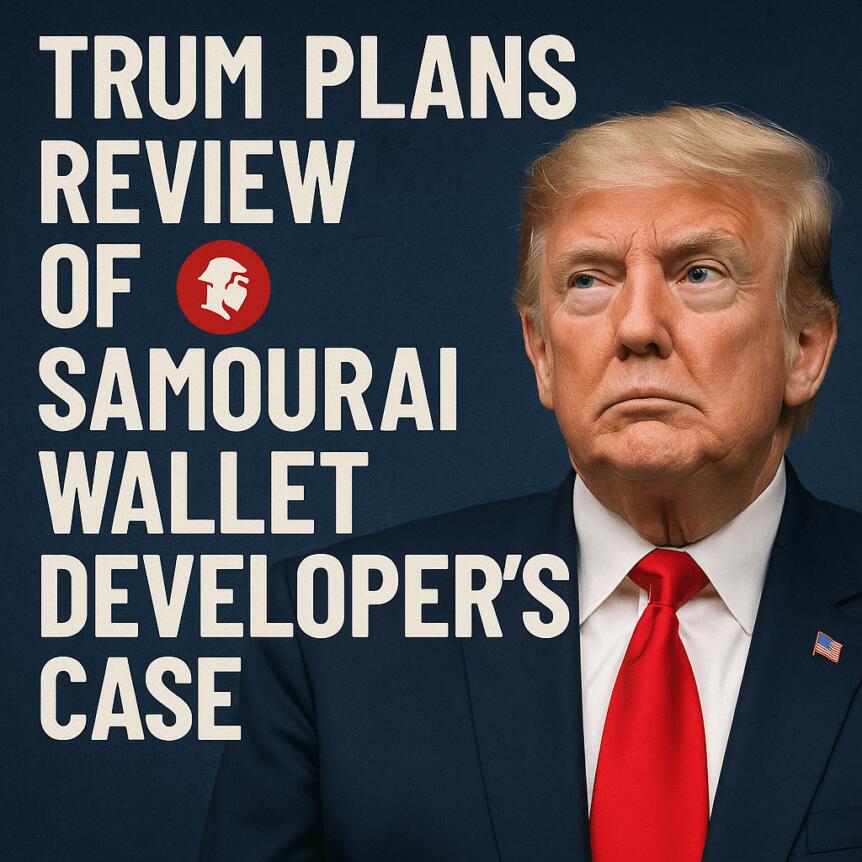
In a surprising development, then-President Donald Trump indicated he would review the case of Keonne Rodriguez, co-founder of the privacy-focused Samourai Wallet, who is scheduled to begin serving a prison sentence for charges linked to a crypto mixing protocol. The move has sparked renewed debate over crypto privacy, legal authority, and potential presidential intervention in crypto-related prosecutions.
Key Takeaways
- Donald Trump expressed willingness to review the case of Samourai Wallet co-founder Keonne Rodriguez, hinting at a potential pardon.
- Rodriguez faces a prison sentence after pleading guilty to operating an unlicensed money-transmitting business related to crypto mixing.
- Privacy advocates argue that Rodriguez and his co-founder William Hill should not bear responsibility for third-party misuse of their software.
- Supporters have launched a movement with the hashtag #PardonSamourai, urging the former president to intervene.
Tickers Mentioned
Tickers mentioned: none
Sentiment
Sentiment: Supportive of Rodriguez’s case, highlighting concerns over legal overreach and the importance of privacy rights in crypto.
Price Impact
Price impact: Neutral – the news primarily involves legal and political developments rather than immediate market fluctuations.
Market Context
Market context: This case underscores ongoing tensions between American regulatory authorities and crypto privacy technology advocates amid broader regulatory scrutiny.
Rewritten Article Body
In an unexpected statement, former President Donald Trump revealed that he would consider reviewing the case of Keonne Rodriguez, the co-founder of the privacy-focused Samourai Wallet. Rodriguez, who is scheduled to begin serving a prison sentence this week, was convicted of operating an unlicensed money transmitter in connection with a crypto mixing protocol that aids in obscuring transaction history.
Rodriguez and his associate William Hill were sentenced in November to five and four years respectively. Their convictions stem from their involvement in the cryptocurrency mixing service, which is often used by privacy-conscious users but has also attracted regulatory crackdowns for facilitating illicit activities. Privacy advocates have long maintained that users should not be held accountable for third-party misuse of open-source tools, asserting that the software itself should not be criminalized.
Rodriguez, who is set to report to prison on December 19, has publicly voiced hope that his case might be reconsidered by the former president. He tweeted this week that the ongoing support from his community is making an impact, suggesting that the “noise is working” and thanking supporters for rallying behind him. Notably, Rodriguez believes his case may receive a favorable review because he perceives the DOJ’s actions against crypto developers are politically motivated, especially given Trump’s previous clashes with federal agencies.
In interviews, Rodriguez mentioned that he had believed he waived his right to appeal when accepting a plea deal, but he now considers appeals unlikely. Initially pleading not guilty, Rodriguez and Hill later agreed to plead guilty to conspiracy to operate an unlicensed money transmission service, facing potential sentences of up to 25 years, including charges of conspiracy to commit money laundering. Rodriguez expressed regret over his plea, citing fears that key evidence—such as legal advice received prior to launching Samourai Wallet—would not be considered in his defense.
President Trump has a history of issuing pardons in high-profile crypto cases, having previously pardoned Binance founder Changpeng Zhao after his guilty plea and Ross Ulbricht, the creator of the Silk Road marketplace. These decisions have often been viewed as a recognition of the broader importance of privacy rights and regulatory leniency in the evolving crypto landscape.
The case remains a focal point in the ongoing debate over crypto privacy tools and the legal boundaries surrounding their use, especially as authorities increasingly target privacy-centric technologies. Rodriguez’s plea and potential pardon highlight the complex intersection of law, technology, and individual rights within the crypto industry.