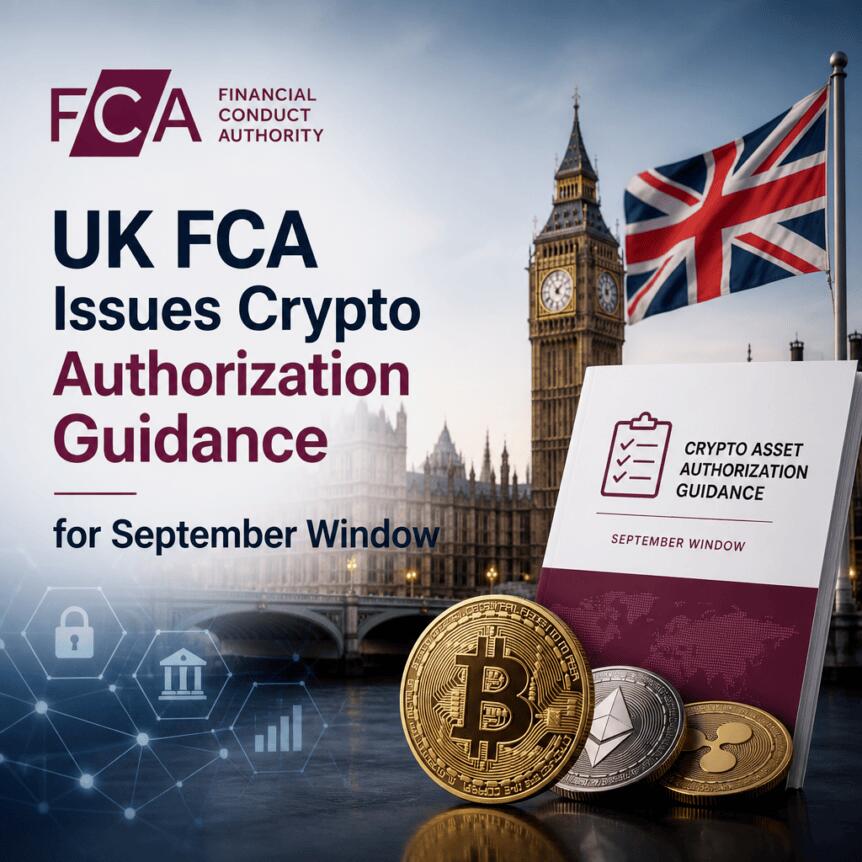
The UK Financial Conduct Authority (FCA) has published final guidance clarifying when specific crypto-related activities will fall within the scope of the country’s forthcoming crypto authorization regime. The update is aimed at helping firms assess whether they need to apply for FCA permission, and what type of authorization they may require, as the UK prepares to bring cryptoassets more comprehensively under financial regulation.
In the guidance issued this week, the FCA outlines a set of crypto activities that may require authorization under the new framework, including issuing qualifying stablecoins, operating cryptoasset trading platforms, dealing in cryptoassets and arranging transactions, safeguarding cryptoassets, and arranging crypto staking.
Key takeaways
- The FCA’s final guidance explains how to judge whether day-to-day crypto business activities fall inside the UK’s regulatory perimeter.
- Some permissions will not carry over automatically—firms may need FCA authorization or permission variations under the new regime.
- Crypto operators—including stablecoin issuers, trading platforms, and custodial or staking-related businesses—should review their activities against the FCA’s perimeter.
- Application windows and deadlines have been set for firms seeking transitional arrangements ahead of the regime’s start date.
What the FCA says will require authorization
The regulator’s guidance is designed to address a practical question facing compliance teams: when does a firm’s crypto activity trigger FCA authorization requirements under the incoming regime. Rather than treating “crypto” as a single category, the FCA focuses on particular types of conduct that resemble regulated financial services.
According to the FCA’s guidance, the perimeter includes activities such as:
- Issuing qualifying stablecoins, where the stability mechanism and how tokens are issued can bring the activity into scope.
- Operating cryptoasset trading platforms, reflecting parallels to exchange and trading arrangements.
- Dealing in and arranging cryptoasset transactions, covering certain intermediated trading behaviors.
- Safeguarding cryptoassets, aligning with custody-related responsibilities.
- Arranging crypto staking, bringing certain participation or facilitation activities within the authorization framework.
The intent is not only to spell out whether a firm is covered, but to help identify what permissions may be needed to operate lawfully once the new rules begin.
Why existing registrations may not be enough
A key point in the FCA’s announcement is that existing registrations and permissions will not automatically convert into the new authorization regime. That means firms already operating in the UK under older frameworks may still need to reassess their position and determine whether they must apply for FCA authorization or request a variation of permission.
For investors and users, this matters because it can affect which providers remain active, how quickly they can meet compliance requirements, and whether consumer-facing services continue without interruption. For firms, the change raises the importance of early mapping between business models and regulated activity definitions—particularly for companies offering multiple services, such as custody plus staking, or trading plus transaction facilitation.
FCA executive director of consumers, payments and competition David Geale said: “Getting ready for regulation starts with understanding how the regime applies to your business. This guidance gives firms the clarity they’ve asked for so they can prepare with confidence.”
Timeline for applications and transitional arrangements
The FCA also set out timing for the authorization process. The regulator will open applications on Sept. 30. Firms seeking transitional arrangements ahead of the new regime’s start can apply with a deadline of Feb. 28, 2027, before the regime takes effect on Oct. 25, 2027.
The FCA indicated it also plans to consult on potential further changes to its perimeter guidance later this year. That suggests the regulatory map may continue to evolve as the industry and the regulator test how definitions apply to real-world structures.
Broader UK movement: stablecoins, tokenization, and policy direction
The perimeter guidance arrives as the UK builds out a wider regulatory framework for digital assets. Earlier, Parliament approved legislation in February to bring cryptoassets within the FCA’s regulatory remit, and the FCA then finalized a package of rules and guidance in June.
Beyond the FCA’s perimeter work, UK lawmakers have also been pressing for a broader policy approach. Last week, the House of Lords voted 194–138 to add an amendment to the Financial Services and Markets Bill that would require the Treasury to develop a digital asset strategy. That strategy is intended to cover cryptoassets, stablecoins, tokenized securities, and digital financial infrastructure within 12 months of the bill becoming law.
The FCA’s wider priorities are also visible in its engagement with tokenization. Earlier reporting highlighted the FCA seeking feedback on whether certain tokenized gold products should be exempt from UK fund rules, and the regulator—alongside the Bank of England—has said it plans to publish a roadmap for tokenization in wholesale financial markets later this year.
Taken together, these developments show that UK crypto regulation is not just about licensing exchanges or custodian-like services. It is also moving toward a framework intended to support tokenized financial products—while drawing boundaries around which activities must meet authorization requirements.
For market participants, the immediate practical task is compliance readiness: firms offering stablecoins, trading, custody, transaction facilitation, or staking should now evaluate their models against the FCA’s perimeter guidance and plan for how authorization might change their operating approach before the Oct. 2027 start date. Readers should watch for the FCA’s later consultation updates on the perimeter and for how firms’ transitional applications shape the UK’s near-term crypto service landscape.