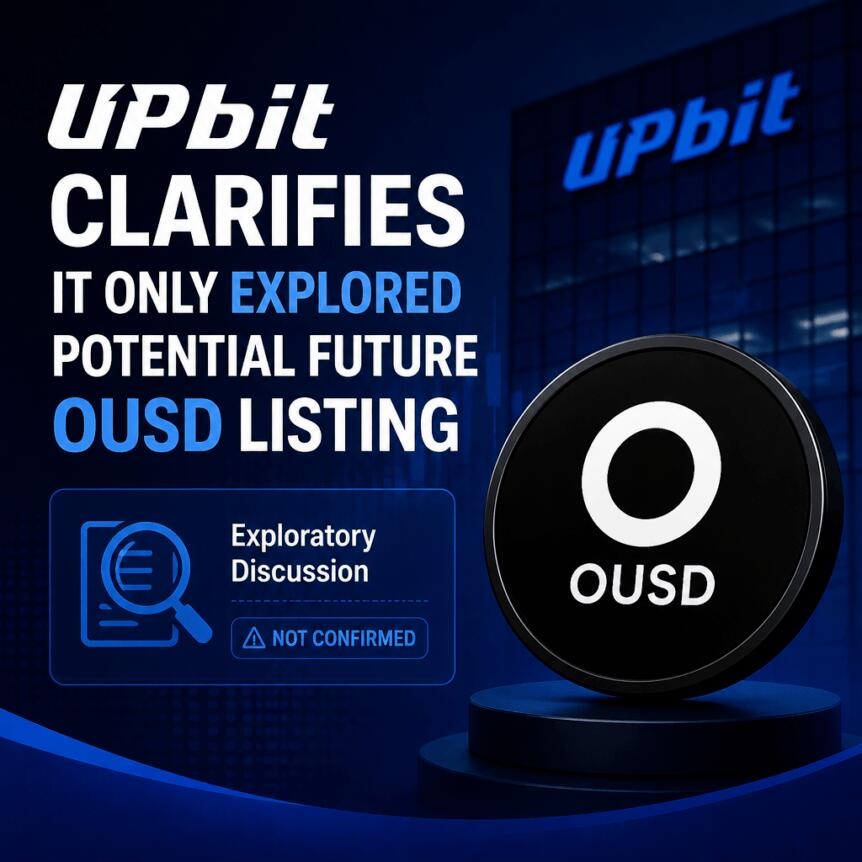
South Korean crypto exchange Upbit says it will not take part in the issuance of Open USD (OUSD), despite an operator-level connection to the stablecoin project. The clarification comes after Open Standard named Dunamu among more than 140 businesses associated with its new dollar-backed initiative.
In a statement to Cointelegraph, an Upbit spokesperson said the exchange has only “indicated our potential willingness to consider taking part in the future expansion of the OpenStandard ecosystem.” The company’s position follows similar pushback from other South Korean firms that were included in Open Standard’s broader business list.
Key takeaways
- Upbit denies participation in OUSD issuance, limiting its stance to possible future involvement in the OpenStandard ecosystem.
- Open Standard’s public roster includes major South Korean companies, but several say they have not agreed to specific roles.
- Regulatory uncertainty in South Korea persists because the Digital Asset Basic Act has not yet been finalized.
- Open Standard’s “no fees / no volume limits” mint-and-redeem model remains a subject of debate among industry observers.
Upbit’s clarification reshapes how Open Standard’s list is read
Open Standard announced Open USD on Tuesday, describing a framework under which participating businesses would be able to mint and redeem the stablecoin without fees or volume limits. The project also said it plans to distribute earnings generated from its reserves to participating companies.
Open Standard’s announcement listed a broad group of firms—reportedly more than 140—stating they had “signed up to use” the stablecoin. Among those named were global payments and finance brands including Visa and Mastercard, as well as asset management and tech firms such as BlackRock and Google. In South Korea, Dunamu was included, which is the operator behind Upbit.
That inclusion prompted follow-up clarification from Upbit. The exchange said it is not participating in OUSD issuance, and only signaled openness to potentially joining “future expansion” of the OpenStandard ecosystem. Cointelegraph also reported that it reached out to Open Standard for comment but did not receive a response before publication.
The broader implication is that the public business list may represent interest or preliminary alignment rather than committed operational roles. That distinction matters for users and market participants watching whether large incumbents are truly underwriting, distributing, or managing parts of the stablecoin’s reserve and governance.
Other South Korean companies reportedly echo “no formal role” concerns
According to a Friday report by ChosunBiz, Samsung Electronics said it had not held formal discussions with Open Standard and did not know what role it was expected to play. The same reporting also indicated Shinhan Financial Group and KBank had only signaled they would consider the initiative.
These responses highlight a recurring pattern in early-stage stablecoin announcements: companies may be mentioned in promotional materials or participation lists before regulatory processes, commercial terms, and internal approvals are locked down. For investors and builders, the practical question becomes whether these entities will move from “consideration” to concrete deliverables such as issuance participation, redemption access, or reserve-related responsibilities.
It also raises the likelihood that Open Standard’s roster could change as plans are translated into compliance-ready operating structures—especially given South Korea’s still-evolving legal landscape for digital assets.
Why South Korea’s pending stablecoin law complicates commitments
Stablecoin issuance and ecosystem participation in South Korea remain constrained by policy uncertainty. The country has not yet passed the Digital Asset Basic Act, leaving open questions about who can issue stablecoins and what roles non-issuers and participating firms may perform.
Cointelegraph has previously reported that lawmakers are debating whether stablecoin issuance should be limited to banks or opened to qualified non-bank issuers, with the broader regulatory framework still under discussion. As long as that process remains unresolved, companies may hesitate to commit to initiatives that depend on licensing, reserve management rules, and the permitted scope of activities for different types of institutions.
That uncertainty can delay integrations and reduce the reliability of public participation lists. Even when major names are mentioned, compliance timelines and approval hurdles can force a slower, more cautious path—particularly for projects that connect traditional finance and payments infrastructure to on-chain settlement.
Open Standard’s mint-and-redeem model still faces skepticism
Alongside corporate clarifications, industry figures have questioned whether Open Standard’s economics are sustainable. Open Standard previously said participating businesses would be able to mint and redeem OUSD without fees or volume limits, and it also described plans to share earnings generated from reserves with participants.
Cointelegraph noted earlier that Circle CEO Jeremy Allaire challenged the model’s durability, specifically questioning the logic of free, unlimited minting and redemption. Lorenzo Valente, director of research at ARK Invest, also characterized the announcement as a “giant” letter of intent.
While such critiques do not necessarily disprove the project, they underscore that stablecoin economics—especially those involving reserve yields, operational costs, redemption incentives, and governance—are often the deciding factor in whether participation scales beyond initial pilots. The tension here is straightforward: an approach designed to reduce friction for users may shift financial responsibilities elsewhere, requiring careful reserve and risk management to stay viable.
For market participants, Upbit’s position is another reminder to separate marketing claims from operational reality. Even if a project advertises broad participation, the sustainability of the underlying business model and the readiness of the legal framework will likely determine who can actually play active roles.
What to watch next is whether South Korea’s Digital Asset Basic Act—and the specific stablecoin issuance rules it implies—moves from debate toward implementation. In parallel, observe whether Open Standard converts “signed up to use” lists into clearly defined, compliant roles for identified entities, including in South Korea.