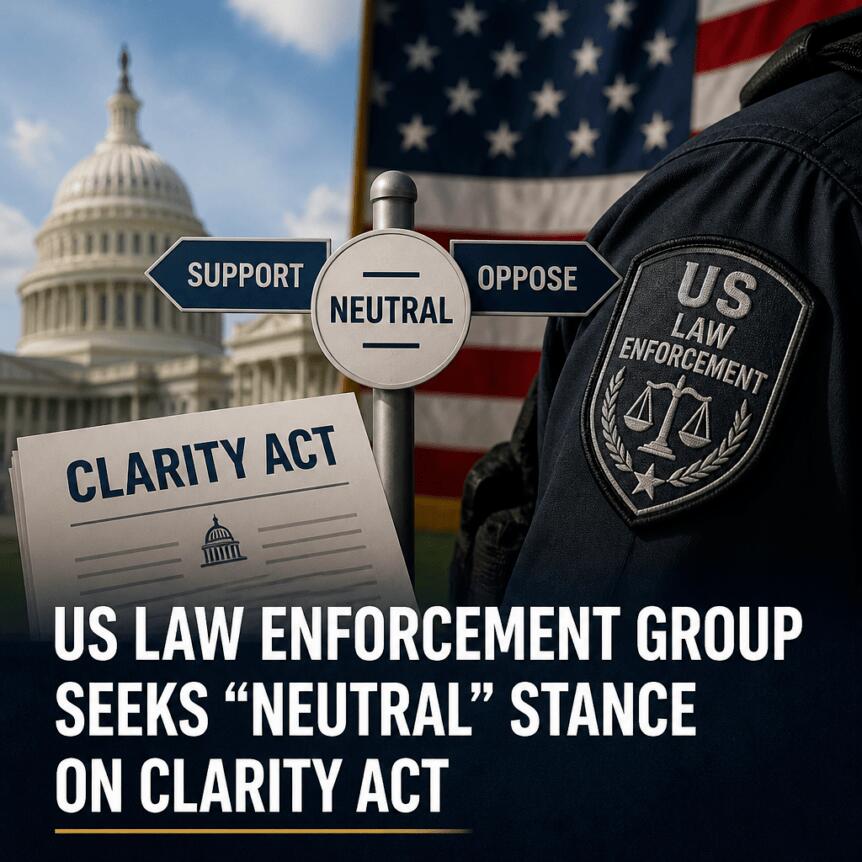
The National Sheriffs’ Association (NSA) has reversed course on the Digital Asset Market Clarity (CLARITY) Act, moving from opposition to a neutral stance ahead of a Senate vote expected later this month. In a letter dated Thursday to Senate Majority Leader John Thune and Senate Minority Leader Chuck Schumer, the group said it would “step back” and allow the legislative process to continue in order to produce a clearer regulatory framework for the sector.
The change is notable because the NSA’s earlier criticism focused on provisions that, in its view, could weaken law enforcement’s ability to track cryptocurrency-related transactions—particularly around exemptions for crypto mixers from certain registration obligations. The group says that, after “significant work undertaken by Congress, the Administration, and stakeholders,” it now believes the most constructive path is to remain neutral while the bill advances.
Key takeaways
- The NSA has shifted its position on the CLARITY Act from opposition to “neutral,” citing broader legislative and regulatory progress.
- Its earlier objections centered on potential exemptions for crypto mixers from registration requirements, which the NSA said could hinder tracing and victim recovery.
- The House passed CLARITY in July 2025, but the measure has faced repeated hurdles in the Senate, including concerns raised by multiple stakeholders.
- Senate leadership has moved toward a procedural vote, with Thune filing a motion for a Sept. 15 cloture vote after senators return.
- Even if CLARITY stalls, top U.S. crypto regulators have signaled they may proceed with rulemaking through their agencies.
NSA shifts to neutral as CLARITY heads toward a Senate vote
In the Thursday letter, NSA president Troy Wellman and CEO and executive director Justin Smith said the association’s position is changing because of the “significant work undertaken” by lawmakers and stakeholders to address legal, regulatory, and enforcement issues tied to CLARITY. Rather than re-litigate its concerns at this stage, the NSA argued that the bill should be allowed to move forward through the legislative process to create “a clear, effective, and much needed regulatory framework.”
The NSA’s message suggests the group believes the bill’s drafting has evolved enough to warrant an altered posture, even though the underlying enforcement questions raised earlier have not necessarily disappeared from the broader policy debate.
What drove the NSA’s earlier opposition
Before changing course, the NSA had expressed opposition to parts of the CLARITY Act—specifically amendments it believed would exempt crypto mixers from many registration requirements. In its earlier correspondence to Senate Banking leadership (referenced in the Senate-record letter linked in the input), the NSA argued that such an exemption could “impair law enforcement’s ability to trace transactions and digital assets, and recover victims’ money.”
The association’s concern reflects a longstanding tension in crypto regulation: policymakers have tried to balance compliance and market integrity goals with concerns about privacy and the use of legitimate anonymity-enhancing tools. In the NSA’s view, easing regulatory obligations for mixers could raise practical enforcement challenges for tracing illicit flows.
In July, NSA leadership also underscored the stakes in a video statement—framing CLARITY as a law that, in their view at the time, protected the crypto industry more than the public.
CLARITY’s slow path through Congress
CLARITY was passed by the U.S. House of Representatives in July 2025. After being sent to the Senate, the bill encountered multiple procedural and political obstacles. While the agriculture and banking committees passed versions of the measure in 2026, the bill has continued to face criticism and scrutiny from lawmakers and interest groups.
The input notes that ongoing concerns include elements related to stablecoin rewards, tokenized equities, and perceived conflicts of interest involving President Donald Trump and his family. Those issues illustrate that the debate over CLARITY is not only about enforcement and transparency, but also about how the legislation would structure participation and incentives across crypto and tokenized markets.
With the Senate set to return to session, procedural steps have been underway. Before the Senate broke in August, Thune filed a motion to hold a cloture vote on the bill on Sept. 15 once senators return from state work periods—an effort intended to move the measure forward despite potential delays.
Regulators signal they may act without CLARITY
While the legislative process remains in motion, the regulatory track is also developing. According to earlier coverage referenced in the input, Trump publicly supported CLARITY alongside leaders of the U.S. Securities and Exchange Commission (SEC) and the Commodity Futures Trading Commission (CFTC), among others. In that context, SEC Chair Paul Atkins and CFTC Chair Michael Selig—both nominated by Trump—have signaled that their agencies would address crypto regulation even if Congress fails to pass the market structure bill.
That matters because it reframes what “market clarity” could mean in practice. If CLARITY advances, it could provide a statutory baseline for rules governing crypto market structure. If it stalls, regulators may attempt to fill gaps through agency action—though that approach can produce different outcomes from legislation, including differences in scope, timing, and how courts might ultimately interpret statutory authority.
For market participants, the NSA’s shift to neutrality adds another variable: it suggests that at least one major law-enforcement-adjacent stakeholder does not plan to oppose the bill at the final stretch. Traders, platforms, and compliance teams are therefore likely to watch the next procedural milestones—especially whether the Sept. 15 cloture vote holds—while paying close attention to whether the most contentious provisions, such as those affecting crypto mixers and related registration obligations, remain unchanged or are modified during further Senate consideration.
As the Senate prepares to vote, the key question for investors and builders is whether CLARITY will converge into a version that satisfies both market-structure goals and enforcement practicality. Readers should monitor not only the cloture timetable, but also any last-minute amendments that could alter the specific provisions the NSA and other stakeholders have argued over.