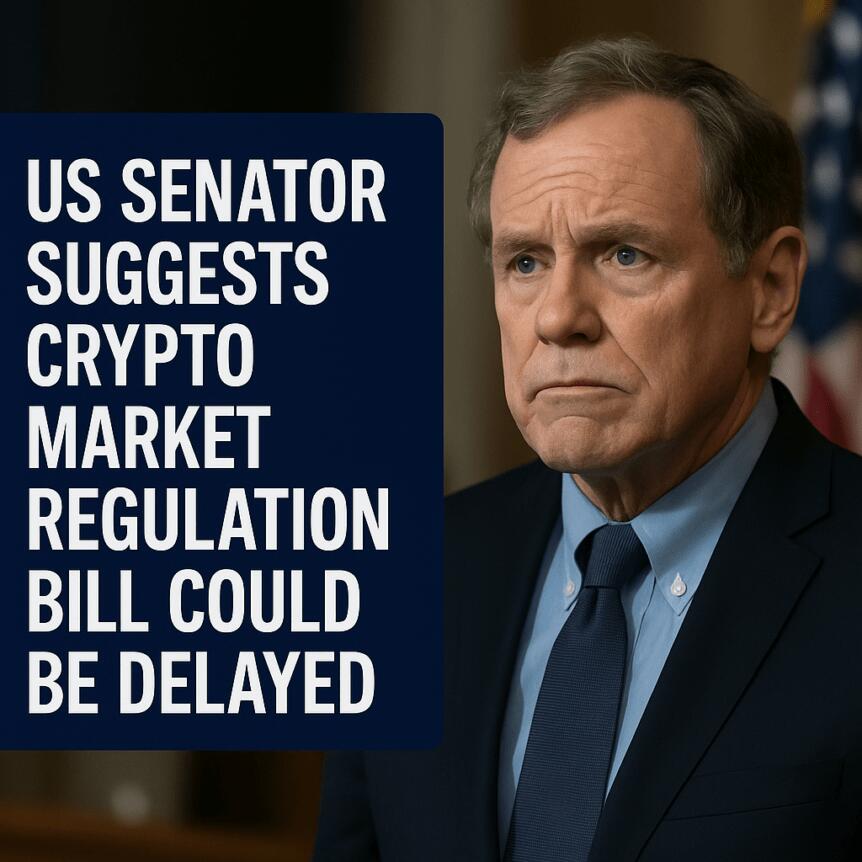
Legislative Uncertainty Clouds Crypto’s Future as US Senate Delays Action
The ongoing debate over the regulation of decentralized finance (DeFi) and stablecoin rewards in the proposed CLARITY Act is creating uncertainty within the US legislative landscape. Key stakeholders from banking and crypto sectors are divided, potentially impeding progress on crypto-friendly legislation. Recent developments suggest a delay in Senate proceedings, reflecting the contentious nature of proposed provisions.
Key Takeaways
- Senator Cynthia Lummis indicates a likely postponement of the Senate markup on crypto legislation.
- Coinbase withdraws support over industry-unfavorable text around stablecoin rewards and tokenized assets.
- Legislation’s stalled progress could significantly impact crypto companies’ revenue streams and traditional banking operations.
- Broader market implications include potential shifts in stablecoin adoption and regulatory oversight.
Tickers mentioned: $BTC, $ETH, $COIN
Sentiment: Bearish
Price impact: Negative. Regulatory delays and industry pushback increase uncertainty, potentially dampening market momentum.
Trading idea (Not Financial Advice): Hold. Cautiously observe regulatory developments before making any entry decisions.
Market context: Ongoing legislative battles underscore the increasing regulatory scrutiny faced by crypto markets amid broader institutional adoption and market growth concerns.
Legislative Developments and Industry Responses
Recent reports suggest that the Senate Banking Committee may postpone its scheduled markup of the crypto market structure legislation. Senator Cynthia Lummis, a notable advocate for crypto-friendly policies, is expected to recommend delaying the process, leaving Chair Tim Scott to decide. The Senate committee had planned to conduct a markup session on Thursday at 10:00 am Eastern Time, but sources indicate that the timing could shift.
Coinbase publicly criticized the latest draft of the legislation, citing concerns that it would impose unfavorable restrictions on industry growth. The company explicitly challenged provisions related to stablecoin rewards, tokenized stocks, and government access to financial data, highlighting the risk of stifling innovation. Coinbase CEO Brian Armstrong emphasized the importance of passing effective regulation without sacrificing the industry’s integrity, noting, “This version would be materially worse than the current status quo. We’d rather have no bill than a bad bill.”
The legislation’s outcome is pivotal. Industry insiders warn that unfavorable regulations could severely impact revenue, with Coinbase alone earning hundreds of millions from stablecoins and blockchain rewards. Conversely, advocates for stricter rules argue that widespread stablecoin adoption could siphon trillions from traditional banking systems, making this legislative debate highly consequential for both sectors.
As the regulatory landscape remains uncertain, the crypto market faces heightened volatility. Industry leaders and policymakers are at a crossroads, balancing innovation with oversight amidst an evolving geopolitical and economic backdrop.