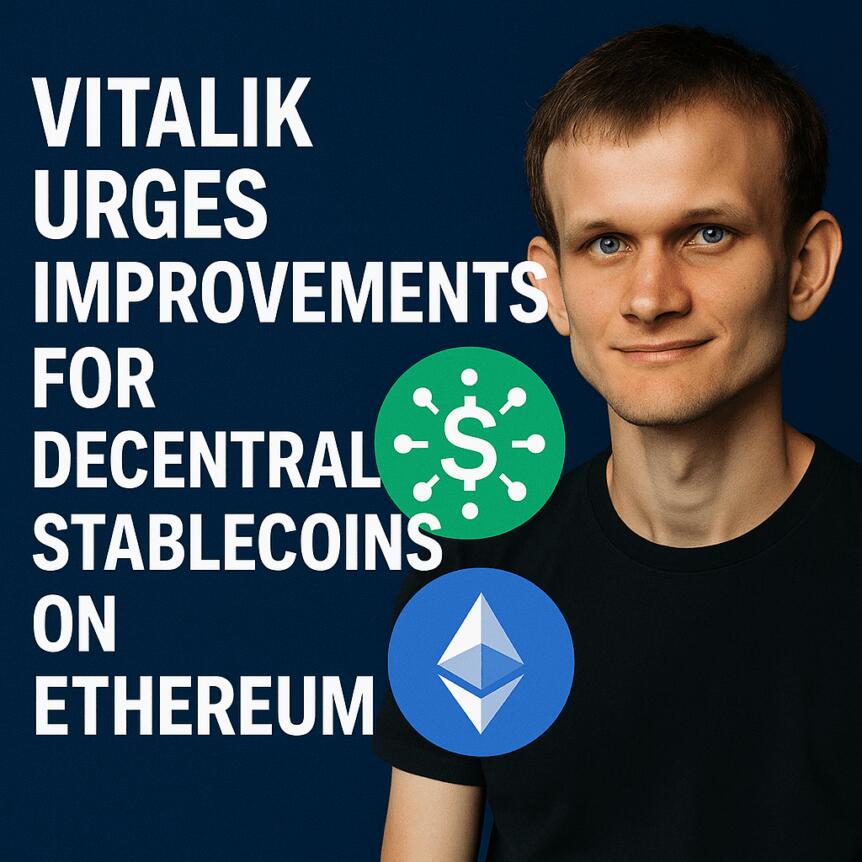
Ethereum Co-Founder Vitalik Buterin Advocates for Enhanced Decentralized Stablecoins
Vitalik Buterin, one of the principal architects of Ethereum, has emphasized the importance of developing more robust decentralized stablecoins to foster greater financial independence. Highlighting ongoing challenges within the sector, Buterin outlined key issues that must be addressed to improve the sustainability and reliability of these digital assets, which are crucial for decentralization advocates and users worldwide.
Key Takeaways
- Most stablecoins are pegged to the US dollar, comprising 95% of the market, which raises concerns about reliance on traditional fiat currencies.
- Buterin emphasizes that stablecoins should develop independent mechanisms that are resilient to potential hyperinflation or collapse of fiat currencies.
- Reliable oracles and secure collateralization are essential for maintaining stablecoin stability without exposing protocols to manipulation.
- High staking yields must balance incentivization with protocol stability, suggesting a reduction to approximately 0.2% and alternative staking mechanisms to avoid risks.
Tickers mentioned: USDT, USDC, USDe, DAI, ETH
Sentiment: Neutral
Price impact: Neutral. The discussion highlights foundational issues rather than immediate market moves.
Trading idea (Not Financial Advice): Hold. Focus on understanding the evolving stablecoin infrastructure rather than immediate trades.
Market context: With the rapid growth of the stablecoin market, regulatory and technological challenges remain central to its future development amidst broader crypto sector volatility.
Addressing Critical Challenges in Decentralized Stablecoins
Vitalik Buterin recently called for innovations in decentralized stablecoins, emphasizing their critical role in expanding financial sovereignty. Currently, the market is dominated by centralized stablecoins such as Tether (USDT) and Circle’s USDC, which together hold over 83% of trading volume. While these assets dominate liquidity and usage, they face scrutiny over centralization risks.
Buterin pointed out three main issues with the current stablecoin infrastructure. The first involves the peg to the US dollar, which although practical in the short term, may be problematic over the long run. CoinGecko data indicates that 95% of stablecoins are dollar-pegged. Conversely, Buterin argues that survivability shouldn’t depend on the stability of fiat currencies, as hyperinflation or political upheaval could undermine these assets. He advocates for developing indices or alternative benchmarks that better reflect true financial stability.
The second challenge involves oracles, which are responsible for providing real-world data to blockchain protocols. Buterin stresses the necessity of secure and manipulation-resistant oracles that do not increase costs or enable artificial inflation of stablecoins’ values. This resilience is vital for maintaining trust and stability.
The third issue relates to staking yields, which should incentivize participation without risking protocol instability. Buterin suggests reducing yields to around 0.2%, coupled with innovative staking mechanisms that minimize slashing risks. Furthermore, he emphasizes that security frameworks must protect against both network attacks and protocol errors, acknowledging that Ether alone cannot guarantee the stability of stablecoins during large price swings.
The stablecoin market has experienced extraordinary growth, reaching a valuation of over $311 billion in 2026—a 50% increase since early 2025. Its widespread adoption for cross-border transfers and savings, especially in emerging markets, underscores its importance. However, innovation remains crucial to overcoming current limitations and ensuring long-term resilience in the decentralized finance ecosystem.