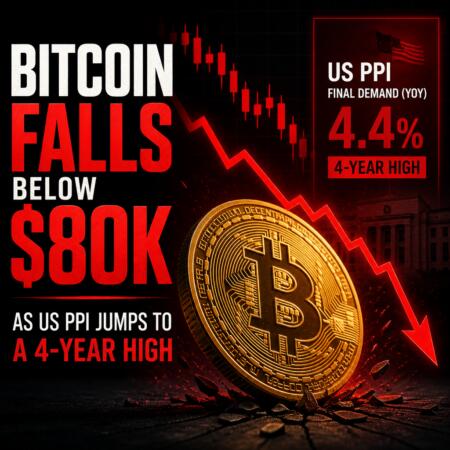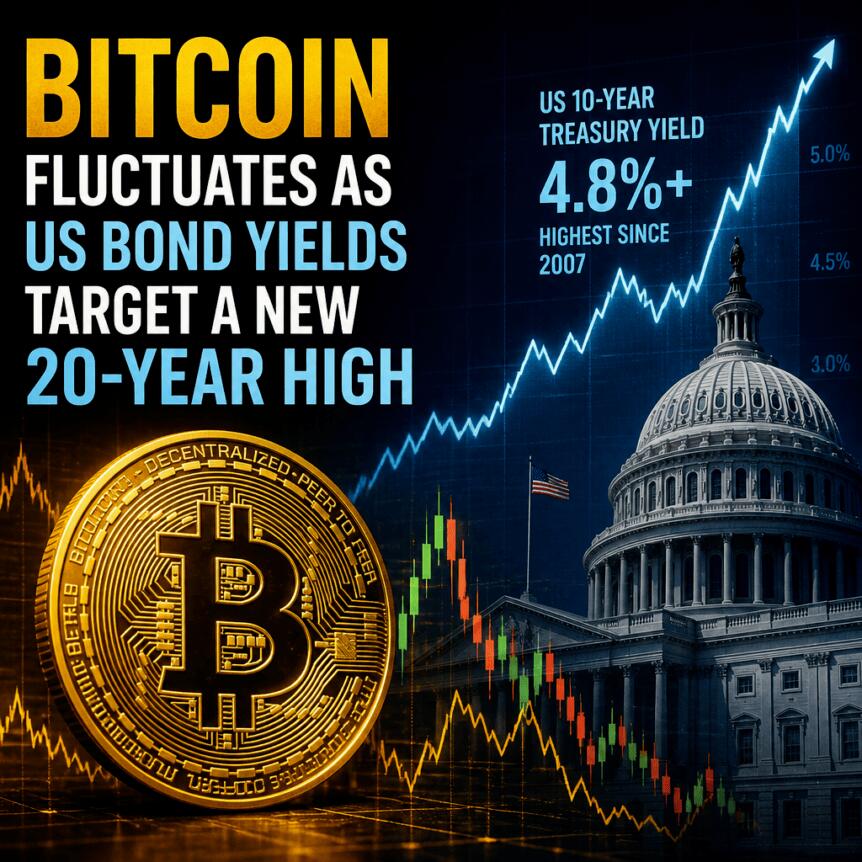
Bitcoin traded around the $78,000 area at the open of Wall Street on Monday as US bond yields pushed back toward multi-year highs. The move tied back to fresh comments from US Treasury Secretary Scott Bessent, who signaled the Treasury was considering further action at the long end of the curve, even as yields continued climbing.
BTC/USD’s intraday swings stayed relatively contained at first, but crypto traders were clearly watching the same macro driver again: higher yields tend to tighten financial conditions and can reduce appetite for risk assets—including digital tokens—especially when investors start pricing sustained strength in the long end of US rates.
Key takeaways
- Bitcoin rebounded during the US session after Scott Bessent told CNBC he had not yet purchased long-dated bonds, while implying further intervention was possible.
- US 10-year yields were back near their highest levels since January 2025 (4.76% cited), and the 30-year yield approached levels not seen since January 2007.
- Despite BTC holding the 50-week EMA near $77,269, traders flagged an emerging bearish divergence on the daily RSI ahead of the August monthly close.
- Market participants are balancing Treasury debt-buyback announcements against skepticism that policy changes can reliably steer bond pricing.
Bessent’s CNBC interview brings a quick BTC bounce
According to TradingView data referenced in the report, BTC/USD traded in a tight range early in the session, up roughly 1% on the day after a dip around the start of US trading. The rebound came alongside comments from Bessent in an interview with CNBC, where he emphasized that he had not yet taken steps to directly support the long end of the yield curve—specifically the 10-year and 30-year segments.
“I haven’t bought anything yet,” Bessent said on CNBC, adding that he was “fine” with yields rebounding following the latest Treasury messaging. The exchange mattered for traders because even hints about intervention in long-duration Treasuries can change expectations for real yields and the broader discount rate applied to future assets.
Earlier this month, the Treasury announced it would at least double the size of its debt buyback transactions to $4 billion from September. The report notes that yields fell after that announcement, but Monday’s trading showed the follow-through was limited: the 10-year yield was cited at 4.76%, returning to its highest levels since January 2025.
On the long end, the 30-year yield reached 5.269% on Monday—just six basis points short of its highest level since January 2007. In other words, while the Treasury talked, rates kept pressing higher, reinforcing the idea that the bond market’s interpretation of policy remains cautious and reactive.
Bond investors question whether policy is actually steering yields
One of the sharper reactions cited came from The Kobeissi Letter, which argued that “the bond market appears to be completely ignoring the US Treasury.” The post, shared on X, framed the issue as a mismatch between official actions and what investors are pricing into the yield curve—particularly as the 30-year rate moves close to long-unobserved territory.
The report also referenced earlier skepticism from Ray Dalio regarding the likelihood that the Treasury can control bond behavior under the new program. Dalio, in a post earlier covered by Cointelegraph, reportedly pointed to both Bitcoin and gold as potential hedges if investors conclude that debt markets cannot be stabilized through policy measures.
While Dalio’s remarks were not market guidance in the strict sense, they reflect a broader debate that matters to crypto: when yields rise and investors worry about long-term debt dynamics, some participants look for alternative stores of value outside traditional fixed income.
Stocks slip as geopolitical headlines feed risk caution
Bitcoin’s macro sensitivity showed up again in cross-asset price action. The report states that US equities traded lower, with both the S&P 500 and Nasdaq Composite around 0.4% down at the time. It attributed the pressure to market concerns tied to new US-Iran strikes, which filtered into investor sentiment during the session.
For crypto traders, this combination—rising yields alongside softer equity sentiment—often means fewer tailwinds. Even when BTC finds support on technical levels, broader risk conditions can cap upside until the macro picture stabilizes.
Technical watch: 50-week support holds, but daily RSI divergence warns
On the chart, the report highlighted Bitcoin’s ability to hold a key long-term reference point. Ahead of the August monthly candle close, BTC/USD maintained its 50-week exponential moving average (EMA) at $77,269, described as support. Cointelegraph previously framed this area as a “line in the sand” for bulls.
At the same time, momentum signals looked less convincing. The trader and analyst Rekt Capital warned of a “hidden bearish divergence” forming on daily time frames between price action and the relative strength index (RSI). The report notes that while RSI signals on the weekly chart have been bullish, the daily readings suggested waning momentum.
Rekt Capital cautioned followers that if the daily RSI continues to print lower highs, it could “contribute to mounting weakness here,” according to the X post cited in the report. On Monday, daily RSI was reported at 70.7—still within the “overbought” band, but potentially relevant because divergence often appears when an asset begins to struggle to sustain strength despite elevated momentum readings.
In practical terms for traders, the tension is clear: Bitcoin is holding a major trend indicator (the 50-week EMA), yet a shorter-term momentum warning suggests any late-month weakness could deepen if price can’t reclaim upside traction.
What to watch into the August monthly close
With the August monthly candle approaching, investors will likely focus on whether Bitcoin can hold the 50-week EMA around $77,269 while daily RSI divergence plays out. At the same time, the next developments in the bond market—especially around long-end yields near recent highs—will remain a crucial variable, since the day’s BTC movement was closely linked to Treasury messaging that did not immediately halt the rise in rates.