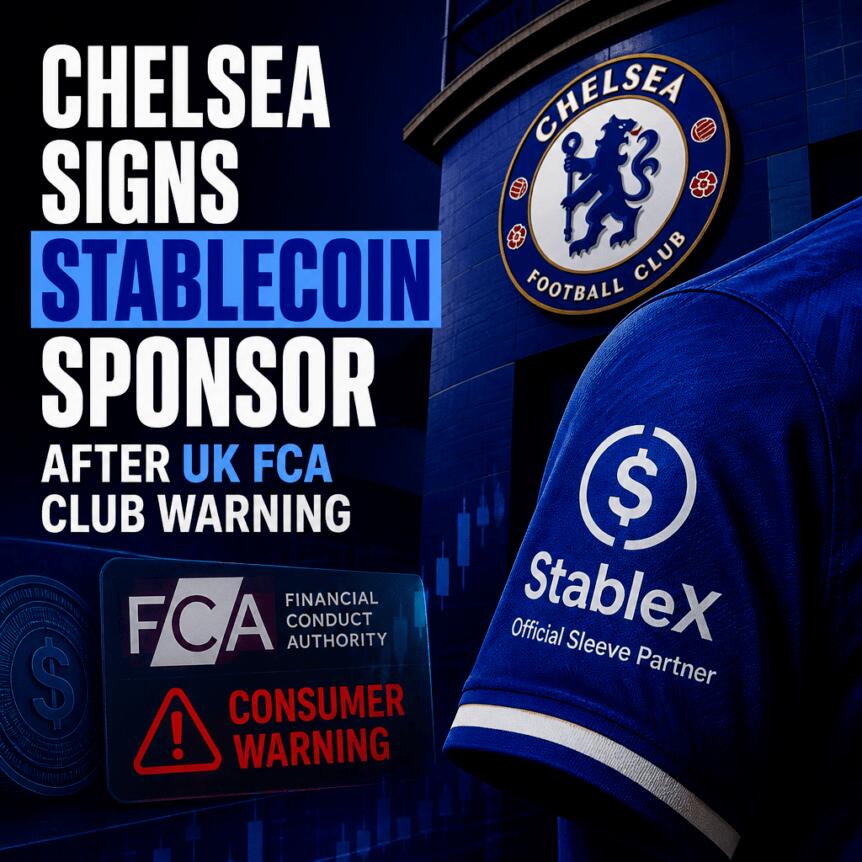
Circle, the issuer of the USDC stablecoin, is stepping into English football sponsorship on a high-profile stage. The company announced that its name and the USDC brand will appear on Chelsea Football Club jerseys for the 2026/2027 season.
The move lands only months after the UK Financial Conduct Authority (FCA) warned Premier League clubs about sponsorship arrangements involving “unauthorized” financial firms—including crypto-related businesses—raising questions about how stablecoin brands fit into the regulator’s broader expectations for marketing and authorization.
Key takeaways
- Circle will sponsor Chelsea FC and place the USDC brand on team jerseys starting with the 2026/2027 season.
- The announcement follows FCA warnings to Premier League clubs about sponsorship deals with unauthorized firms that could breach UK financial services rules.
- Circle UK Trading Limited is listed by the FCA as authorized to provide certain financial services to UK residents.
- USDC is stated to be issued by regulated affiliates, but Circle says it is not issued or regulated under UK law.
Chelsea jerseys to carry USDC branding
In a Friday press release, Circle said its name and USDC would be featured on Chelsea FC players’ jerseys during the 2026/2027 season. The sponsorship effectively brings a stablecoin brand into a mainstream consumer spotlight where millions of fans watch matches and associated media coverage.
For Circle, the rationale is straightforward: football sponsorship offers global reach and brand visibility for a payments-focused token built to maintain a stable value relative to a reference currency. For Chelsea supporters, the change will be more immediate—USDC will become a visible part of the club’s on-field identity.
Why the FCA warning matters
The sponsorship arrives about three months after the FCA said it had sent warning letters to football clubs in the Premier League, potentially including Chelsea. According to the FCA, the letters were tied to “unauthorized” companies using sponsorship deals to target football fans, which the regulator said could violate UK financial services rules.
The FCA framed the issue as a consumer protection concern. In comments accompanying its warning, Lucy Castledine, the FCA’s director of consumer investments, said that clubs’ loyalty-based relationships should not be used to expose fans to “potentially dodgy products.”
While Circle’s sponsorship is not being presented as a direct response to the FCA’s earlier action, the timing makes the regulator’s stance impossible to ignore for market participants. The core question for investors and users is whether stablecoin marketing—especially when tied to major sports audiences—falls cleanly within the FCA’s interpretation of authorized activity, or whether additional scrutiny will follow.
Authorization vs. where the token is “issued”
Circle’s relationship with UK regulatory oversight appears to be split between its corporate authorization and the legal status of the stablecoin itself. Circle UK Trading Limited—the firm described as Circle’s UK arm—has been listed by the FCA as an authorized company able to provide certain financial services to residents since 2018.
At the same time, Circle said USDC is “issued by certain regulated affiliates,” but it is “not issued or regulated under the laws of the United Kingdom.” That distinction matters because FCA warnings were aimed at unauthorized financial firms and marketing practices that could be inconsistent with UK financial services requirements.
The company’s messaging suggests it views its UK operations as compliant in terms of the entities that interact with UK residents, even if the stablecoin’s issuance and regulation occur under other jurisdictions. For readers, the practical implication is that sponsorship does not necessarily settle regulatory questions on its own; what matters is the scope of authorization and the jurisdictional framework covering the token.
Broader policy pressure around stablecoins
The Chelsea deal also sits within a wider UK policy environment still working out how stablecoins should be governed. The UK has said lawmakers are working toward a more comprehensive regulatory framework for digital assets. In parallel, stablecoin usage in the country is described as legal, but regulatory clarity remains a moving target.
That context raises the stakes of visible consumer-facing campaigns. When a stablecoin brand becomes associated with a mainstream sports club, it can accelerate awareness well beyond crypto-native audiences—exactly the kind of attention the FCA typically tries to manage when it fears consumer harm from products presented through trusted institutions.
Regulatory questions are likely to remain open
Circle’s sponsorship may be entirely lawful under its stated authorization structure, but the FCA’s earlier warnings indicate the regulator is focused on how financial firms reach fans through club branding and what authorization claims are presented to the public. Investors, builders, and users should watch for any follow-up guidance, further enforcement signals, or public clarification on how stablecoin marketing is expected to align with UK rules.