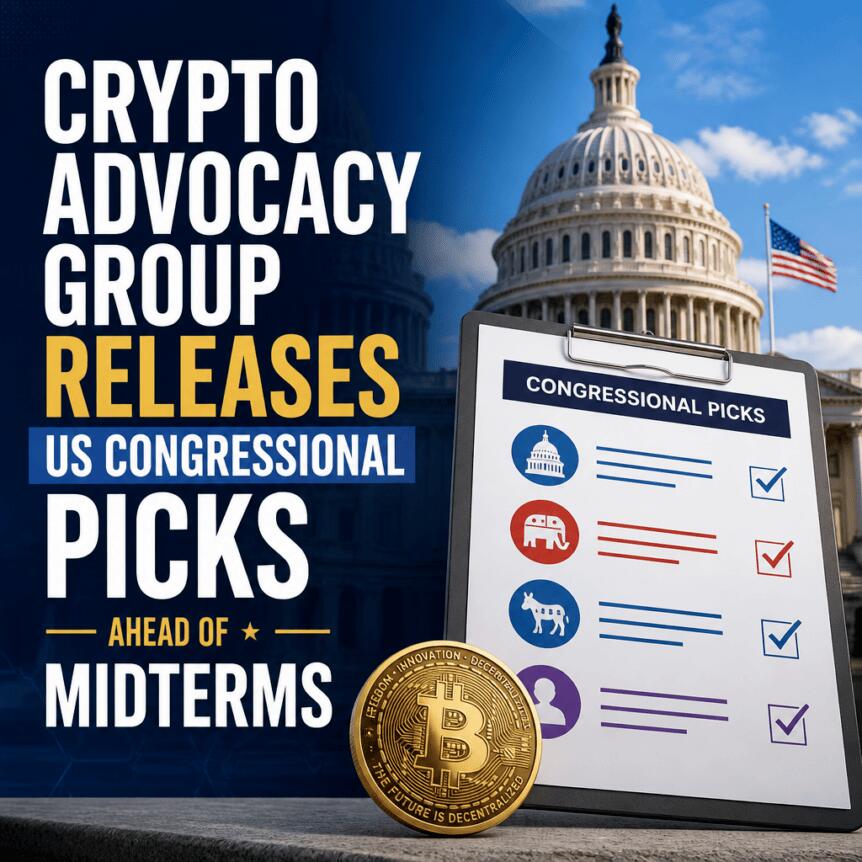
Coinbase-backed advocacy group Stand With Crypto, which launched in 2023 to push for “clear, common-sense regulations” for the digital-asset industry, has begun laying out political endorsements for the next wave of US congressional elections.
According to Bloomberg Government, the organization said it plans to support several candidates on the 2026 ballot. The list includes Ohio Republican Senator candidate Jon Husted, Iowa Republican Ashley Hinson, and New Hampshire Democrat Chris Pappas, with additional endorsements extending to multiple House races. The announcements arrive as control of the House and Senate could shift after the 2026 election cycle—an outcome that may determine whether stalled crypto legislation can move forward.
Key takeaways
- Stand With Crypto, Coinbase’s industry-aligned advocacy group, has announced support for multiple 2026 Senate candidates, including Jon Husted in Ohio.
- The group also cited support for several House candidates, including Mariannette Miller-Meeks in Iowa and Shomari Figures in Alabama.
- Crypto-focused lawmakers are still contending with stalled progress on the Digital Asset Market Clarity (CLARITY) Act, which recently failed to advance in the Republican-controlled Senate.
- Stand With Crypto warned that lawmakers who opposed the bill could face consequences, underscoring the tight link between legislative outcomes and campaign strategy.
Stand With Crypto’s 2026 candidate endorsements
Bloomberg Government first reported Stand With Crypto’s slate for Senate races in 2026. The endorsements cover three states: Ohio (Jon Husted), Iowa (Ashley Hinson), and New Hampshire (Chris Pappas).
The Ohio race is especially prominent in the organization’s messaging because Husted is defending a Senate seat against Democrat Sherrod Brown. Brown’s political fortunes shifted in the prior cycle: he lost to Republican Bernie Moreno in 2024 after outside spending surged in Ohio, according to the reporting.
In addition to Senate seats, Stand With Crypto said it endorsed candidates for the US House of Representatives. The reported picks include Republican Mariannette Miller-Meeks in Iowa and Democrat Shomari Figures in Alabama.
CLARITY Act stalls, raising stakes for lawmakers
The endorsements land against a backdrop of legislative momentum that has recently stalled. A crypto market structure bill known as the Digital Asset Market Clarity (CLARITY) Act passed the House with bipartisan support in 2025, but it failed to receive enough votes to move forward in the Republican-controlled Senate earlier this month.
Cointelegraph previously reported that the Senate did not advance the measure after it failed to secure the votes needed for a key cloture motion, following the House’s earlier approval. That procedural result is now influencing how crypto advocacy groups frame upcoming races.
After the September 15 CLARITY vote failed, Stand With Crypto warned lawmakers that there would be “consequences” for those who did not support the legislation. Cointelegraph attempted to seek clarification from Stand With Crypto regarding its endorsement of Jon Husted, but did not receive an immediate response.
Why elections and crypto bills are becoming harder to separate
The timing of Stand With Crypto’s endorsements matters because election outcomes could reshape legislative priorities. Polling referenced in the original reporting suggests Democrats may be in a position to regain control of the House and Senate in 2027. A change in majority control could affect the path for bills like CLARITY, particularly if committee agendas and floor scheduling shift.
Stand With Crypto has also previously leaned on direct campaign influence. In August, the organization endorsed 32 House candidates, describing them as “proven digital asset policy champions,” while arguing that such support could matter in close races.
Advocacy groups are not operating in a vacuum. Cointelegraph reported that some candidates were already seeing financial inflows tied to the crypto sector close to the midterm election window—through political action committees and direct campaign contributions.
One prominent example is Fairshake PAC, which Cointelegraph described as largely supported by contributions from Coinbase, Ripple Labs, and Andreessen Horowitz. In Ohio, the PAC pledged an initial commitment of $30 million to support Husted in his race against Brown, and Cointelegraph reported that it spent $82 million on candidates across the country as of June.
While spending totals and endorsement lists don’t, by themselves, guarantee legislative success, they can help explain why crypto firms and industry-aligned groups are treating elections as a determinant of regulatory timelines. In the current environment—where CLARITY cleared the House but failed procedurally in the Senate—the difference between a supportive or non-supportive caucus can become a matter of whether a bill ever reaches a final vote.
What to watch next as Congress approaches a potential reset
For investors, builders, and users, the practical question is whether CLARITY—or legislation aligned with it—can regain momentum in the event of a congressional power shift. Readers should watch whether the 2026 endorsements translate into measurable changes in how lawmakers vote on crypto market structure and whether procedural barriers like cloture continue to block progress in the Senate.