
Selling crypto from a phone has become much easier than it used to be. A few years ago, users often had to move assets to a separate exchange, choose a trading pair, place an order, and then transfer funds again. Today, many mobile crypto apps allow users to manage this process in a simpler way.
One practical example is the ability to sell crypto in app Trustee, where users can manage assets from a mobile wallet and use in-app tools instead of switching between several separate services. This type of solution is useful for people who want a faster and more convenient way to handle everyday crypto operations.

What Does It Mean to Sell Crypto in an App?
Selling crypto in an app usually means converting a digital asset into another supported asset, stablecoin, or available balance directly inside a mobile application. The exact process depends on the app, supported currencies, and available payment methods.
For many users, this is more convenient than using a traditional exchange. They can open the app, choose the asset, enter the amount, check the rate, and confirm the operation in one place.
This is especially useful for people who do not trade professionally. They may not need charts, order books, or advanced market tools. They simply want to sell or exchange crypto when needed.
Selling vs Swapping vs Withdrawing
Before selling crypto, users should understand the difference between selling, swapping, and withdrawing.
Selling crypto usually means converting a cryptocurrency into another form of value. Depending on the app, this may be a stablecoin, fiat-equivalent balance, or another supported asset.
Swapping means exchanging one cryptocurrency for another. For example, a user may swap BTC to USDT, ETH to USDC, or one altcoin to another.
Withdrawing means moving funds out of the app to an external wallet, exchange, or payment method. This is different from selling because the asset may remain the same, but its location changes.
These terms are sometimes used differently across platforms, so users should always check what exactly will happen before confirming any operation.
Why People Sell Crypto from Mobile Apps
The main reason is convenience. A mobile app gives users access to their assets at any time. They can sell or exchange crypto without opening a desktop platform or moving funds between several services.
Another reason is speed. If market conditions change, users may want to react quickly. An in-app flow can be faster than sending funds to another exchange first.
Mobile apps are also useful for smaller, routine transactions. Not every sale requires a professional trading setup. Sometimes a user simply wants to convert crypto to a stablecoin, prepare funds for a payment, or rebalance their assets.
For beginners, mobile apps can make the process less intimidating. Instead of dealing with order books and trading pairs, they can follow a simpler step-by-step flow.
What to Check Before Selling Crypto
Exchange Rate
The exchange rate affects how much value the user receives. Since crypto prices move quickly, users should always review the rate before confirming a transaction.
Final Amount
The final amount is more important than the advertised fee. It shows what the user will actually receive after the operation.
Fees and Spread
Some services show a separate commission. Others include costs in the rate. Users should look at the full result, not only one number.
Supported Assets
Before selling, users should check whether the app supports the asset they want to convert and the asset they want to receive.
Limits
Some apps may have minimum or maximum transaction limits. This can matter for both small and larger operations.
Security
Since selling crypto involves real funds, users should use only official apps and enable available security features such as two-factor authentication or biometric login.
Benefits of Selling Crypto Inside a Mobile App
Selling crypto inside a mobile app can reduce unnecessary steps. Users do not need to transfer assets to another platform, wait for confirmations, and then complete the transaction elsewhere.
It can also reduce the chance of transfer mistakes. Every external transfer requires the correct network, address, and asset. If users can complete the operation inside the app, the process may be easier to control.
Another benefit is better mobile access. Users can check rates, review balances, and complete transactions wherever they are.
For people who use stablecoins regularly, in-app selling or swapping can be especially practical. They can convert volatile assets into USDT or USDC when they want more predictable value.
Trustee as a Practical Example
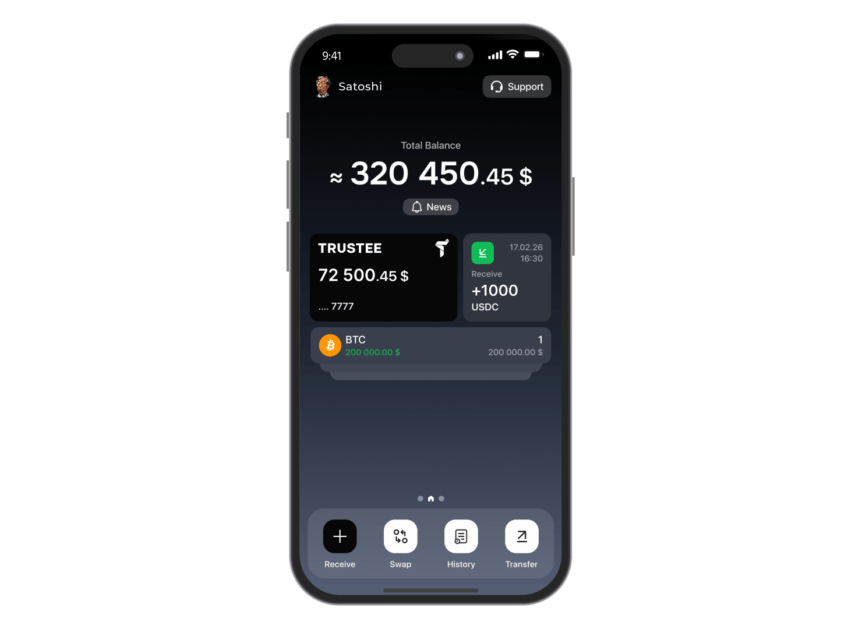
Trustee is one example of a mobile crypto app that allows users to manage crypto operations from one interface. Users can store assets, exchange cryptocurrencies inside the app, buy crypto with Visa and Mastercard, send transfers, and use additional tools for everyday crypto management.
The app supports 30+ coins and popular networks or methods such as TRC20, ERC20, SOL, and NEAR. Before confirming an exchange or sale-related operation, users can review the transaction details, including the rate and final amount.
Trustee also includes useful tools such as price-change alerts and transaction filtering. Alerts can help users follow market movements without constantly checking charts, while filtering makes it easier to find past exchanges, top-ups, card payments, and other operations in transaction history.
Security features include multi-level two-factor authentication, biometric access methods like Face ID, decentralized security protocols, and a Secret PIN option for hidden sub-accounts. The app also includes a referral programme that allows users to earn up to 45% of the fees from invited users’ exchanges.
How to Sell Crypto in an App
The exact steps may differ depending on the app, but the general process is usually similar.
- Open the crypto app and choose the asset you want to sell or exchange.
- Select the asset or balance you want to receive.
- Enter the amount.
- Check the exchange rate, fee, and final amount.
- Confirm the operation if all details are correct.
- Review the completed transaction in your history.
Users should never rush this process. Even if the app is simple, it is always important to check the asset, amount, rate, and final result before confirmation.
Common Mistakes to Avoid
One common mistake is selling crypto without checking the final amount. A user may focus on the fee but ignore the rate or spread.
Another mistake is selling during sharp market movement without understanding the risk. Crypto prices can change quickly, and fast decisions may lead to worse results than expected.
Users should also avoid using unofficial apps or suspicious links. Fake crypto apps can be dangerous and may put funds at risk.
Another issue is choosing the wrong asset. Some tokens have similar names, so users should confirm exactly what they are selling and what they will receive.
Finally, users should not ignore transaction history. Reviewing past operations can help them understand their habits and manage assets better.
Tips for Selling Crypto More Safely
Start with smaller transactions if you are using a new app for the first time. This helps you understand the flow before moving larger amounts.
Use price alerts if available. They can help you react when an asset reaches a level you are comfortable with.
Check rates before confirming. The final amount should always be visible and acceptable.
Enable security features. Two-factor authentication, biometric login, and passcodes can help protect your account.
Keep transaction records. A clear history can help you track exchanges, top-ups, and other operations over time.
Final Thoughts
Selling crypto from a mobile app can be a simple and convenient option for everyday users. It removes the need to move assets between several platforms and makes routine crypto operations easier to manage from a phone.
The most important things are to check the exchange rate, final amount, fees, supported assets, and security settings before confirming any transaction.
Trustee is a practical example of this type of mobile crypto solution. It combines wallet, exchange, purchase, transfer, security, alert, transaction filtering, and referral features in one app, making it useful for users who want to manage crypto without unnecessary steps.