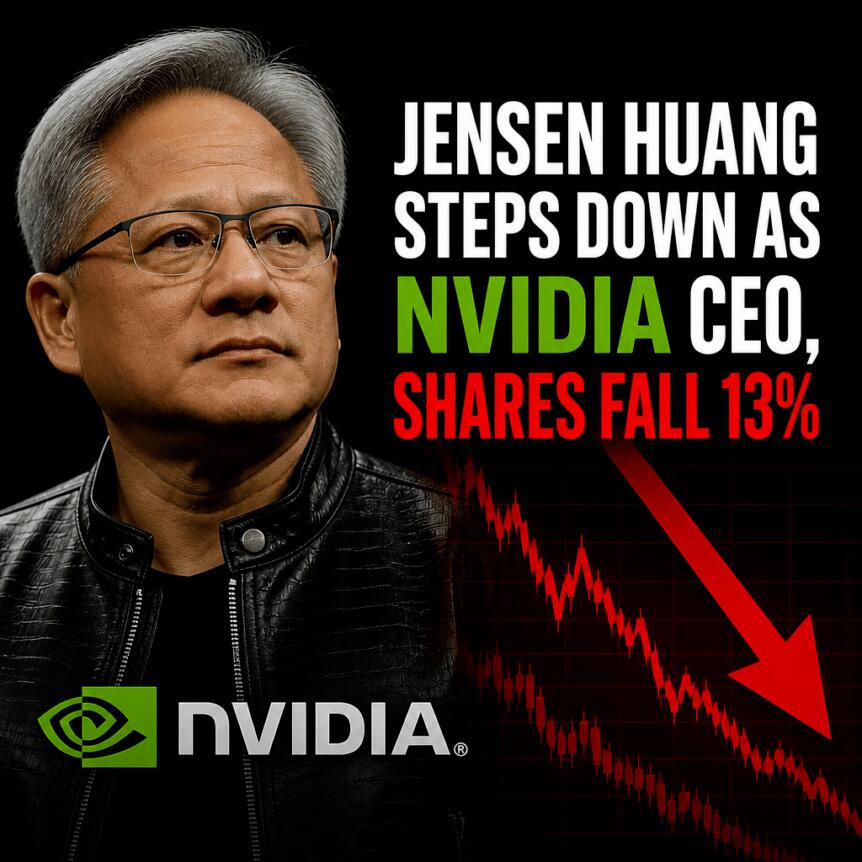
Nvidia co-founder Jensen Huang has resigned as president and chief executive officer and stepped down from the company’s board, effective immediately, according to an announcement from Nvidia. The board named Chief Financial Officer Colette Kress as interim CEO while it evaluates internal and external candidates to fill the permanent role.
In the wake of the change, Nvidia shares dropped sharply. Yahoo Finance data shows the stock fell more than 13% at the US market open on Thursday, trading around $151.00 as of 13:31 UTC.
Key takeaways
- Jensen Huang has exited as Nvidia’s president and CEO, with the resignation taking effect immediately.
- Colette Kress becomes interim CEO while retaining her CFO responsibilities.
- Nvidia appointed Harvey C. Jones as its first chair as part of the leadership transition.
- Company leadership says operations won’t pause, including continuity of its product roadmap.
- Investors will likely focus on the upcoming earnings date, with fiscal 2027 third-quarter results scheduled for Nov. 17.
Leadership transition at Nvidia
Huang’s departure marks a major shift for a company closely associated with his leadership since he helped build Nvidia into a dominant player in accelerated computing. Nvidia’s board moved quickly to install Kress, a long-tenured executive, as interim CEO.
The interim appointment is paired with a clear message from the board: Nvidia expects its day-to-day operations and long-term product plans to continue without interruption. In the announcement, newly appointed chair Harvey C. Jones stated that the company expects its operations and product roadmap to proceed as planned.
Why the interim structure matters
From an investor perspective, the key practical detail is that Kress will serve as interim CEO while continuing as chief financial officer. That dual role can reduce disruption during a transitional period, especially for a company whose financial planning, reporting cadence, and capital allocation decisions tend to be closely tied to top-level leadership.
Because the board is still considering both internal and external candidates for the permanent CEO position, the interim period effectively becomes a test of continuity. Markets often look for signs that strategic priorities—such as execution against the product roadmap the board referenced—remain stable even as governance leadership changes.
Board changes and new chair role
Nvidia’s announcement also included governance updates. The board appointed Harvey C. Jones as its first chair, signaling an expanded or restructured role for the chair position as the company navigates the CEO transition.
While the CEO shift addresses day-to-day leadership, chair appointments typically matter for how oversight is organized—particularly when leadership changes are decisive and immediate. Nvidia’s messaging indicates the board is trying to reassure stakeholders that continuity will be maintained as the permanent successor search proceeds.
Market reaction and the next milestone
The stock move reflects the uncertainty that often follows sudden leadership changes at highly scrutinized, fast-moving technology firms. According to Yahoo Finance, Nvidia shares fell more than 13% at the US market open on Thursday, trading around $151.00 as of 13:31 UTC.
Nvidia still has an important upcoming operational and investor checkpoint: the company is scheduled to report its fiscal 2027 third-quarter financial results on Nov. 17. That date will likely be closely watched for indications that strategy execution and financial outlook remain on track under interim leadership.
Beyond quarterly results, investors may also focus on how the board frames the process for selecting a permanent CEO—especially whether the company leans more heavily toward internal leadership continuity or pursues external candidates. Until that becomes clearer, Nvidia’s interim period will remain the central storyline for both markets and employees.
For now, readers should watch two things most closely: whether Nvidia’s upcoming results on Nov. 17 confirm operational and financial continuity, and what signals the board provides about the criteria and timeline for a permanent CEO appointment.