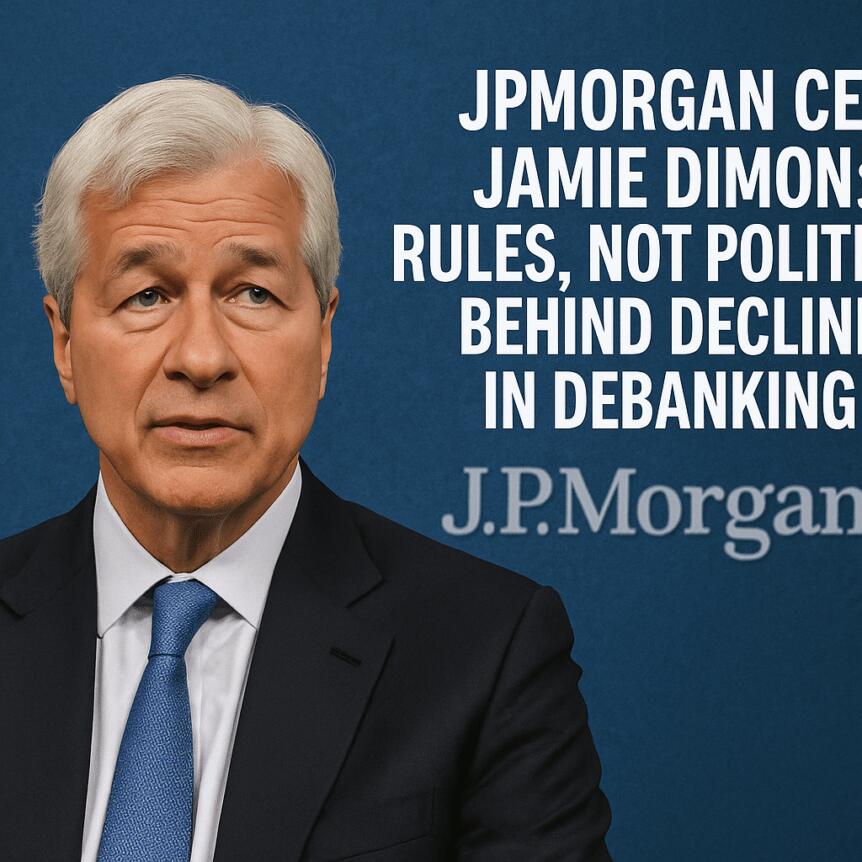
JPMorgan CEO Jamie Dimon Addresses Allegations of Debanking and Calls for Regulatory Reform
Jamie Dimon, CEO of JPMorgan Chase, has firmly contested claims that the banking giant debanks customers based on their political or religious affiliations. In a recent interview, he emphasized ongoing efforts to reform the rules governing bank account closures, highlighting that the bank’s actions are driven by compliance and risk management rather than discrimination.
Key Takeaways
- Dimon denies any political or religious bias in JPMorgan’s debanking practices.
- Industry figures and political figures have raised concerns about politically motivated account closures.
- Dimon calls for regulatory changes to address perceived overreach and improve transparency.
- He criticizes both political parties for pressuring banks, emphasizing the need for balanced policies.
Tickers mentioned: None
Sentiment: Neutral
Price impact: Neutral, as the statements aim to clarify practices rather than influence market sentiment directly.
Trading idea (Not Financial Advice): Hold, as regulatory and industry concerns about debanking are likely to prompt policy discussions without immediate impact on banking stocks.
Market context: The broader financial sector is scrutinizing practices around account closures amid rising political and regulatory tensions, especially in the evolving crypto landscape.
JPMorgan CEO Clarifies Debanking Practices
During a Sunday interview with Fox News’ “Sunday Morning Futures,” Jamie Dimon addressed recent allegations of political and religious bias in JPMorgan Chase’s banking operations. The bank has been accused by various industry insiders and political figures of debanking individuals and organizations linked to certain political groups or religious backgrounds, often amid discussions surrounding free speech and political expression.
Dimon stated, “We do debank people, but it’s never for religious or political reasons. We have debanked individuals from both major parties and various faiths, but never because of their affiliations.” He emphasized that the bank’s actions are driven by compliance and risk considerations, not discrimination. “We cannot discuss specific accounts,” he added, “but our policies are not biased.”
Calls for Regulatory Reform
Dimon expressed support for legislative efforts aimed at reforming the rules surrounding bank account closures, citing the need for clearer regulations to prevent perceived overreach. “I’ve been advocating for rule changes for 15 years,” he remarked. “We should focus on making the system more customer-friendly and transparent.”
He also criticized the political pressures that can influence banking practices, noting, “Both Democratic and Republican administrations have pressured banks. It’s time for the government to step back and allow banks to operate without undue influence.”
Industry Concerns and Broader Implications
The debate over debanking is particularly relevant in the context of the cryptocurrency industry, which has faced ongoing challenges with account closures and service denials from traditional banks. Critics argue that these actions are part of a wider effort to suppress digital assets.
Furthermore, in August, President Donald Trump signed an executive order directing regulators to investigate claims of politically motivated banking decisions. Meanwhile, industry leaders like Jack Mallers, CEO of Strike, have reported unexplained closures of personal accounts, fueling fears of “Operation Chokepoint 2.0”—an alleged campaign to limit financial services for certain sectors.
Looking Ahead
As discussions about banking practices continue, JPMorgan’s stance and Dimon’s calls for regulatory reform underscore the growing tension between financial compliance and political independence. Industry observers suggest that future regulatory changes could reshape how banks address politically sensitive issues and account closures in the digital age.