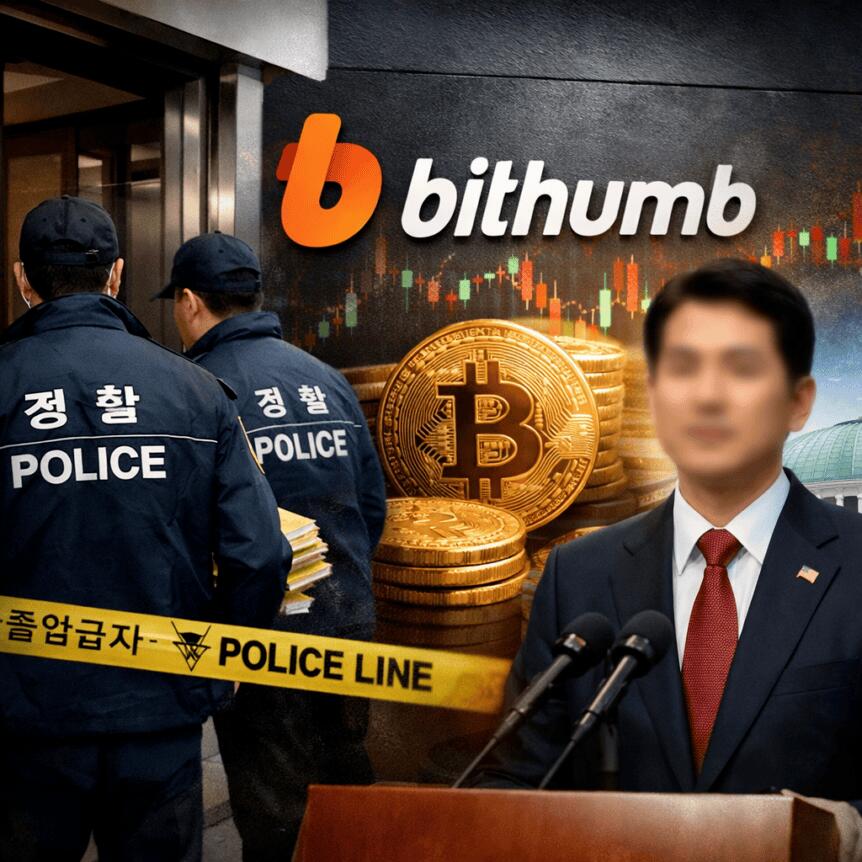
South Korean police have raided Bithumb as part of an ongoing investigation into alleged nepotism involving independent lawmaker Kim Byung-gi, according to a News1 report. The probe centers on whether Kim attempted to influence employment decisions for his son at crypto firms including Bithumb and Dunamu, the operator of Upbit.
News1 said Kim’s son joined Bithumb in January 2025 and remained there for about six months. Authorities are examining whether any external pressure or preferential treatment affected the hiring process, underscoring how political influence and corporate access remain highly sensitive issues in South Korea’s crypto sector.
Key takeaways
- <li Police raid Bithumb amid a broader nepotism inquiry into independent lawmaker Kim Byung-gi and potential influence over crypto-firm hiring.
<li Kim’s son reportedly joined Bithumb in January 2025 and worked for about six months; investigators are assessing whether external pressure biased the hiring decision.
<li The probe expanded to questions about Kim’s conduct in Parliament, including how he interacted with Dunamu during Finance Committee proceedings.
<li Bithumb faces regulatory action on AML/KYC compliance, including a $24.5 million fine and a six-month partial suspension imposed in March 2025; a court later paused the suspension order in late April.
<li The investigation highlights ongoing tensions between politics, governance, and the crypto industry in Korea, with potential implications for investors and market oversight.
Nepotism probe widens beyond Bithumb hiring
The investigation has moved beyond the hiring episode at Bithumb. Police have questioned Kim multiple times as they probe possible criminal conduct tied to the alleged misuse of his official position. The scope broadened after disclosures that, while serving on the National Assembly’s Political Affairs Committee—overseeing the nation’s finance regulator—Kim repeatedly directed questions at Dunamu during committee proceedings, prompting questions about potential preferential treatment toward the company tied to his son’s employment.
Law enforcement has already summoned executives from crypto exchanges for testimony, and authorities executed searches at Bithumb’s headquarters and the Bithumb Financial Tower. In April, Kim was questioned over 13 separate allegations, including nomination bribery, employment-related favors involving his son, and alleged requests connected to a university transfer. Kim has publicly maintained confidence that he will be cleared of wrongdoing, while authorities have not publicly announced additional summonses at this stage.
The developments were reported by News1, underscoring how quickly a single hiring controversy can escalate into a wider political and regulatory saga for Korea’s crypto ecosystem.
Regulatory scrutiny tightens as Bithumb faces penalties
Bithumb has been under regulatory scrutiny for AML and compliance shortcomings. Regulators imposed a $24.5 million fine and ordered a six-month partial suspension in March 2025, citing deficiencies in Know-Your-Customer procedures and other compliance controls that restricted onboarding of new users as part of the enforcement package tied to 2025 inspections.
In late April, a South Korean court temporarily blocked the suspension order after Bithumb challenged the regulator’s decision, pausing enforcement while legal proceedings continue. Cointelegraph coverage notes that the paused suspension adds uncertainty to the exchange’s operations during the legal process. Bithumb did not respond to a request for comment by publication.
Implications for Korea’s crypto governance and markets
The case sits at the crossroads of politics, corporate influence, and market regulation at a time when South Korea has already signaled a sustained push to tighten governance within the crypto sector. If substantiated, allegations that a lawmaker could influence hiring or other business outcomes may intensify calls for clearer rules around the intersection of public office and private sector ties. For investors and users, the episode reinforces the importance of robust AML/CFT controls and transparent governance at exchanges. It also signals that political risk linked to insider networks remains a meaningful factor in Korea’s rapidly evolving crypto landscape.
The episode also highlights how regulatory actions—paired with high-profile investigations—can shape sentiment and trajectories for crypto firms operating in the country. As authorities continue their inquiries, observers will be watching for further summons, potential charges, and any ensuing changes to oversight and compliance standards that could influence market access and enforcement in Korea’s crypto industry.
What unfolds next—whether additional charges emerge or policy adjustments follow—will inform how seriously investors should weigh political risk in Korea’s crypto sector.