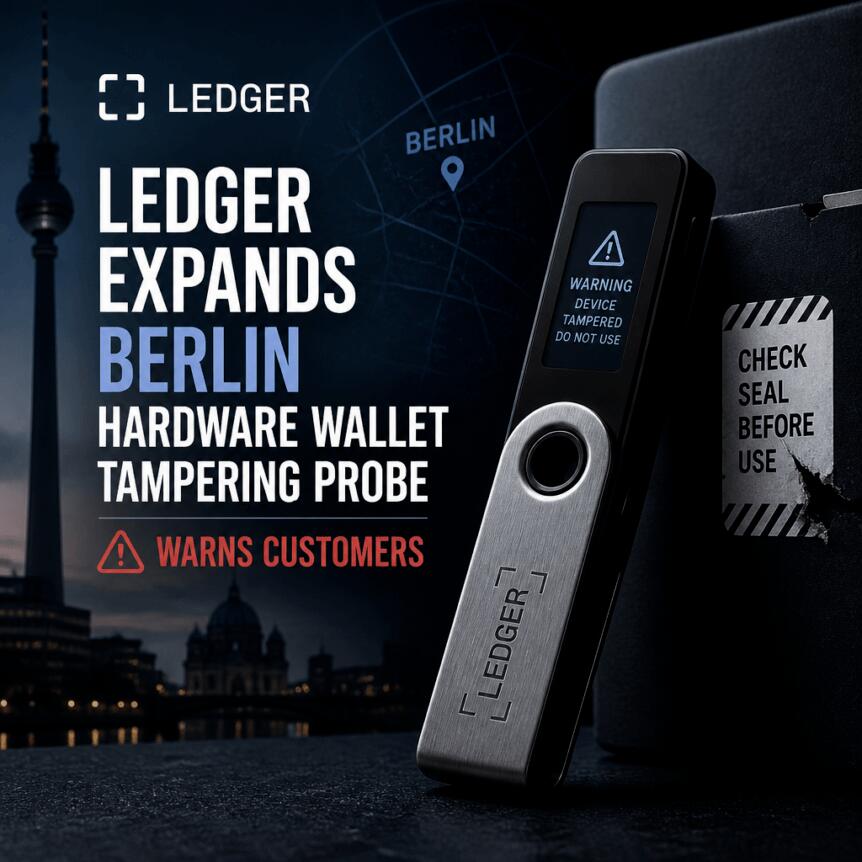
Ledger has urged some customers in Berlin—specifically those who bought its hardware wallets there since January 2026—to contact its support team after the company said it is investigating reports of tampered devices in Germany and the United Arab Emirates.
In a Wednesday status update on its investigation, Ledger said it identified “several suspicious devices” linked to the same suspected tampering campaign while reviewing cases in Berlin. The company also acknowledged separate reports from Dubai, where two customers said they lost a combined $604,000 in cryptocurrency after receiving compromised wallets.
Key takeaways
- Ledger is flagging Berlin-area purchases since January 2026 for potential device tampering tied to an ongoing distribution-channel investigation.
- Dubai reports involve two customers and total losses of $604,000, according to Ledger’s update.
- Ledger says the affected devices show similar physical modifications intended to capture recovery phrases during setup.
- The company claims it found no issues in its secure chip or operating system and no confirmed cases involving wallets bought directly from its website.
- Customers can request physical inspections in Vierzon, France, including X-ray analysis, if they suspect their device was compromised.
Berlin findings expand the scope of Ledger’s investigation
Ledger’s latest update focuses on an area where it says it has found multiple suspicious units. The company warned that customers who purchased Ledger hardware wallets in Berlin since January 2026 should reach out to its support team, as these devices appear to match a pattern tied to the same tampering campaign under review.
Ledger did not outline further operational details in the update beyond indicating that the suspicious devices were identified through its investigation and that the cases align with the broader distribution-channel incident the company has been addressing.
Dubai losses tied to the same suspected campaign
Alongside the Berlin alert, Ledger also referenced reports from Dubai. According to the company, it received accounts from two customers who reported losing a combined $604,000 in cryptocurrency after receiving tampered devices.
Ledger did not claim how the funds were moved, but its acknowledgment underscores that the problem may extend beyond one region. Importantly, Ledger said the incidents appear connected to the same distribution-channel tampering campaign it had been investigating earlier—suggesting a common thread in how compromised wallets circulated.
The Dubai link also reinforces the practical urgency for users who purchased during the relevant window and those who received wallets through channels other than direct purchase from Ledger.
What Ledger says about the tampering method
Ledger said that all confirmed tampered devices it identified contained similar physical modifications. The company described these modifications as being designed to capture users’ recovery phrases during the device setup process.
Just as crucial for risk assessment, Ledger stated that it found no vulnerability in its secure chip or operating system. In other words, Ledger is not framing the issue as a software exploit; it is treating the incident as a physical compromise tied to distribution and device preparation.
Ledger also reported that it has found no confirmed cases involving devices purchased directly from its website. That distinction matters for customers trying to determine whether their purchase route reduced exposure.
Connection to an earlier Southeast Asia case
Ledger said the Berlin and Dubai incidents are connected to the same distribution-channel tampering campaign it first began investigating in October, when it asked authorized reseller CryptoBilis to suspend sales and shipments amid reports of cryptocurrency thefts.
Ledger’s earlier phase of the response included confirmation that a Ledger Nano Gen 5 device was affected in the region at that time. The latest update effectively extends what started as an incident in Southeast Asia into a wider geographic picture—raising questions about where along the distribution chain the tampering might have occurred and how many compromised units may have reached end users.
For investors and users, the key takeaway is that the investigation appears to be tracking a consistent manipulation technique rather than isolated, unrelated cases. That makes the upcoming customer guidance and device verification steps more significant, because pattern-based tampering can create recurring risk wherever affected supply routes reach.
How Ledger is helping customers check their devices
In addition to asking certain Berlin-area customers to contact support, Ledger is offering customers physical inspections of their hardware wallets. The company said inspections—including X-ray analysis—will be available at its factory in Vierzon, France for people concerned their device may have been compromised.
This matters because physical verification can be difficult for end users without specialized equipment. By creating a formal inspection pathway, Ledger is giving affected customers a way to reduce uncertainty, particularly for those who may not fall under the initial geography-based notice but still worry their device may match the tampering pattern described.
As Ledger continues to investigate, customers should watch for further guidance on how the company is classifying confirmed devices and which purchase locations or time ranges are being added or removed. The unanswered questions are likely to center on how far the tampering reached within distribution channels and whether additional regions will be flagged as the investigation progresses.