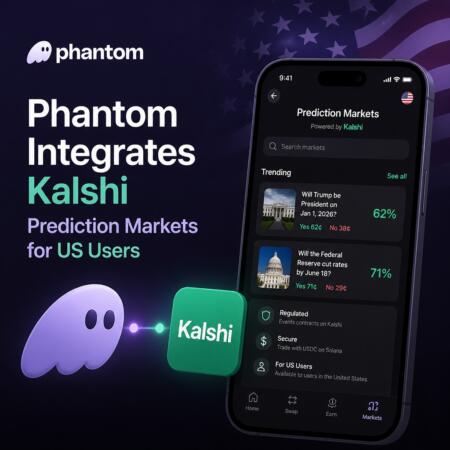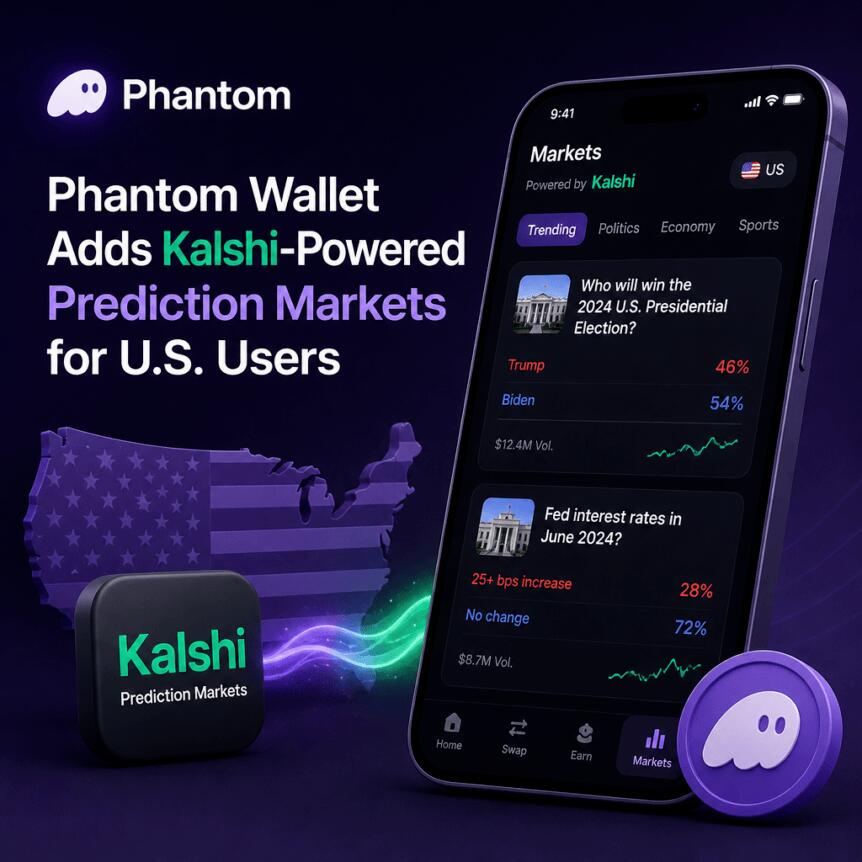
Phantom, the self-custody crypto wallet popular with retail traders, has added access to prediction markets for eligible users in the United States via a new integration with Kalshi. The move brings CFTC-regulated event contracts into Phantom’s interface, letting customers trade on topics that include short-term crypto price moves as well as sports and other real-world events.
According to Phantom’s announcement published Wednesday, the integration routes qualifying trades through Kalshi, while Phantom supplies the consumer-facing app experience. Users can fund activity using Phantom Cash balances denominated in the CASH stablecoin.
Key takeaways
- Phantom’s new “Predict” tab lets eligible US users place trades on CFTC-regulated event contracts through Kalshi.
- The offering includes short-term Bitcoin price markets that settle every 15 minutes, alongside sports and other real-world event contracts.
- Kalshi handles customer verification, account management, and trade execution; Phantom provides app access.
- Funding is available through Phantom Cash balances denominated in the CASH stablecoin.
- The launch arrives as Kalshi continues to face regulatory and legal pressure in the US.
Prediction markets move into the wallet app
Phantom’s announcement describes the integration as a way to trade event contracts directly within the wallet experience, rather than requiring users to navigate to a separate prediction-markets platform. The service is being rolled out through a new “Predict” tab inside Phantom.
The user experience is designed to resemble Phantom’s familiar token swap flow: users can browse live market data and, in the case of sports-based contracts, view relevant scores and discussion content before placing trades. Availability varies by state and by market category, reflecting the compliance constraints typical of regulated US financial products.
For crypto-focused traders, the headline feature is access to short-term Bitcoin price markets that settle every 15 minutes. Phantom positions these contracts as part of a broader set of event-driven markets, aiming to connect everyday retail trading behavior with the structure of regulated prediction contracts.
How the Phantom–Kalshi integration is structured
While Phantom brings the entry point, the operational and compliance responsibilities are split between the two firms. Phantom’s announcement states that Kalshi manages customer verification, account management, and trade execution. Phantom’s role is to connect eligible users to that regulated market activity through its app.
The legal foundation for the integration ties back to earlier regulatory relief from the US Commodity Futures Trading Commission. Earlier coverage from Cointelegraph noted that the CFTC granted no-action relief in March, allowing Phantom to connect customers to regulated markets without registering as an introducing broker, provided certain conditions are met. That relief is relevant to how Phantom can offer the product while operating within the US regulatory framework.
In the latest rollout, funding is facilitated via Phantom Cash balances denominated in the CASH stablecoin. That matters for users because it streamlines deposit and balance management inside the wallet, reducing friction compared with moving funds between separate platforms.
Kalshi’s legal challenges continue as volumes rise
Phantom’s entry into prediction markets arrives amid an ongoing legal dispute over the industry’s status under US law. On Monday, the CFTC sued Utah after the state challenged Kalshi’s event contracts under its gambling laws. The case adds to a series of proceedings focused on whether federal derivatives regulation preempts state gambling restrictions.
Even with the regulatory uncertainty, trading activity has not stalled. Data compiled by DeFi Rate shows Kalshi recorded $10.8 billion in crypto contract volume over the 30 days ending Oct. 27, representing a 19.6% increase compared with the prior period. The growth suggests demand for event contracts remains intact, at least in the segment tied to crypto outcomes.
For investors and traders, this combination—product expansion via major consumer crypto infrastructure alongside continued legal contestation—highlights a recurring tension in the US prediction-markets sector. Platforms can keep building user access and market depth, while the legal questions governing their long-term operating boundaries remain unresolved.
What to watch next for US prediction markets
Phantom’s integration effectively broadens the distribution channel for regulated prediction contracts by embedding them into a mainstream wallet workflow. That could accelerate trial and retention among users who already manage stablecoin balances in Phantom and prefer trading interfaces they understand.
At the same time, the product’s future accessibility may continue to depend on jurisdiction-by-jurisdiction rules, as reflected in Phantom’s stated variable availability across states and market categories. Readers should watch how the ongoing CFTC-versus-state legal developments evolve, and whether platform access or market offerings change if court outcomes affect the regulatory path for event contracts.