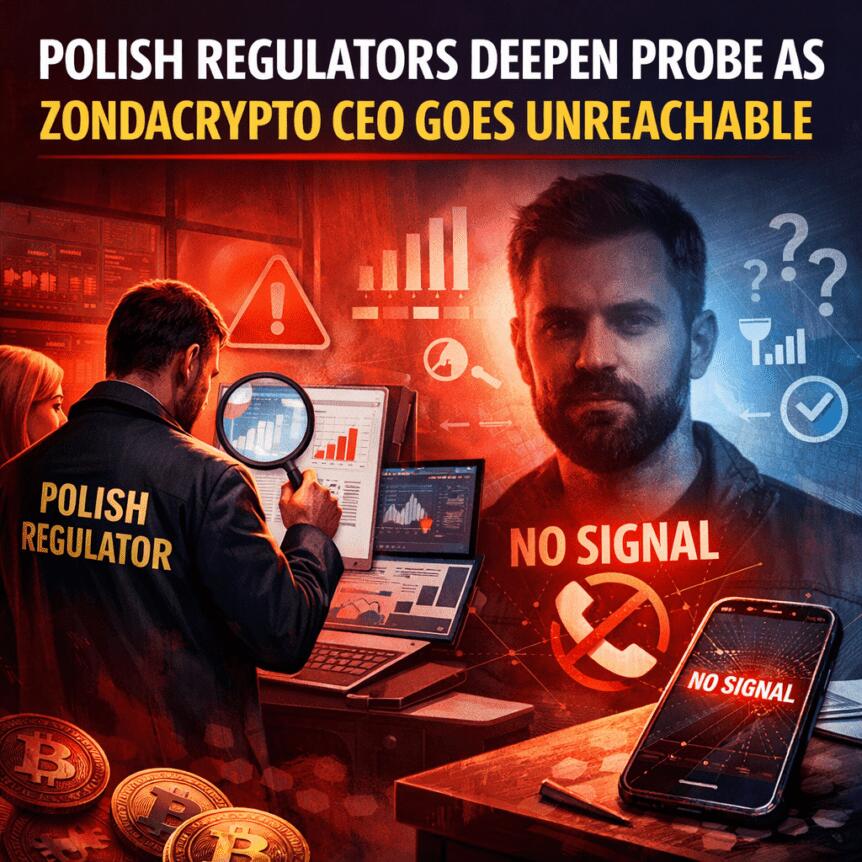
The crisis surrounding Zondacrypto deepened this week as Polish prosecutors opened a formal investigation into alleged fraud and investor losses at the Central European crypto platform. The move follows a string of disclosures surrounding the exchange’s leadership, liquidity access, and governance, and comes amid heightened scrutiny of cross-border crypto activities within Poland and the wider European Union.
According to Onet, the Polish investigative authorities are looking into potential fraud and investor losses tied to Zondacrypto. The report also notes that CEO Przemysław Kral has been in Israel for about a week and holds Israeli citizenship, a detail that could complicate any potential extradition proceedings to Poland. Polish prosecutors opened their inquiry last Friday after collecting complaints from local customers. Cointelegraph confirmed that Kral’s email address—previously used to communicate with him—has since become unavailable, underscoring deteriorating channels of contact amid the crisis.
The developments come on the heels of Kral’s earlier admission that Zondacrypto’s cold wallet, which reportedly held 4,500 Bitcoin, was inaccessible. This admission marked his last publicly documented communication before the current escalation. Prosecutors in Poland have identified several hundred potential victims and estimated losses at least PLN 350 million, roughly USD 97 million, according to Notes from Poland, which cited a prosecutor spokesperson.
Key takeaways
- Polish authorities have opened a criminal probe into Zondacrypto for alleged fraud and investor losses, signaling a formal step beyond private complaints.
- The CEO, Przemysław Kral, is reported to be in Israel and to hold Israeli citizenship, raising potential extradition complications for Polish authorities.
- Disclosures indicate a significant loss exposure to creditors, with several hundred potential victims and losses measured in the mid-to-high nine-figure PLN range.
- Board and governance pressures intensified as resignations from the Estonian operator’s supervisory board point to governance breakdowns and inconsistencies between public statements and internal information.
- The episode feeds into a broader EU regulatory debate around MiCA implementation, centralized supervision, and the adequacy of investor protection regimes in member states.
Polish investigation, exposure, and the evolving regulatory landscape
Although Zondacrypto is registered in Estonia via BB Trade Estonia OÜ, its user base remains concentrated in Poland, with a substantial Polish-speaking community and a significant operational footprint in the country. The Polish investigation reflects regulatory and enforcement realities where cross-border crypto platforms can fall under multiple jurisdictions, especially when customer complaints arise from a specific locale. The case has thus raised questions about how Poland, and the EU more broadly, apply investor protections and enforce sanctions when a platform operates across borders.
Analysts note that the episode occurs within a broader policy framework under discussion in Europe. The Markets in Crypto-Assets Regulation (MiCA) aims to standardize oversight of crypto activities across EU member states, but national authorities continue to wrestle with timely, effective enforcement. Prime Minister Donald Tusk has publicly connected the case to broader concerns about political influence and the movement of capital, highlighting what he characterized as potential links between crypto flows and external funding. In remarks cited by Poland’s government, Tusk said as many as 30,000 Zondacrypto users may have been affected and argued that the country’s investor-protection regime—already constrained by a historically slow pace of legislative adoption—faced challenges due to MiCA’s ongoing implementation timeline.
From a compliance and enforcement standpoint, the case underscores the regulatory tension between national oversight and EU-wide harmonization. Several Polish authorities have described a governance model in which ownership and executive management were concentrated in a single individual, a structure that can impair oversight, transparency, and accountability. Former supervisory board member Georgi Džaniašvili stated that the board learned about the scale of the crisis through media reports rather than internal channels, signaling “material inconsistencies” between public statements and available information. The LinkedIn post by Džaniašvili emphasizes the importance of transparent governance, effective oversight, and mutual trust—elements that are critical to institutional resilience in the crypto sector.
The pushback against the governance model has also fed into political discourse surrounding the case. Polish officials noted that the absence of a robust investor-protection framework delayed the ability to act decisively, a position aligned with ongoing criticisms of MiCA implementation in member states. Some observers argue that a more centralized, EU-level approach to crypto supervision—beyond national lines—could mitigate fragmentation and improve cross-border consumer protection, though achieving consensus on enforcement and licensing remains contested.
Contextually, Zondacrypto’s origin story—having been founded in Katowice in 2014 as BitBay by Sylwester Suszek, who has been missing since 2022—casts a shadow over the company’s earlier trajectory. In recent public statements, Kral contended that Suszek bore responsibility for the platform’s inability to access its cold wallet, a claim that further complicates the legal narrative around accountability and ownership. The Polish investigation, paired with governance concerns and the founder’s absence, raises questions about risk management, internal controls, and the due diligence that regulators require of exchange operators operating across jurisdictions.
Regulatory and governance implications for cross-border crypto firms
The Zondacrypto case illustrates the practical implications of regulatory fragmentation and the push toward more centralized oversight within the EU. For exchanges and platforms operating in or with customers in Poland, the investigation underscores the need for robust cross-border compliance programs—encompassing AML/KYC protocols, ongoing due diligence, and clear governance structures that withstand leadership transitions or disputes. It also highlights the risk that regulatory actions in one jurisdiction can spill over into regulatory expectations elsewhere, particularly in EU member states seeking to align with MiCA provisions while managing national enforcement priorities.
Moreover, the episode reinforces the importance of timely information-sharing between regulators, prosecutors, and market participants. As authorities pursue accountability—whether related to fraud, mismanagement, or operational failures—firms must demonstrate resilient governance, transparent disclosures, and robust safeguarding of customer assets. The case also places a spotlight on how political dynamics, including perceptions of foreign influence and capital flows, can influence regulatory discourse and policymaking in crypto markets.
According to Cointelegraph, the unfolding events in Poland are likely to influence the regulatory conversation around how smaller crypto firms are supervised under MiCA, including considerations of licensing, cross-border activity, and the capacity of national authorities to protect investors while enabling legitimate innovation. The balance between robust enforcement and competitive viability for regional platforms remains a central concern for policymakers, industry groups, and financial institutions engaging with crypto services.
In the near term, observers will be watching for developments on several fronts: whether Polish authorities secure extradition or pursue alternative legal avenues, the pace and scope of governance reforms within Zondacrypto’s operating entities, and how EU regulators calibrate MiCA implementation to address gaps revealed by cross-border cases like this one.
Closing perspective: The Zondacrypto case is a reminder that regulatory clarity, governance integrity, and robust asset safeguarding are now essential prerequisites for crypto platforms seeking legitimacy and continuity across multiple jurisdictions.