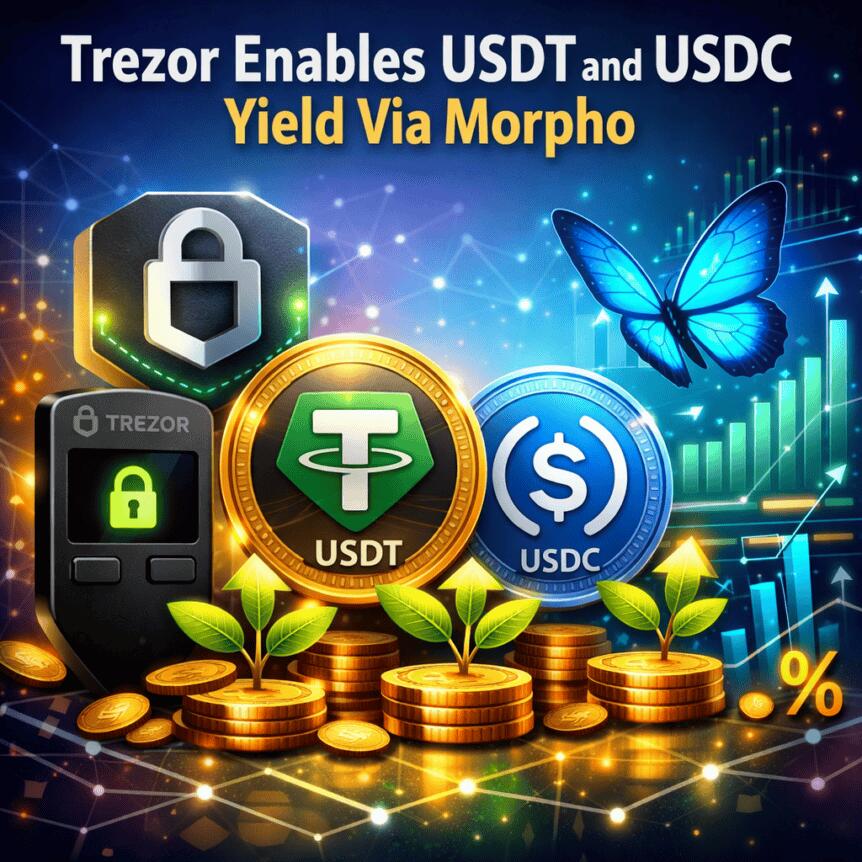
Trezor, a leading hardware wallet maker, has integrated native stablecoin yield into Trezor Suite, enabling users to earn returns on USD-pegged tokens through Morpho’s Ethereum-based lending protocol. The feature, announced this week, lets users deposit USDC and USDT directly into Morpho vaults from the desktop or mobile app without needing to connect external wallets or navigate separate DeFi applications.
All deposits, withdrawals and reward claims are signed on the hardware device via Trezor’s clear-signing interface, with transaction details rendered in human-readable form on the device’s screen. At launch, the vault options are USDC Prime and USDT Prime, curated by Steakhouse Financial. Trezor emphasizes that the yield is generated from Morpho’s borrowing demand rather than token incentive programs, a distinction that could affect long-term sustainability and risk profiles.
Key takeaways
- Trezor Suite now offers native stablecoin yield through Morpho vaults, starting with USDC Prime and USDT Prime.
- Yield derives from Morpho’s borrowing demand rather than external token incentive programs.
- Deposits, withdrawals and rewards are signed on-device, preserving security by keeping signing keys within the hardware wallet.
- The integration marks a broader industry trend toward embedding DeFi yield functionality in custody products, following similar moves by Ledger.
- Stablecoin yield strategies carry notable risks, including smart contract risk, liquidity exposure and counterparty risk; Ethereum co-founder Vitalik Buterin has cautioned that many USDC-yield approaches rely on centralized elements and may not address core DeFi risk concerns.
A broader shift: DeFi features integrate with custody products
The move places Trezor within a growing cohort of crypto custody providers wiring DeFi functionality directly into their interfaces. Hardware wallets are increasingly seen not merely as storage devices but as gateways to on-chain finance, enabling everyday users to access lending, borrowing and yield opportunities without building fluency in complex smart-contract workflows. In this vein, Trezor is widely regarded as one of the largest crypto hardware wallet providers and is typically described as the second-largest player in the market behind Ledger. By embedding yield-generation capabilities into a trusted custody layer, Trezor aims to reduce the friction that has long deterred non-technical users from engaging with DeFi.
Ledger’s approach provides a useful point of comparison. Ledger Live already supports native stablecoin yield through Kiln-powered integrations with Morpho, as well as with Aave and Compound. The Ledger example underscores how the custody ecosystem is evolving toward a more integrated, user-friendly DeFi experience. Taken together, these developments reflect a broader industry push to blur the lines between traditional custody tools and decentralized finance, with the goal of unlocking passive income options for a wider audience of crypto holders.
How the Morpho integration operates within Trezor Suite
From within Trezor Suite, users can deposit USDC and USDT into Morpho Prime vaults. Morpho’s model emphasizes a borrowing-driven yield instead of reward programs tied to token incentives. This design is intended to offer a more predictable yield signal by aligning with real borrowing demand on the Morpho platform. The two vaults available at launch—USDC Prime and USDT Prime—are curated by Steakhouse Financial, a parameter that helps frame the risk and quality of assets accessible through the integration. The critical security feature remains: all sensitive signing occurs on the hardware device, ensuring users retain control over private keys and signing material even when interacting with DeFi.
The on-device signing flow, coupled with human-readable transaction details on the device screen, is positioned as a core safety feature intended to reduce the common pitfalls of DeFi onboarding—misclicks, phishing and misconfigured approvals. By keeping the signing operation within the hardware wallet, Trezor aims to provide a familiar, secure path to yield while maintaining the custody guarantees users expect from a hardware wallet provider.
Yield, risk and the evolving regulatory conversation
Stablecoin yield has become one of DeFi’s fastest-growing use cases, enabling holders to earn returns on dollar-pegged assets by lending them on-chain. Market data from CoinMarketCap shows that USDC yields vary widely across platforms and market conditions, with some protocols offering double-digit annual percentages under favorable supply-and-demand dynamics. Supporters argue that such yield opportunities can offer crypto holders a form of passive income without abandoning custody principles.
Nevertheless, the model carries notable risks. Smart contract vulnerabilities, liquidity squeezes and exposure to centralized stablecoin issuers or counterparties can all threaten capital. The debate around these dynamics has grown more pointed in recent months. Ethereum co-founder Vitalik Buterin recently highlighted significant concerns with many “USDC yield” strategies, suggesting that they remain heavily tethered to centralized elements and may not adequately mitigate counterparty risk. In his view, which centers on preserving DeFi’s decentralized ethos, more robust models could include Ether-backed algorithmic stablecoins or overcollateralized real-world asset-backed stablecoins. These perspectives inform how market participants assess the risk-adjusted appeal of DeFi-enabled yields embedded in custody products.
As custodians expand DeFi functionality, regulators, users and builders will be watching how these integrations balance security, transparency and user protections. The maturity of on-device DeFi features will likely hinge on ongoing risk management, clear disclosure of yield sources, and the resilience of the underlying protocols during market stress.
For readers tracking industry moves, the Trezor-Morpho integration marks a notable milestone in merging custody-grade security with DeFi yield generation. It signals both renewed confidence in the security model of on-device signing and the continued demand for accessible, yield-bearing exposure to stablecoins from mainstream crypto users.
What remains uncertain is how these integrated pathways will perform across different market regimes and how regulators will frame custody-integrated DeFi products in the coming months. Watch for updates on additional vault options, changes in yield composition, and any guidance from Trezor or Morpho about risk controls, coverage, and user education as adoption expands.