Bitcoin’s rebound from mid-year lows has helped lift market-wide sentiment, but CoinMarketCap Head of Research Alice Liu says investors should be careful about assuming the asset will revisit the lower ranges it traded through for much of 2026. In an interview with Cointelegraph’s Trade Secrets, Liu argued that BTC may have already “touched the bottom,” pointing to a drop to around $59,000 in June—roughly 53% below its October all-time high of $126,100.
While Bitcoin recently pushed up toward $81,600 and the CoinMarketCap Crypto Fear & Greed Index moved back to “Greed” after spending most of the year in “Fear,” Liu suggested the more revealing developments are happening outside Bitcoin. In particular, she highlighted tokenized real-world assets (RWAs) and perpetual futures markets—especially venues connected to Hyperliquid’s ecosystem—as areas where activity and capital flows may be shifting.
Key takeaways
- CoinMarketCap’s Alice Liu said Bitcoin may have already set a floor after falling to about $59,000 in June, with BTC later reclaiming the $81,600 area.
- Liu emphasized that “network activity doesn’t necessarily translate to price,” a key lens for evaluating tokenized perps markets.
- On RWA-linked perpetuals, she said market share has moved toward centralized venues as Binance began launching RWA perps, while Hyperliquid still leads on decentralized trading.
- Liu attributed part of Hyperliquid token momentum to aggressive buybacks, noting the project has spent over $400 million on token repurchases.
- She urged caution around “AI-crypto” tokens lacking utility, warning that some meme-ified tokens could ultimately decline sharply.
Bitcoin’s rebound, and the question of whether lower prices return
Bitcoin failed to hold above $80,000 after a rally, yet Liu argued that the market is unlikely to return to the lower levels it hovered near for much of the year. Her framing is rooted in how far BTC fell from its prior peak and how quickly it has recovered since.
According to Liu, the June selloff to roughly $59,000 was a major drawdown versus the October all-time high at about $126,100. More recently, BTC tapped around $81,600 at the start of September following a roughly 28% rally from mid-August. The CoinMarketCap Fear & Greed Index, which measures broader sentiment, has also improved—moving back to “Greed” after prolonged “Fear” readings earlier in the year.
That said, Liu’s broader point is not that volatility is over. Rather, she believes the market may already have already priced in the most pessimistic scenario investors were testing earlier in the year.
RWA perps and Hyperliquid: activity versus price
Liu’s most detailed comments focused on tokenized markets linked to RWAs, particularly perpetual futures that are backed by exposure to assets such as tokenized stocks, tokenized ETFs, and tokenized indices.
She said her review of RWA perps over the past two months shows that Hyperliquid “still leads” in terms of aggregation and where liquidity concentrates—but she also flagged that this position may not be permanent. The reason: centralized exchanges have moved into the same product category.
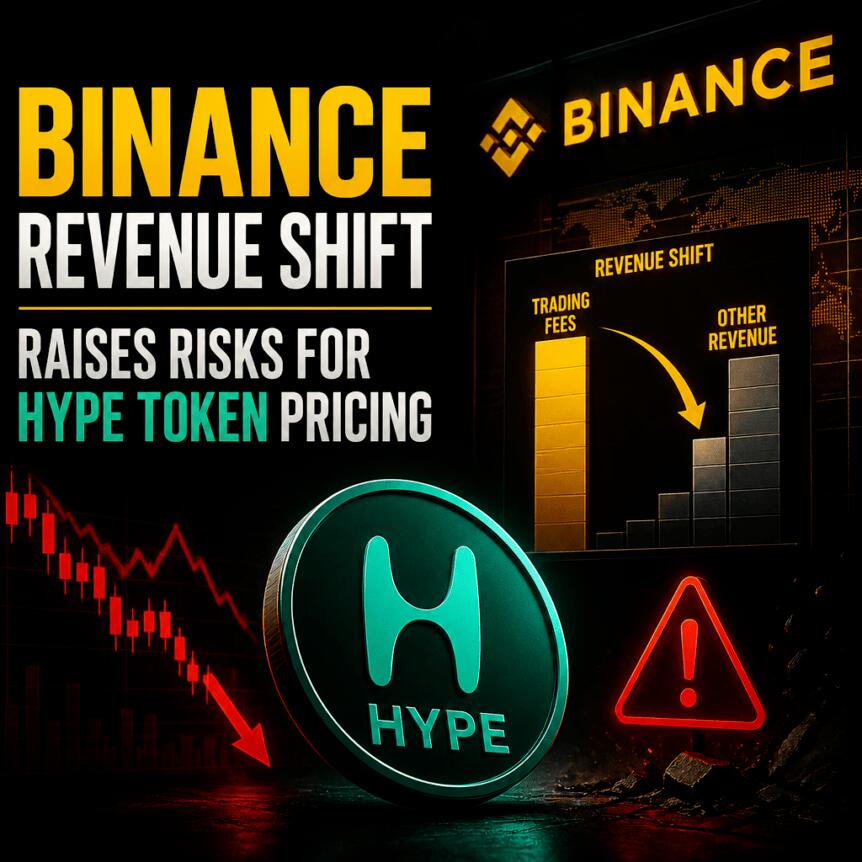
Liu noted that when Binance began launching RWA perps, volume and liquidity “quickly moved” toward Binance. She estimated that Binance now accounts for around 50% of market share, while maintaining that Hyperliquid still leads within decentralized venues. In her view, Hyperliquid remains a place where liquidity is aggregated and product scale is created—even as competitive pressure increases.
Crucially, Liu stressed a distinction traders often miss: high network or trading activity on its own may not automatically produce token price strength. She suggested investors should separate the metrics that reflect user behavior and liquidity from the mechanisms that influence token valuation.
Why HYPE’s momentum may be tied to buybacks
On Hyperliquid’s token price, Liu pointed to a different driver than pure trading activity: buybacks. She said Hype recently reached an all-time high around $86 and called out the role of repurchases as a plausible contributor to ongoing price momentum.
According to Liu, Hyperliquid has spent more than $400 million on token buybacks. She framed these repurchases as support for demand dynamics by using revenue to buy HYPE on the open market. Liu also added that only a small amount of tokens are currently unlocked, implying that additional unlocks could occur gradually—something investors may want to monitor as it can affect supply over time.
“So, will we have enough activity on the network to generate the revenue to continue with the buybacks to support the price level? I think that’s one of the key things to watch.”
That condition is the central uncertainty in Liu’s analysis: if buybacks are funded by revenue generated from network usage, then sustained token support may depend on maintaining the activity needed to fund repurchases. In other words, the bullish narrative here is tied to whether operational performance can keep the buyback engine running—not just to short-term trading volume.
AI-crypto tokens face a different kind of test
Liu also delivered a cautionary note on parts of the AI-crypto theme. While she remains bullish on the broader category of credible AI infrastructure, she said she is more skeptical about “AI tokens with little or no utility” that became popular in late 2023.
Her concern centers on competition. She argued that these tokens are facing pressure from actual AI companies and traditional “AI stocks,” including memory-related names and broader AI industry players. She suggested that the meme-like AI tokens that are more concept than infrastructure could “go to zero.”
At the same time, Liu distinguished infrastructure projects that have real utility. Even then, she suggested that these tokens may see a “price discount,” implying the market may reprice AI-related assets more realistically after earlier speculative waves.
This view aligns with her earlier emphasis on fundamentals: tokens backed by revenue-generating systems and clear use cases may be better positioned than assets whose value rests primarily on narrative demand.
Bitcoin as a fund parking asset—optimism tempered
Liu also addressed the debate around Bitcoin’s longer-term upside in the context of the current economic environment. She said Bitcoin and the broader crypto market may be underestimated as places to park funds—though she appears more conservative than high-profile bullish forecasts.
She contrasted her own stance with Coinbase CEO Brian Armstrong and ARK Invest CEO Cathie Wood, both of whom have predicted Bitcoin could reach $1 million by 2030. Liu reacted by saying, “Bitcoin to $500K by 2030,” adding that hitting $1 million is “not unlikely,” but that she would give a more conservative answer.
Her comments reflect a balancing act common among market participants: acknowledging the possibility of sustained institutional and macro-driven demand, while avoiding aggressive targets without the supporting certainty.
For traders and investors, Liu’s remarks suggest three watchpoints going into the next phase: whether RWA-perp liquidity continues migrating between venues as more centralized options launch, whether Hyperliquid’s revenue can sustainably finance buybacks amid token unlocks, and how quickly the market separates AI infrastructure with utility from AI tokens that never become more than a narrative.