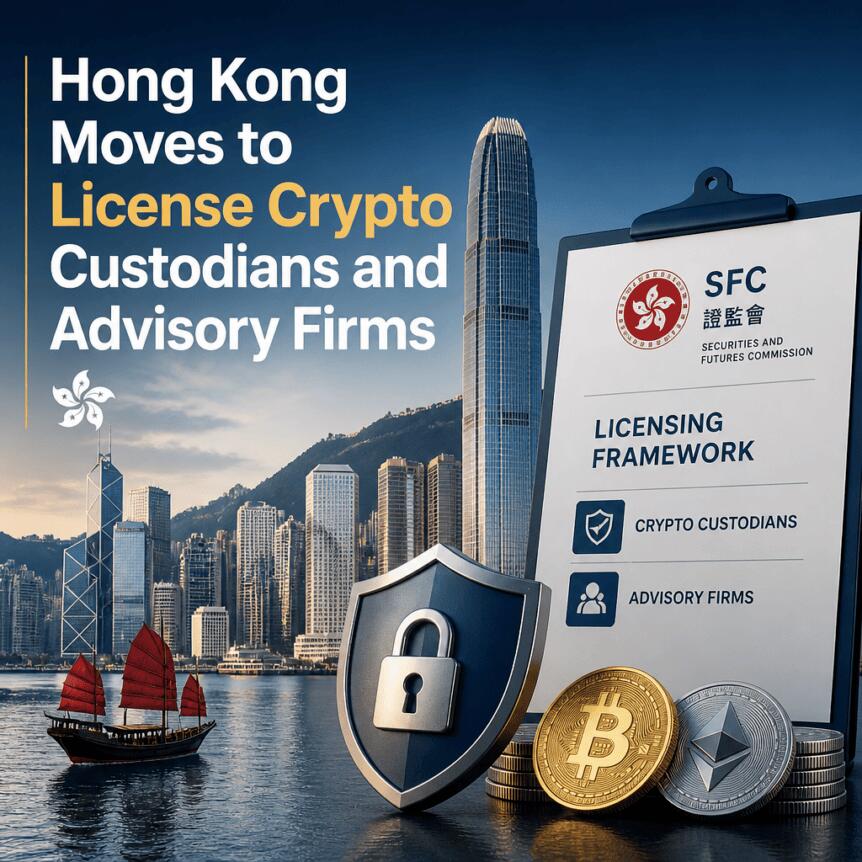
Hong Kong has taken another step toward tightening its crypto oversight by publishing legislation that would extend licensing and registration requirements beyond trading platforms to cover key virtual asset services such as custody, advisory, management and dealing.
On Friday, the government officially published the Virtual Asset Services Legislation (Amendment) Bill 2026, proposing a framework in which firms performing four regulated activities would either need a license or be required to register with the Securities and Futures Commission (SFC).
Key takeaways
- Hong Kong’s amendment bill would bring “virtual asset dealing, advisory, management and custody” under mandatory licensing or registration with the SFC.
- The proposal includes amendments to the Anti-Money Laundering and Counter-Terrorist Financing Ordinance and would introduce “fit-and-proper” style checks.
- Banks and stored-value facility licensees overseen by the Hong Kong Monetary Authority would also have to register with the SFC to offer virtual asset services.
- SFC Chief Executive Julia Leung said the changes are designed to strengthen investor protections while enabling responsible innovation.
- The bill is scheduled for its first reading in the Legislative Council on Dec. 2.
What Hong Kong’s amended framework would cover
The published bill sets out an expanded regulatory reach for virtual asset services. According to the government’s notice, the amendment targets four activities: virtual asset dealing, advisory services, management, and custody. In practice, that means the SFC would become the central authority for bringing these service providers within Hong Kong’s regulated perimeter.
Under the proposal, firms carrying out these activities would need to obtain an appropriate SFC license or complete registration, rather than relying on a narrower rule set that may have been more focused on trading venues and related activities.
In addition, the government’s plan extends beyond pure crypto-native operators. It would also require certain firms already supervised under Hong Kong’s banking and payments regimes—specifically banks and stored-value facility licensees overseen by the Hong Kong Monetary Authority—to register with the SFC if they want to provide virtual asset services.
AML requirements and “fit-and-proper” checks
A central element of the amendment is compliance with anti-financial-crime expectations. The bill proposes changes to Hong Kong’s Anti-Money Laundering and Counter-Terrorist Financing Ordinance, which would bring service providers under additional regulatory requirements.
The government’s publication indicates that regulated virtual asset service providers would be subject to fit-and-proper assessments and related oversight obligations. For market participants, that matters because it affects how firms structure governance, ownership disclosures, and compliance roles—and can influence whether new entrants can obtain approval quickly or whether existing firms will have to adjust their internal processes.
By folding virtual asset services into a broader AML and suitability regime, Hong Kong is aligning the sector more closely with established financial-services compliance practices, even as it continues to carve out a distinct regulatory channel for crypto-related businesses through the SFC.
Why the bill matters for investors and existing businesses
Hong Kong’s regulator has framed the move as a way to improve investor protection and clarify what “responsible innovation” looks like in practice. SFC Chief Executive Julia Leung said the proposal would strengthen investor protections and provide clearer paths for responsible innovation, as noted in the government’s publication.
For investors, the practical shift is that service providers handling assets—particularly custody and management—would face direct authorization or registration expectations. Custody in particular is often where clients are most exposed to operational risk, making licensing and ongoing oversight a key issue for anyone evaluating how their assets are held.
For firms already operating in Hong Kong, however, the transition could be challenging. Earlier discussions around the regulatory expansion have highlighted uncertainty about how quickly existing companies can comply once licensing becomes mandatory.
In January, the Hong Kong Securities & Futures Professionals Association warned that introducing licenses without transitional arrangements could effectively force some businesses to pause operations while applications are reviewed. The association called for a six- to 12-month grace period, emphasizing that the implementation mechanics—not only the end-state rules—could determine whether compliance is manageable.
Next steps: parliamentary timeline and what to watch
The bill is scheduled for its first reading in Hong Kong’s Legislative Council on Dec. 2, placing the amendment on a defined parliamentary path. The government’s publication also cites an earlier commitment that legislation covering the four targeted activities would be introduced before the end of 2026 following consultations on the framework.
As the bill moves through the legislative process, market participants will likely focus on two practical questions. First, how transitional arrangements are handled—particularly whether there is a sufficiently long grace period for current operators. Second, how the SFC will apply fit-and-proper and AML requirements in practice, including what documentation and compliance benchmarks firms will need to meet to obtain licenses or complete registration.
Hong Kong’s approach also has broader implications for the region’s crypto compliance standards. By bringing banks and stored-value facility licensees under a registration requirement with the SFC for virtual asset services, the proposal reinforces that traditional financial gatekeepers cannot assume they are exempt from crypto-specific authorization if they offer these products.
For now, the key thing investors and operators should monitor is how the SFC and lawmakers handle the transition from consultation and framework-building to enforceable licensing, especially for custody and management providers where operational reliability and regulatory oversight directly affect customer risk.