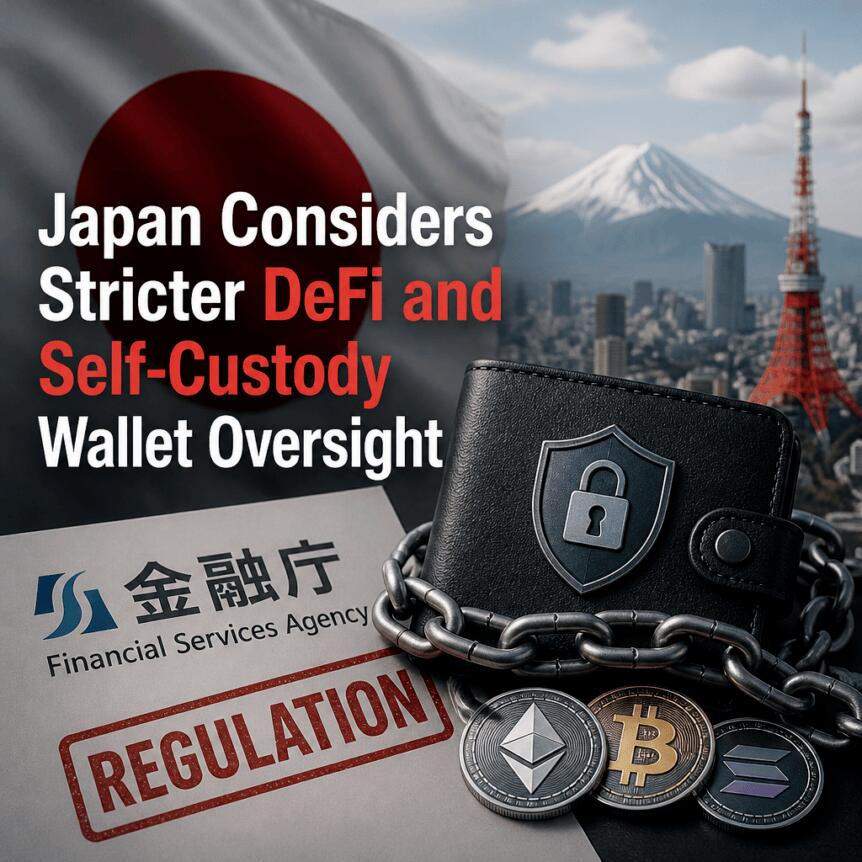
Japan’s Financial Services Agency (FSA) is exploring whether new guardrails are needed for decentralized finance (DeFi) services and self-custodial wallet providers, targeting the compliance and accountability gaps that can arise in onchain finance.
In a discussion paper published Thursday, the regulator highlighted the possibility of discouraging access to DeFi platforms that do not have adequate Anti-Money Laundering and Counter-Terrorist Financing (AML/CFT) controls, while also questioning how responsibility could be assigned when multiple parties interact with DeFi ecosystems but no single entity is clearly accountable.
Key takeaways
- The FSA is considering whether users should be discouraged from accessing DeFi services that lack sufficient AML/CFT controls.
- It asks whether regulated intermediaries—such as stablecoin issuers and fiat on- and off-ramp providers—should help mitigate illicit-finance risks in cases where no clear compliance “owner” exists.
- The regulator wants clarity on how to identify responsible parties for “decentralized” services that retain centralized features.
- Japan is also examining whether additional protections are needed around self-custodial wallets, even though direct wallet-use regulation remains uncommon globally.
AML/CFT enforcement and the problem of unclear accountability
At the center of the FSA’s discussion is a practical regulatory challenge: DeFi platforms can be structured so that no single operator clearly manages compliance, making it harder to apply traditional oversight. The paper proposes that the regulator may seek ways to discourage users from accessing DeFi services that do not offer adequate AML/CFT safeguards.
The FSA also raises a broader allocation-of-responsibility question. It asks whether regulated businesses that interact with DeFi—explicitly including stablecoin issuers, on- and off-ramp providers, and other financial institutions—should play a role in reducing illicit-finance risks when it is not possible to identify a party that is directly responsible for regulatory compliance.
Another unresolved issue concerns how to treat “decentralized” systems that still contain centralized components. The regulator specifically questions how to identify the responsible parties in cases where DeFi services advertise decentralization but maintain elements that resemble centralized control or coordination.
The paper further spotlights a potential regulatory seam around the user’s entry point: it asks whether front-end providers that facilitate access to decentralized exchanges should be considered within the scope of financial regulation. By drawing attention to the infrastructure layer that helps users reach DeFi liquidity, the FSA signals that the compliance discussion may not stop at protocol code alone.
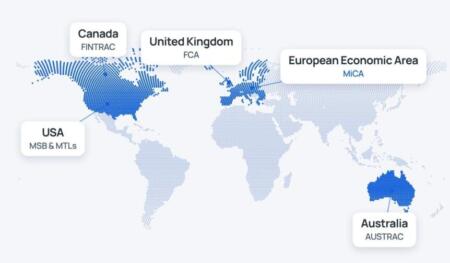
Japan is not alone in grappling with these questions. The paper notes that the European Union excludes fully decentralized crypto services without intermediaries from MiCA (Markets in Crypto-Assets) regulation, while the United States has tended to focus on the nature of the underlying financial activities and the degree of control exercised by developers or operators. In the US, the stalled CLARITY Act has aimed to clarify which DeFi participants should face financial regulation, according to earlier reporting by Cointelegraph.
Self-custodial wallets: existing reporting duties, plus potential new safeguards
Alongside DeFi platform oversight, the FSA turns to self-custodial wallets. While direct regulation of self-custodying wallet use—and rules aimed at parties that only develop or sell wallet software or hardware—remains rare internationally, Japan’s regulator says it is still weighing whether additional measures could be needed to protect users and curb illicit activity.
Japan already requires domestic virtual asset service providers to collect information and maintain transaction records involving self-custodial wallets, the FSA states. That means some compliance obligations exist at the intermediary level, even if self-custody itself is not directly regulated in the same way as a custodial service.
The discussion also points to potential anti-fraud protections. One example mentioned is the introduction of cooling-off periods for transfers from newly opened exchange accounts to self-custodial wallets. The concept reflects a risk-control approach often used to limit harm from compromised accounts or rapid account-to-withdrawal behaviors—without claiming to regulate the wallet itself.
For users and market participants, the key takeaway is that Japan appears to be testing where its oversight should land: not necessarily on code or individual wallet software vendors, but on behaviors and access routes where harm prevention might be more actionable.
Where Japan’s onchain strategy could head next
The FSA’s work is part of a broader financial strategy it announced in July aimed at promoting onchain finance. The regulator’s interim findings are targeted for early 2027, suggesting that today’s discussion paper is a step toward shaping future policy options rather than introducing immediate rule changes.
The timing matters for investors, exchanges, and regulated service providers because it points to an extended runway in which compliance frameworks could be refined. If Japan ultimately pursues mechanisms to discourage access to certain DeFi services, regulated gateways in the ecosystem—such as ramps and issuance channels—could face heightened expectations around risk screening, monitoring, and documentation.
However, the FSA’s paper also underlines that responsibility in DeFi is still contested. Its repeated emphasis on identifying parties behind “decentralized” services, and on whether front-end providers should be treated as regulated entities, indicates that the final regulatory design may depend on how Japan defines control, facilitation, and operational leverage within onchain systems.
What to watch: responsibility models and practical compliance levers
Readers should watch how the FSA translates these questions into workable policy—particularly whether Japan leans toward user-facing access limitations for certain DeFi services, expanded duties for regulated intermediaries, or new expectations for front-end access to decentralized exchanges. With interim findings due in early 2027, the key uncertainty is how the regulator will draw lines between decentralization claims and centralized influence in a way that can be enforced consistently.